Most “travel hacks” articles repeat the same five tips everyone already knows — roll your clothes, bring a portable charger, arrive early.
This one skips those and focuses on the hacks that actually change how a trip feels: fewer last-minute scrambles, lower costs, and fewer avoidable problems once you land.
These 40 travel hacks are organized by the point in your trip where they matter — booking, packing, flying, road trips, and your destination — so you can jump to what’s relevant right now instead of reading 40 tips for a trip you haven’t started planning yet.
Love this? Check out our guide to 15 Essential Europe Travel Tips and 12 Cheapest Places to Visit in Europe for destination-specific planning.
What Are the Best Travel Hacks?
The best travel hacks focus on the moments that actually create stress on a trip — overpacking, checked-bag delays, tight connections, and last-minute price hikes — rather than generic advice like “pack light.” If you only take eight things from this guide:
- Book flights 1–3 months out domestically, 2–8 months out internationally, for the best pricing window.
- Fly Tuesday or Wednesday — fares average 15–25% lower than Friday or Sunday departures on domestic routes.
- Combine packing cubes with rolled (not folded) clothes — the two techniques stack, one alone doesn’t deliver the same space savings.
- Wear your bulkiest clothing item on the plane — it doesn’t count toward carry-on weight or size limits.
- Enroll in Global Entry or TSA PreCheck if you fly more than once a year — many travel credit cards reimburse the fee automatically.
- Bring an empty water bottle through security and fill it after — airport terminal food and drink markup is real and avoidable.
- Keep one outfit and your essentials in your carry-on even if you’re checking a bag — checked luggage delays happen more than travelers expect.
- Download offline maps before you lose signal, whether you’re in a foreign city or on a rural road trip.
Everything below expands on why these work and adds 32 more.
Money-Saving & Booking Hacks
1. Use a Fare-Tracking Tool Instead of Manually Checking Prices
Tools like Google Flights price tracking or Hopper monitor a route continuously and alert you to drops, which catches price dips you’d otherwise miss by checking sporadically. This removes the guesswork of trying to time the market yourself.
2. Search With Flexible Dates (+/- 3 Days)
A flight search locked to exact dates misses cheaper fares that often sit just a day or two on either side of your target dates. Most booking sites have a flexible-date or fare-calendar view — use it before committing to specific dates.
3. Check What Your Existing Credit Card Already Covers
Many travel credit cards already include airport lounge access, rental car insurance, trip cancellation coverage, or a Global Entry fee credit — benefits travelers frequently pay for separately without realizing they’re duplicating something they already have. Check your card’s benefits guide before buying any of these separately.
4. Search in a Private/Incognito Browser Window
Whether or not it actually changes fares (airlines dispute this), booking sites can personalize results based on browsing history and cookies. Searching in a private window removes that variable entirely, which costs nothing and can’t hurt.
5. Book Accommodation Directly After Comparison Shopping
Use an aggregator to compare prices, but book directly through the hotel’s own site once you’ve found your target — many hotels match or beat the third-party price and throw in perks (free breakfast, late checkout, room upgrades) that aren’t available through an OTA booking.
6. Set a Price-Drop Reminder for Refundable Bookings
If you book a fully refundable flight or hotel rate, set a calendar reminder to check the price again closer to your travel date — if it’s dropped, cancel and rebook at the lower rate. This only works on refundable fares; confirm your rate type before assuming you can do this.
7. Use a No-Foreign-Transaction-Fee Card for Any International Trip
Standard cards charge 1–3% per purchase abroad — a real cost across a multi-week trip that a fee-free card eliminates entirely. Confirm this before you travel, not at the first foreign purchase.
8. Pack Snacks to Skip Airport and Highway Markup
Energy-dense snacks — nuts, protein bars, dried fruit — packed before you leave home avoid the inflated prices at airport terminals and highway rest stops, where a simple snack can cost two to three times a grocery store price.
Travel Hacks for Packing

9. Combine Packing Cubes and Rolled Clothing — Not Just One
Packing cubes alone helps you find things faster. Rolling clothes alone saves some space. Used together, they compress volume noticeably more than either technique used on its own, which is the actual reason frequent travelers rely on both rather than picking one.
10. Wear Your Bulkiest Item on the Plane
A jacket, boots, or a heavy sweater worn on your body doesn’t count toward your carry-on weight or size allowance — packing it instead wastes space you could use for something else. This matters most on airlines with strict weight limits, where every kilogram in the bag counts against you but nothing on your body does.
11. Use Compression Bags for Bulky, Non-Structured Items
Compression bags work best on soft items without rigid shape — sweaters, jackets, and towels — squeezing out the air pockets that otherwise waste suitcase volume. They’re less useful for shoes or anything that needs to keep its shape, where a packing cube serves better.
12. Build a Permanent Travel Kit That Never Gets Unpacked
Keep a small zip pouch — portable charger, universal plug adapter, reusable water bottle, travel-size pain reliever, sleep mask — packed and ready between trips rather than gathering these items from scratch each time. Replenish it after every trip rather than the night before your next one, so it’s always ready.
13. Choose a Personal Item That Opens Flat Like a Mini Suitcase
Every airline that charges for carry-ons still allows one free personal item. A backpack that unzips flat and organizes like a small suitcase functions as a genuine second bag rather than a token item, effectively giving you two pieces of luggage for the price of one on carriers that charge for carry-ons.
14. Save Shoe Box Inserts to Protect Dress Shoes and Heels
The cardboard or plastic inserts that come with new dress shoes and heels exist specifically to hold their shape — reinsert them before packing to prevent the toe and upper from getting crushed in transit, instead of stuffing the shoes with socks or leaving them loose.
15. Repurpose Small Containers as Mini Organizers
An empty, cleaned coffee pod or a small pill container works as a crush-proof case for rings, earrings, and other small items that otherwise migrate loose through your bag. This costs nothing beyond what you’d already be recycling and solves a genuinely common small-item-loss problem.
16. Pack Swimwear and Beach Items Directly Into the Bag You’ll Use There
Instead of packing swim gear into a generic packing cube, fold it directly into the tote or bag you actually plan to carry to the beach or pool. You skip a repacking step on the first day and arrive with your beach bag already assembled.
17. Use a Diluted Alum Spray for Odor Control Instead of Chemical Sprays
A small travel spray bottle with alum powder dissolved in water, lightly misted on fabric, works as a natural antibacterial and odor-neutralizer — alum’s astringent properties target the bacteria that cause odor rather than masking it the way most fabric sprays do. Keep the bottle under standard carry-on liquid limits (100ml/3.4oz) to clear security without issue.
18. Photograph or Save Your Packing List and Adjust It After Every Trip
Reusing the same static list every time means repeating past mistakes — the item you never used, the thing you always forget. Cross off what you didn’t touch and add what you wished you’d packed as soon as you get home, while it’s still fresh, rather than trying to remember for next time.
Best Travel Hacks for Flying

19. Fly Tuesday or Wednesday for the Lowest Average Fares
Tuesday and Wednesday departures average 15–25% less than Friday or Sunday on domestic routes, with the gap widening further during peak travel periods like summer and holidays. Flying out on a Tuesday and returning on a Wednesday hits the cheapest days on both legs at once.
20. Book Domestic Flights 1–3 Months Out, International 2–8 Months Out
This window consistently produces the best average pricing — book too early and airlines haven’t released their cheapest fare classes yet; book too late and you’re competing for whatever’s left. Holiday travel (Christmas, Thanksgiving) compresses this window further, since demand spikes earlier than usual.
21. Enroll in Global Entry or TSA Pre-Check if You Fly More Than Once a Year
A Global Entry kiosk can save 30–60 minutes at busy airports compared to the standard customs line, and Pre-Check cuts security wait times similarly for domestic flights. Many travel credit cards reimburse the application fee automatically, which effectively makes this free if you already hold one.
22. Wear Slip-On Shoes Through Security
Shoes with laces or straps slow down the removal-and-reassembly process at the checkpoint — slip-ons come off and go back on in seconds, which adds up across a year of frequent flying even if it saves only a minute or two per trip.
23. Wear Compression Socks on Flights Over Four Hours
Long-haul flights measurably increase the risk of leg swelling and deep vein thrombosis, according to medical guidance on extended sitting — compression socks are a low-cost, low-effort way to reduce that risk on any flight past the four-hour mark.
24. Bring an Empty Water Bottle Through Security, Fill It After
Airport terminal markup is real — a simple sandwich and bottled water can run $20 combined inside the gate area. An empty reusable bottle clears security easily and fills for free at any terminal water station, cutting one of the most avoidable in-airport costs.
25. Build Real Buffer Time Into Connections
A tight connection that looks fine on paper can unravel with a single gate change or a delayed first leg. Booking connections with genuine buffer — not the airline’s stated legal minimum — reduces the odds of a missed flight cascading into a lost day.
26. Fly Carry-On Only When the Trip Allows It
Checked bag fees now run $30–70 each way on most major US carriers, and a family of four can pay over $500 round-trip in bag fees alone. Nearly half of US travelers now fly carry-on only specifically to avoid this — a well-packed personal item plus a compliant carry-on covers most trips under a week.
27. Split Essentials Across Bags If You Do Check Luggage
If you’re checking a bag, keep one change of clothes and your essential toiletries in your carry-on rather than only in the checked bag. Checked luggage genuinely does get delayed or misrouted more often than travelers expect, and having a backup in-hand turns a missing-bag problem into an inconvenience instead of a crisis.
28. Download Your Boarding Pass and Confirmations for Offline Access
Airport wifi is inconsistent and a dead phone battery is common by the end of a travel day — save your boarding pass, hotel confirmation, and any transit tickets to your phone’s offline wallet or as a screenshot before you need them, not while standing in a line with no signal.
Travel Hacks for Road Trips
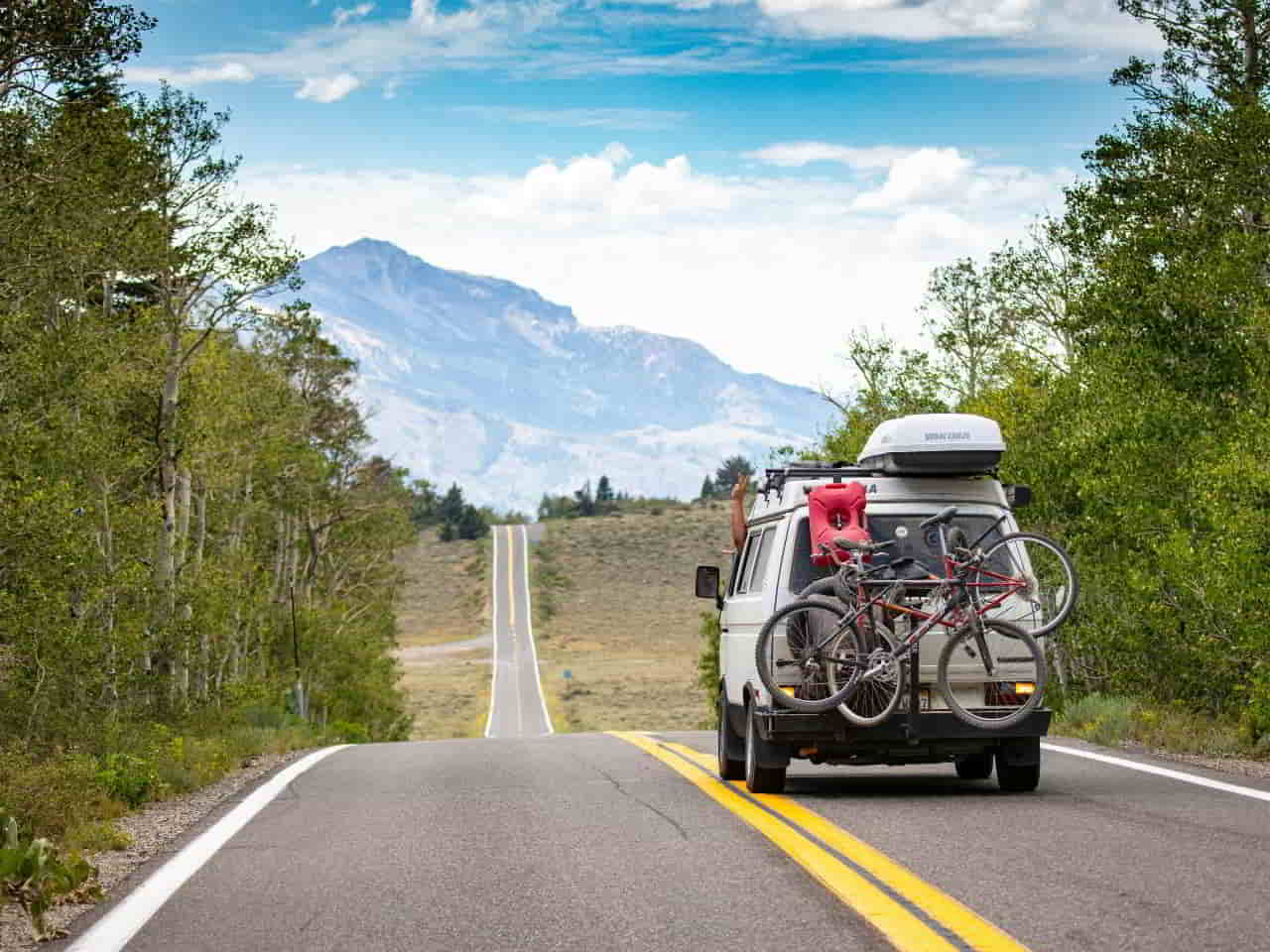
29. Download Offline Maps for the Entire Route, Not Just the Destination
Cell coverage gaps are common on rural highways and mountain routes — download the full route’s map area before you lose signal, not just your final destination, so a wrong turn mid-drive doesn’t leave you without navigation.
30. Keep a Basic Roadside Emergency Kit in the Trunk
Jumper cables, a portable tire inflator, a flashlight, and basic tools cost little and sit unused most trips — but on the one trip something goes wrong, they turn a stranded roadside wait into a manageable delay.
31. Use a Gas-Price App Instead of Stopping at the First Station You See
Apps that compare nearby fuel prices along your route can reveal a meaningfully cheaper station just a few minutes ahead, rather than defaulting to whichever sign you see first — the savings add up over a long road trip’s total fuel cost.
32. Set a Timer to Force a Driving Break Every Two Hours
Fatigue builds gradually and is easy to underestimate behind the wheel. A simple phone alarm every two hours, forcing a short stop to stretch and swap drivers if you’re traveling with someone else, reduces fatigue-related risk on long driving stretches more reliably than waiting until you feel tired to stop.
Travel Hacks to Apply at Your Destination

33. Download Offline Maps Before You Land
Save your destination’s map area for offline use before arrival, so you’re not dependent on cell signal or hotel wifi the moment you land — especially useful for the first walk from a station or airport when you haven’t set up local data yet.
34. Photograph Your Hotel’s Address Card and Business Card
If there’s a language barrier, showing a driver or local a photo of your hotel’s name and address in the local script resolves confusion faster than trying to pronounce it yourself. Most hotels keep branded cards at the front desk specifically for this purpose — grab one on arrival.
35. Locate the Nearest Hospital, Pharmacy, and Embassy Before You Need Them
Look these up in the first hour after arrival, not after an emergency starts. Knowing the location and a rough travel time in advance turns a stressful situation into a manageable one.
36. Photograph Your Hotel Room Number and Key Card
It’s a small thing, but forgetting your room number after a long day of sightseeing is a common, easily avoidable frustration — a quick photo on check-in solves it permanently for the length of your stay.
37. Use a Local eSIM Instead of Public Wifi for Anything Sensitive
Hotel and public wifi networks are common targets for data interception, particularly for banking or anything requiring a login. A local eSIM, activated before or immediately after landing, gives you a private connection for sensitive tasks without hunting for a trustworthy network.
38. Keep a Small Cash Reserve Separate From Your Main Wallet
Split your cash between your wallet and a secondary location (a hotel safe, a hidden zip pocket) so a lost or stolen wallet doesn’t mean losing all your cash on hand. This costs nothing and only matters on the one day you actually need it.
39. Learn 3–5 Key Local Phrases Before You Arrive
“Hello,” “thank you,” “please,” “where is,” and “how much” go further than most travelers expect — service interactions noticeably improve, and it makes solving small problems (finding a bathroom, asking for directions) faster than defaulting to English and hoping.
40. Screenshot Your Accommodation’s Address in the Local Language
Beyond a business card, having the address saved as text in the local script — not just transliterated — lets you paste it directly into a taxi app or show it to someone typing it into their own phone, removing any pronunciation or spelling ambiguity.

FAQs
1. What is the single most useful travel hack?
Flying carry-on only when the trip allows it has the broadest impact — it avoids $30–70 each-way checked bag fees, removes the risk of lost or delayed luggage entirely, and forces the kind of efficient packing that makes the rest of the trip easier to manage.
2. What are the best money-saving travel hacks?
Flying Tuesday or Wednesday, booking 1–3 months out domestically (2–8 months internationally), and using a fare-tracking tool instead of manually checking prices are the three with the most consistent, measurable impact on cost.
3. What travel hacks matter most for international trips specifically?
A no-foreign-transaction-fee card, a local eSIM instead of relying on hotel wifi, and learning a handful of key local phrases address the three most common friction points on international trips — cost, connectivity, and communication.
4. Are road trip hacks different from flying hacks?
Yes — road trip hacks focus on route reliability (offline maps, fuel costs, fatigue management) rather than airport logistics, since the main risks on a road trip are running out of signal, fuel, or driver alertness rather than missing a flight.
5. Do these hacks apply to any destination?
Yes, all 40 are destination-agnostic and apply whether you’re traveling domestically or internationally. For destination-specific planning — visa rules, currency, seasonal timing — pair this guide with a destination-specific planning post.
Helpful Planning Resources
Look up the fast-track program (speedier airport security experience) that applies to your passport and route to confirm current fees and eligibility directly with the relevant one before applying.
- Global Entry/TSA PreCheck (open to US citizens/residents and citizens of several partner countries, including India, Germany, the UK, Singapore, South Korea, Switzerland, Argentina, Colombia, and Panama),
- NEXUS (US–Canada),
- Digi Yatra (India’s own biometric fast-track at domestic and select international departures),
- Registered Traveller/e-Gates (UK),
- Smart Gate (Australia/NZ),
- The EU’s EES/ETIAS-linked e-gates.
Google Flights Price Tracking — Set fare alerts for specific routes and dates.