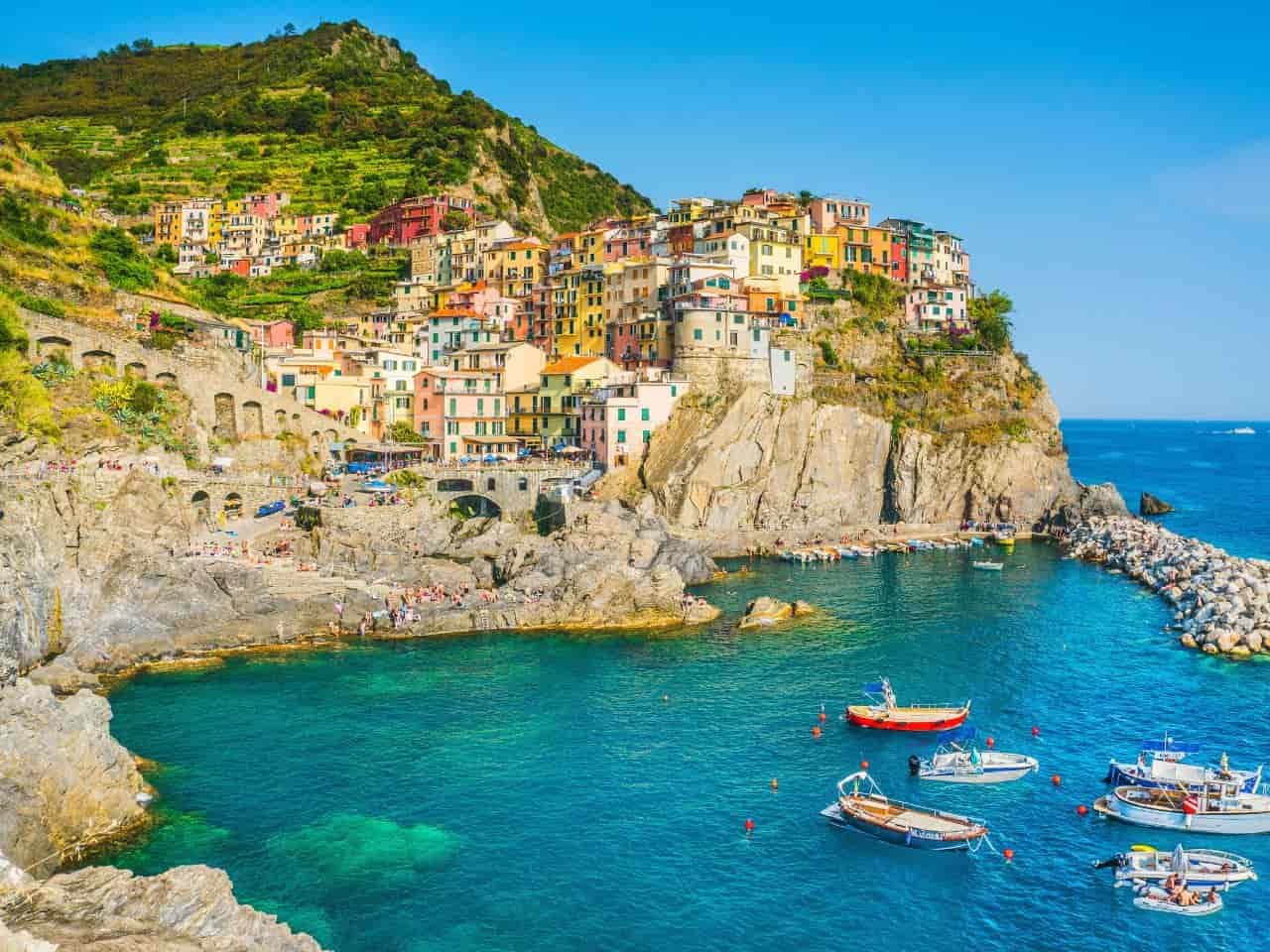
Cinque Terre changed in ways that matter to your trip planning recently — not the scenery, but the access rules. The Via dell’Amore, closed for over a decade after a landslide, is open again but now requires a booked time slot.
Trail access on the Sentiero Azzurro is capped. Open sandals and flip-flops are banned on hiking trails, with real fines for non-compliance.
This guide covers what actually matters for a visit: the current reservation system, which of the five villages to base yourself in, realistic hiking logistics, and how many days this genuinely small area needs before it starts feeling rushed rather than romantic.
- What Is Cinque Terre?
- What Changed from 2026: Reservations, Fees, and Trail Rules
- How to Choose Which Village to Base In
- Cinque Terre Villages Compared at a Glance
- Cinque Terre Map: Where Is It?
- How to Get There and Around
- Best Time to Visit Cinque Terre
- The Five Villages: Full Profiles
- Hiking the Sentiero Azzurro (Blue Path)
- Cinque Terre Food Guide
- How Many Days Do You Need?
- FAQs
- Helpful Planning Resources
- My Popular Cinque Terre Guides
Love this? Check out our Best Places to Visit in Italy and Travel Guide to the Amalfi Coast to round out your planning.
What Is Cinque Terre?
Cinque Terre is a UNESCO World Heritage coastline in Liguria, Italy, made up of five villages — Riomaggiore, Manarola, Corniglia, Vernazza, and Monterosso al Mare — connected by train, hiking trail, and seasonal boat rather than road. As of 2026, several parts of the area, including the Via dell’Amore trail, require an advance reservation and a paid Cinque Terre Card, making pre-trip planning more necessary here than it used to be.
What Changed from 2026: Reservations, Fees, and Trail Rules
Cinque Terre’s local authorities significantly tightened access rules from 2026 in response to sustained overtourism — by some estimates, roughly 4 million visitors pass through an area of just one square kilometer each year.
- The Via dell’Amore now requires a mandatory reservation. The trail connecting Riomaggiore and Manarola reopened after being closed for over a decade following a landslide, but tourist access is now capped at 200 people per 30-minute time slot, entering from Riomaggiore and exiting at Manarola during high season. Bookings can be made online at the official park portal or on-site at village info points, and for the busiest periods, booking ahead is worth doing rather than assuming same-day availability. As of March 2026, Via dell’Amore access is generally bundled into the standard Cinque Terre Card rather than sold as a separate ticket, though pricing structures have shifted more than once in recent years — confirm the current setup on the official site before you go, since exact costs vary by season and demand tier.
- The Cinque Terre Card is required for train travel and most trail access. The card comes in two forms: a Trekking Card (trail and local bus access, no trains) and a Train Card (everything the Trekking Card covers, plus unlimited regional train travel between villages). 2026 pricing for the Train Card runs roughly €22–35 for one day depending on the demand tier of your travel date, rising for multi-day cards. Off-season (roughly early November to mid-March), most trails are free and a single train ticket between villages costs a few euros, making the card unnecessary outside peak season.
- Trail footwear rules are enforced with real fines. Open sandals and flip-flops are banned on the hiking trails, with fines reported up to €2,500 for non-compliance — wear proper closed walking shoes on any trail section, not just the more technical stretches.
Planning takeaway: book your Via dell’Amore slot and confirm current Cinque Terre Card pricing before you travel, not after you arrive — same-day availability isn’t guaranteed in peak season, and the rules have changed enough in recent years to be noted seriously.
How to Choose Which Village to Base In
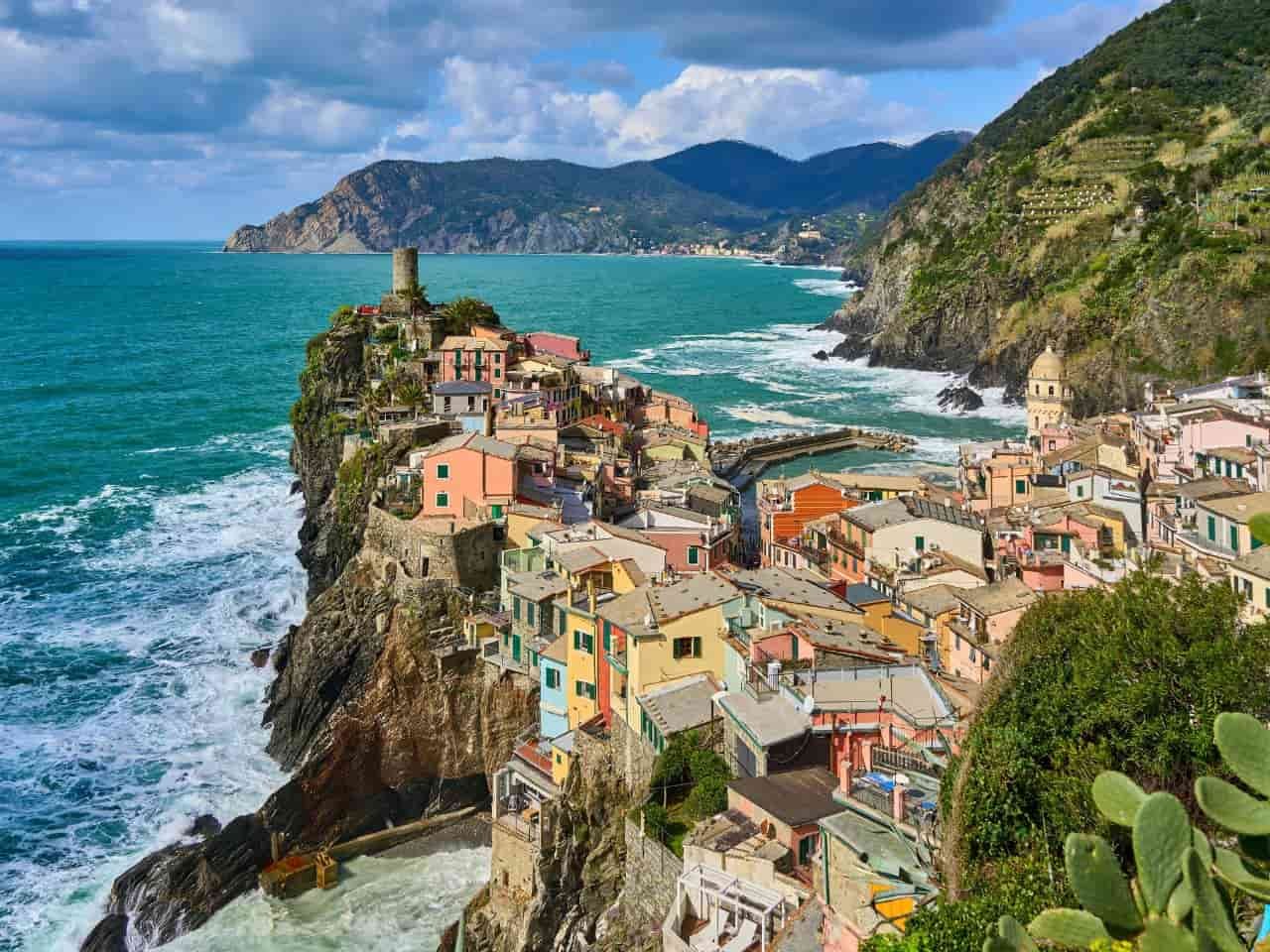
If you want the most classic Cinque Terre postcard image, Manarola and Vernazza are the two most photographed villages, both offering harbor views that define most people’s mental picture of this coastline.
If you want the best beach access, Monterosso al Mare has the area’s only real sand beach — the other four villages have rocky coastlines with limited swimming access.
If you want the most practical transport base, Riomaggiore and Monterosso sit at the two ends of the rail line, both with easier connections to La Spezia and the wider Italian rail network than the three villages in between.
If you want the quietest village, Corniglia is the only one not directly on the water — it sits atop a cliff, reachable by a long staircase or a shuttle bus, which naturally filters out casual day-trippers.
If you’re budget-conscious, La Spezia (just outside the official five villages) offers meaningfully lower accommodation costs with an easy short train ride into the park each day.
Planning takeaway: since the five villages are all within a 15–20 minute train ride of each other, your choice of base matters less here than in a spread-out region like the Amalfi Coast — pick based on transport convenience or atmosphere preference rather than trying to be equidistant from everything.
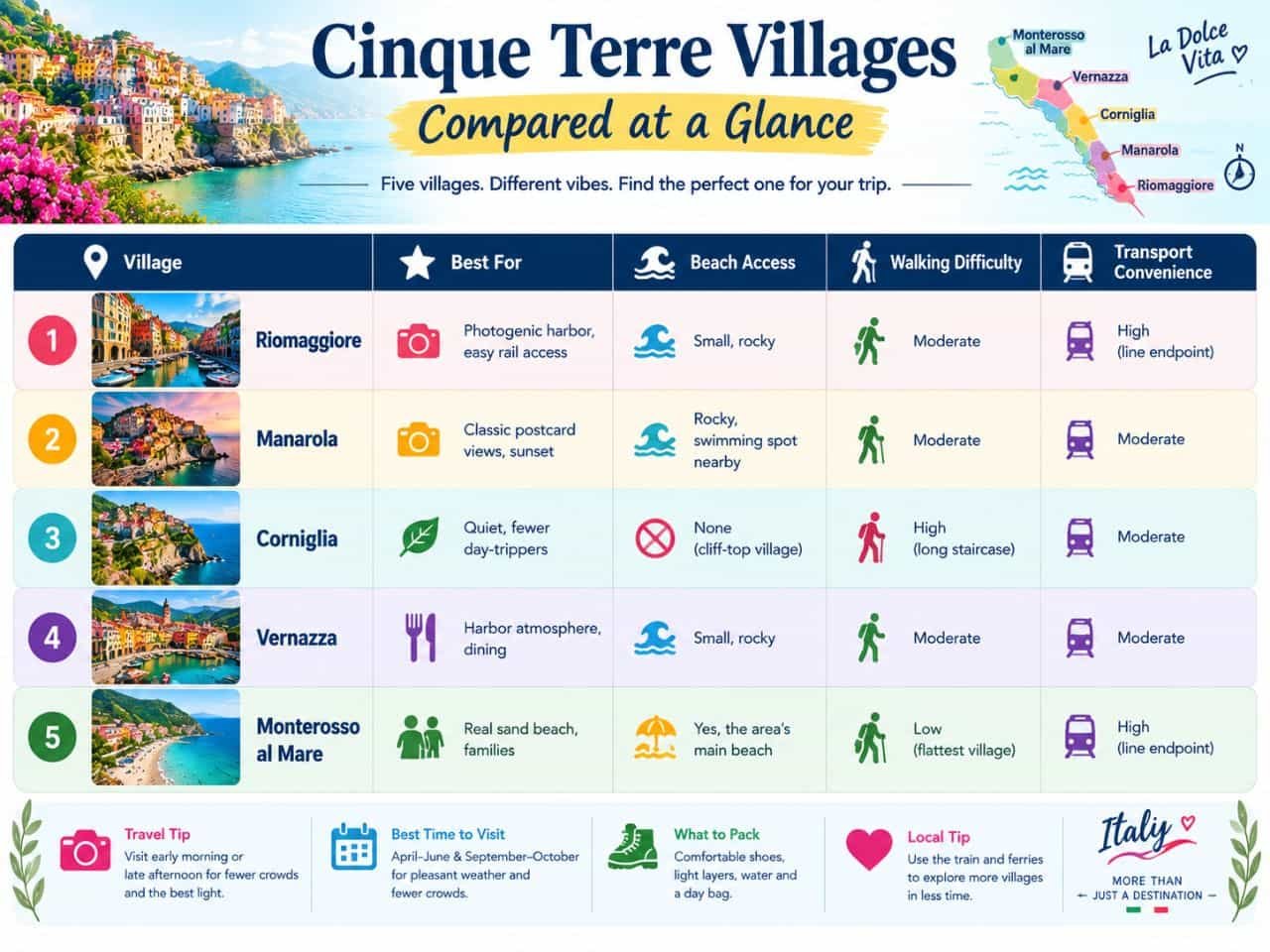
Cinque Terre Villages Compared at a Glance
| Village | Best For | Beach Access | Walking Difficulty | Transport Convenience |
|---|---|---|---|---|
| Riomaggiore | Photogenic harbor, easy rail access | Small, rocky | Moderate | High (line endpoint) |
| Manarola | Classic postcard views, sunset | Rocky, swimming spot nearby | Moderate | Moderate |
| Corniglia | Quiet, fewer day-trippers | None (cliff-top village) | High (long staircase) | Moderate |
| Vernazza | Harbor atmosphere, dining | Small, rocky | Moderate | Moderate |
| Monterosso al Mare | Real sand beach, families | Yes, the area’s main beach | Low (flattest village) | High (line endpoint) |
Save below infographic for your quick reference.
Cinque Terre Map: Where Is It?
Cinque Terre sits on Italy’s northwest coast in Liguria, between La Spezia and Levanto. Save this map before your trip — the villages look close together, but the coastline between them is steep and largely inaccessible by road, which is exactly why the train and trail network matters so much here.
How to Get There and Around
By air: The nearest airports are Pisa (PSA) and Genoa (GOA), both roughly 1.5–2 hours away by train or car.
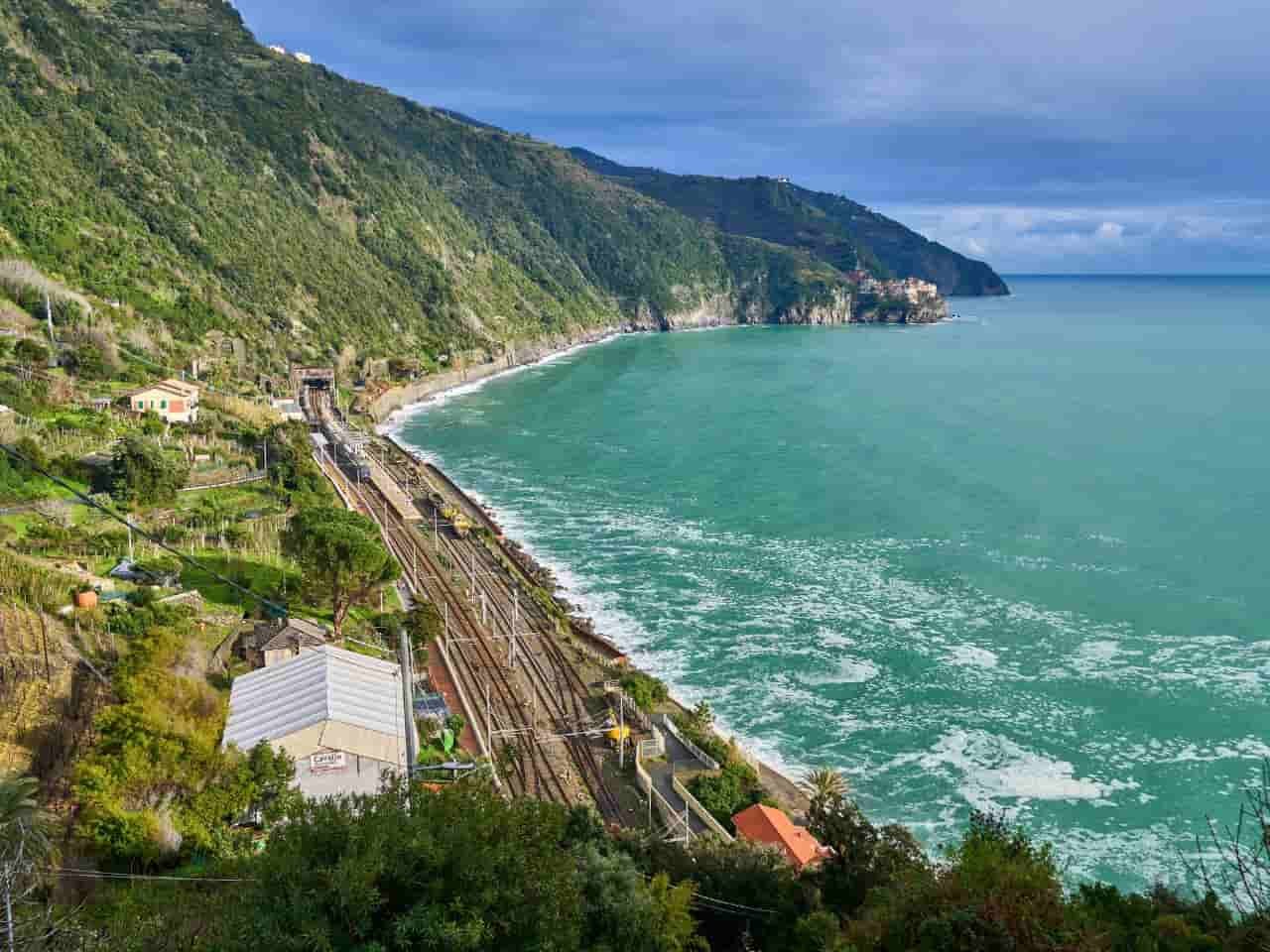
By train: La Spezia is the main rail gateway, with regular connections from Florence, Milan, and Rome via Pisa or Genoa. From La Spezia, the regional Cinque Terre Express train connects all five villages in a single line, usually running every 15–30 minutes in season.
By car: Not recommended for reaching or moving between the villages — parking is extremely limited, expensive, and located outside the village centers, with a walk (or shuttle) required to reach the actual town. Most experienced visitors park in La Spezia and use the train exclusively once inside the park.
By boat: Seasonal ferries connect most of the villages (Corniglia has no direct boat dock) and offer a genuinely different, scenic way to move between stops — a good alternative on a day when trains are crowded or trails are closed for weather.
Getting around once you’re there: The regional train is the backbone of the whole area — fast, frequent, and covered by the Cinque Terre Card. Hiking trails connect villages for those who want to walk rather than ride, though several sections require the same reservation and card system described above.
Planning takeaway: don’t rent a car specifically for Cinque Terre — between the train line and the trail network, a car adds cost and stress without adding convenience anywhere in this park.
Best Time to Visit Cinque Terre
Late April–June and September offer the strongest combination of good hiking weather, manageable crowds, and full train/trail service, ahead of July–August’s peak congestion.
July–August brings the warmest swimming weather but also the year’s heaviest crowds — expect genuinely packed trains, busy trails, and the need to book the Via dell’Amore and any popular restaurant well ahead.
Off-season (early November–mid-March) is the cheapest and quietest time to visit, with most hiking trails free and no Cinque Terre Card needed for walking — but expect some restaurants and accommodations to reduce hours or close, and rougher weather can occasionally affect train and boat schedules.
Planning takeaway: if avoiding the worst of the 2026 reservation-system crowding is your priority, shoulder season (May, June, or September) gets you most of summer’s good weather with meaningfully better slot availability on the Via dell’Amore and thinner crowds on the trails.
The Five Villages: Full Profiles
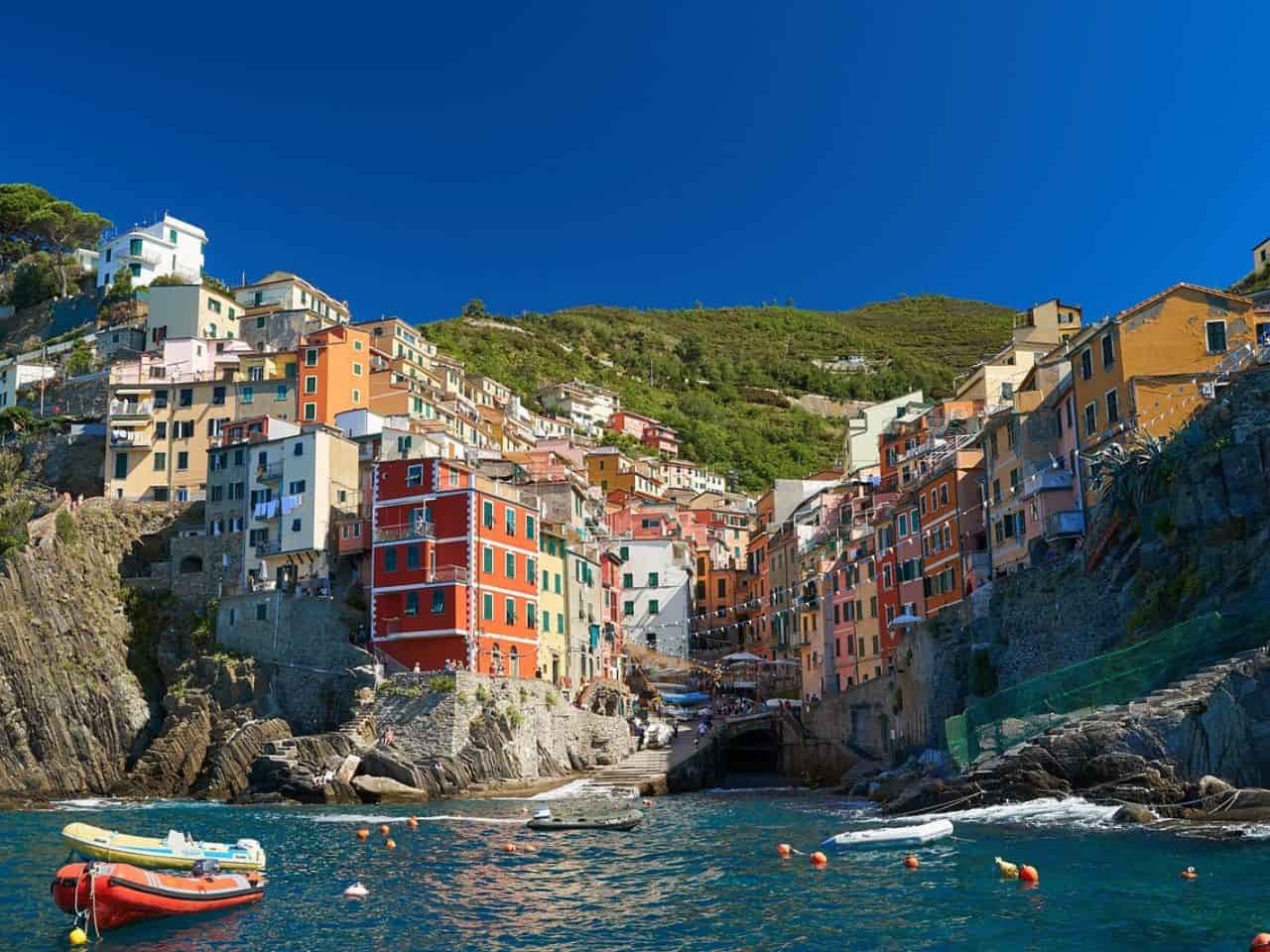
1. Riomaggiore — The Colorful Rail-Line Anchor
Why Visit
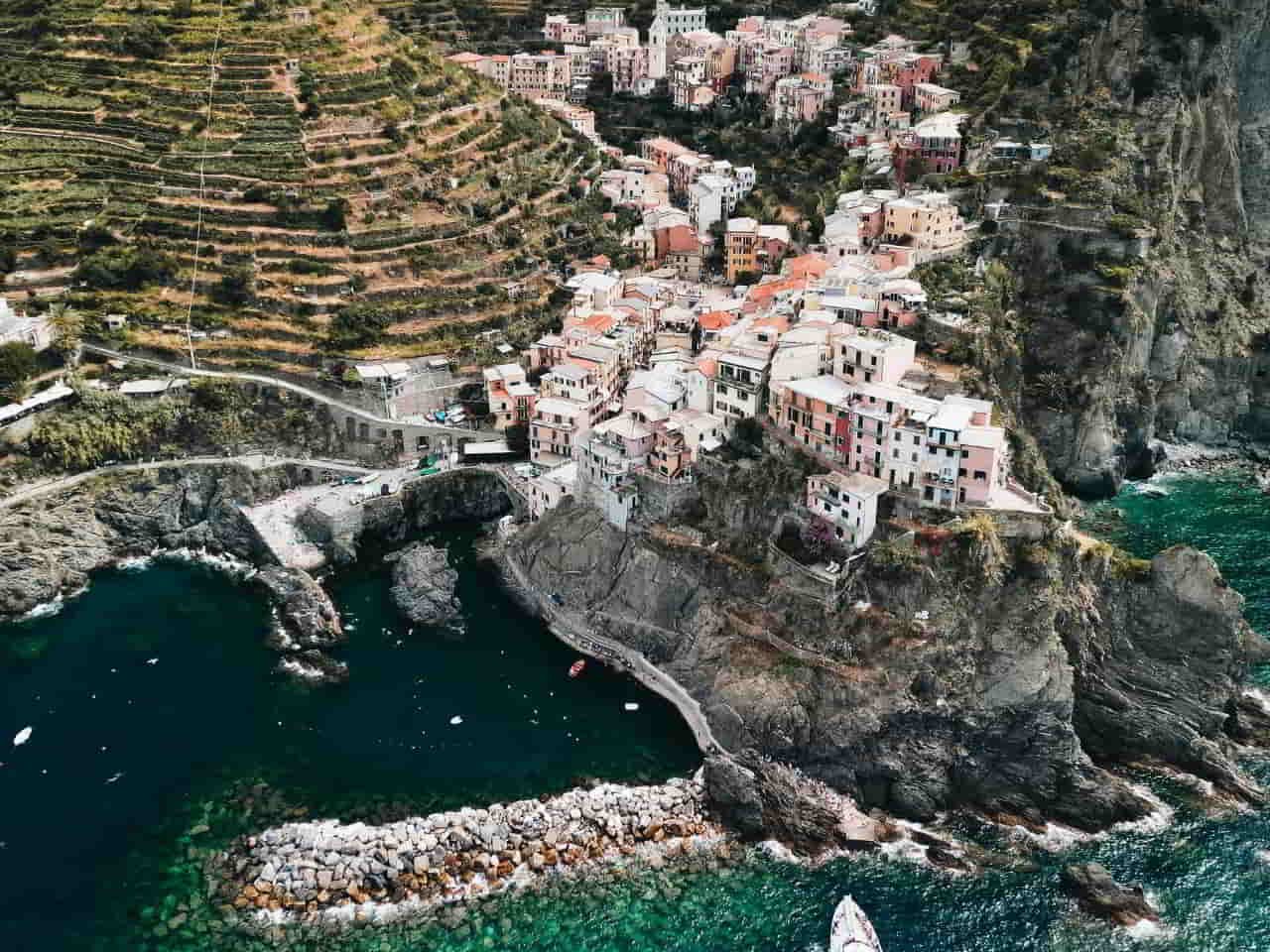
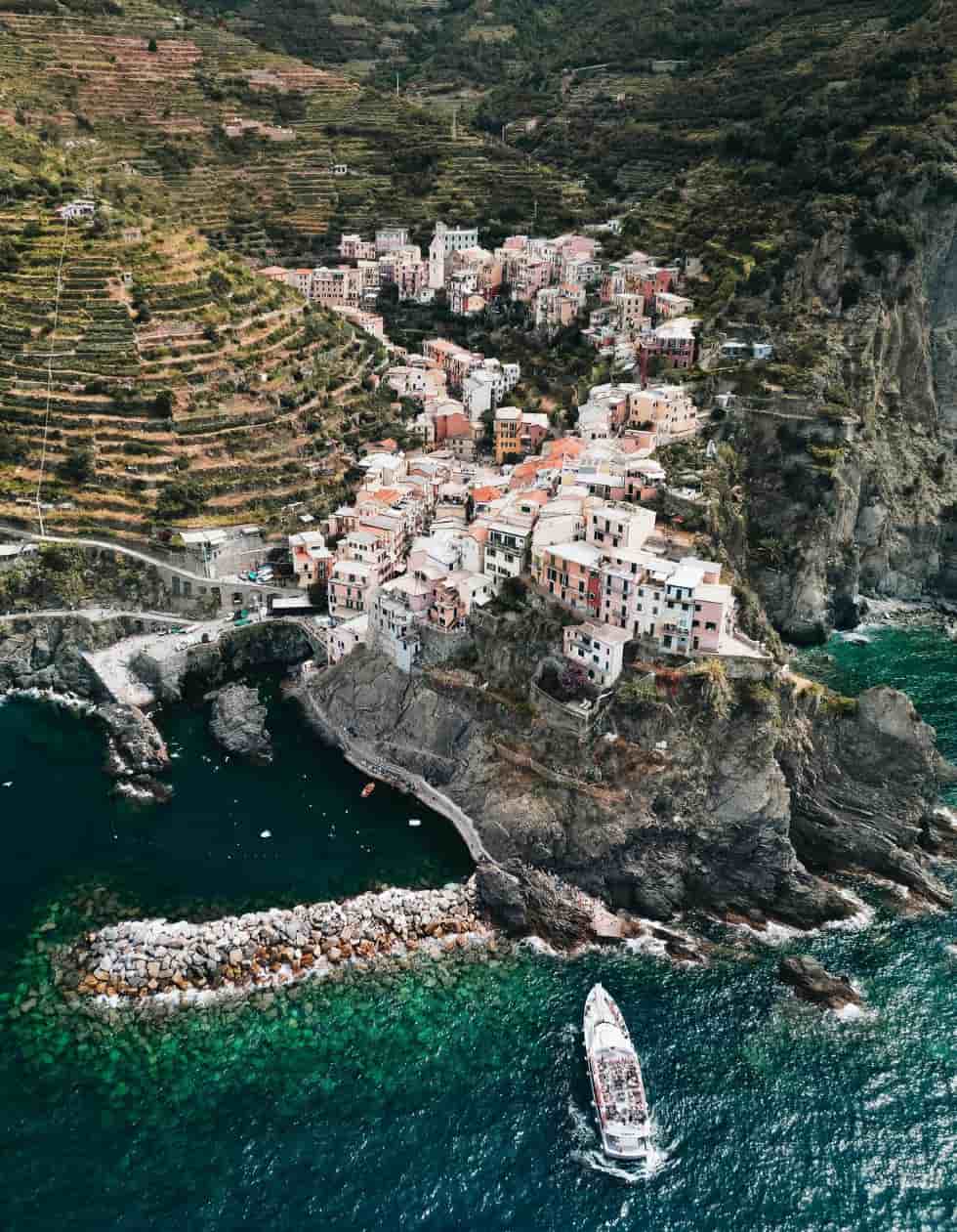
Riomaggiore’s stacked, colorful houses rising from the harbor make it one of the most recognizable single images of this coastline, and its position at one end of the rail line makes it a genuinely convenient base.
What Makes It Different
Riomaggiore is the starting point for the Via dell’Amore reservation system — entry to the trail begins here, which makes it a natural first or last stop on a village-to-village itinerary.
Things to Do
- Walk down to the small harbor for the classic view back up at the village
- Start the Via dell’Amore trail toward Manarola (reservation required)
- Explore the village’s steep main street, lined with small shops and trattorias
Best For / Avoid If
- Best for: travelers wanting an easy rail connection, first or last stop on a village-hopping itinerary.
- Avoid if: you want the area’s best beach — Riomaggiore’s harbor isn’t a swimming beach.
Practical Details
The village itself is compact, though the main street runs uphill from the train station — manageable but not flat.
Pro Tip
Book your Via dell’Amore slot for early morning if you’re staying in Riomaggiore — starting the trail before the day’s crowds build makes a genuine difference to the experience.
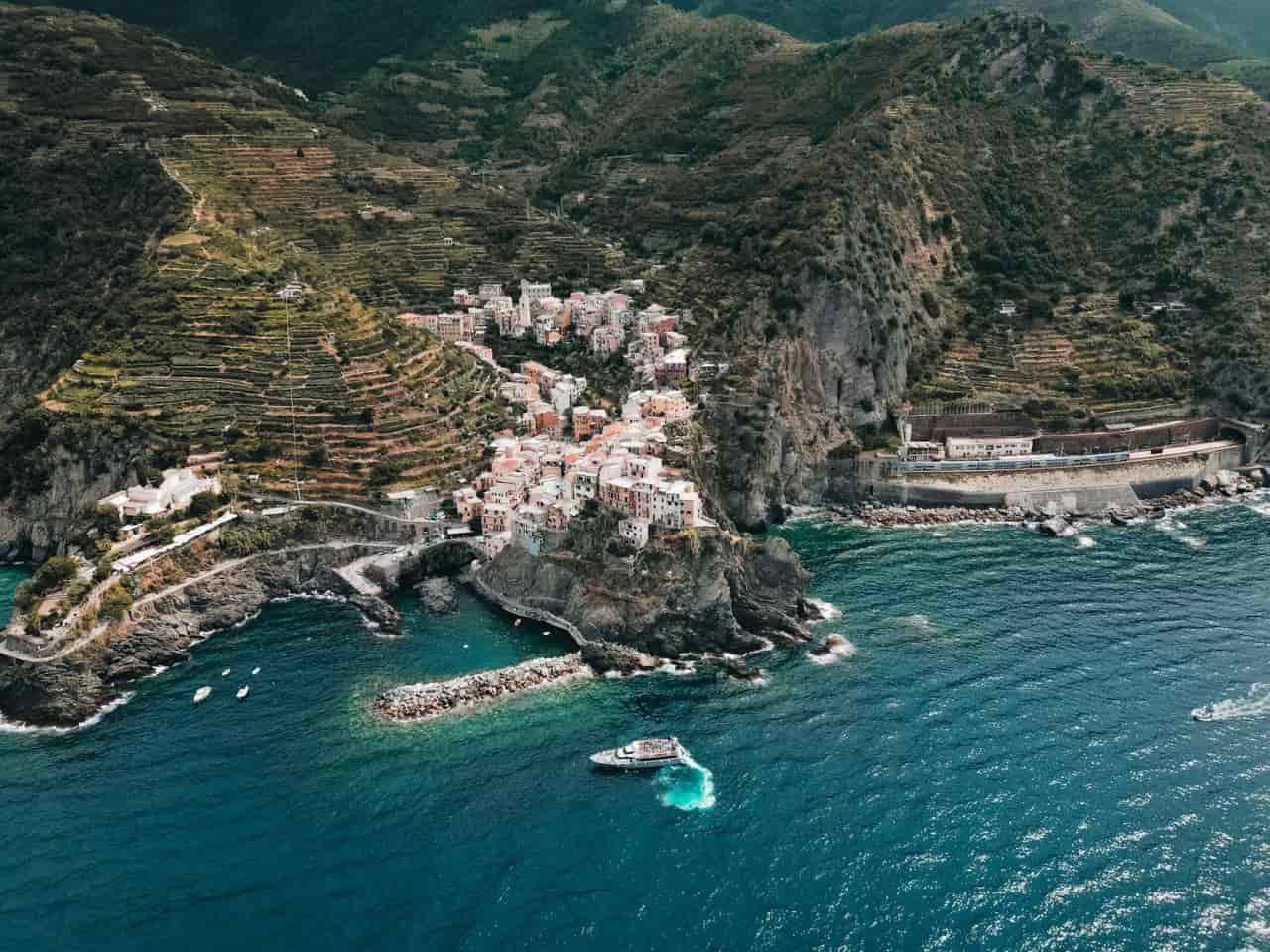
2. Manarola — The Postcard Village
Why Visit
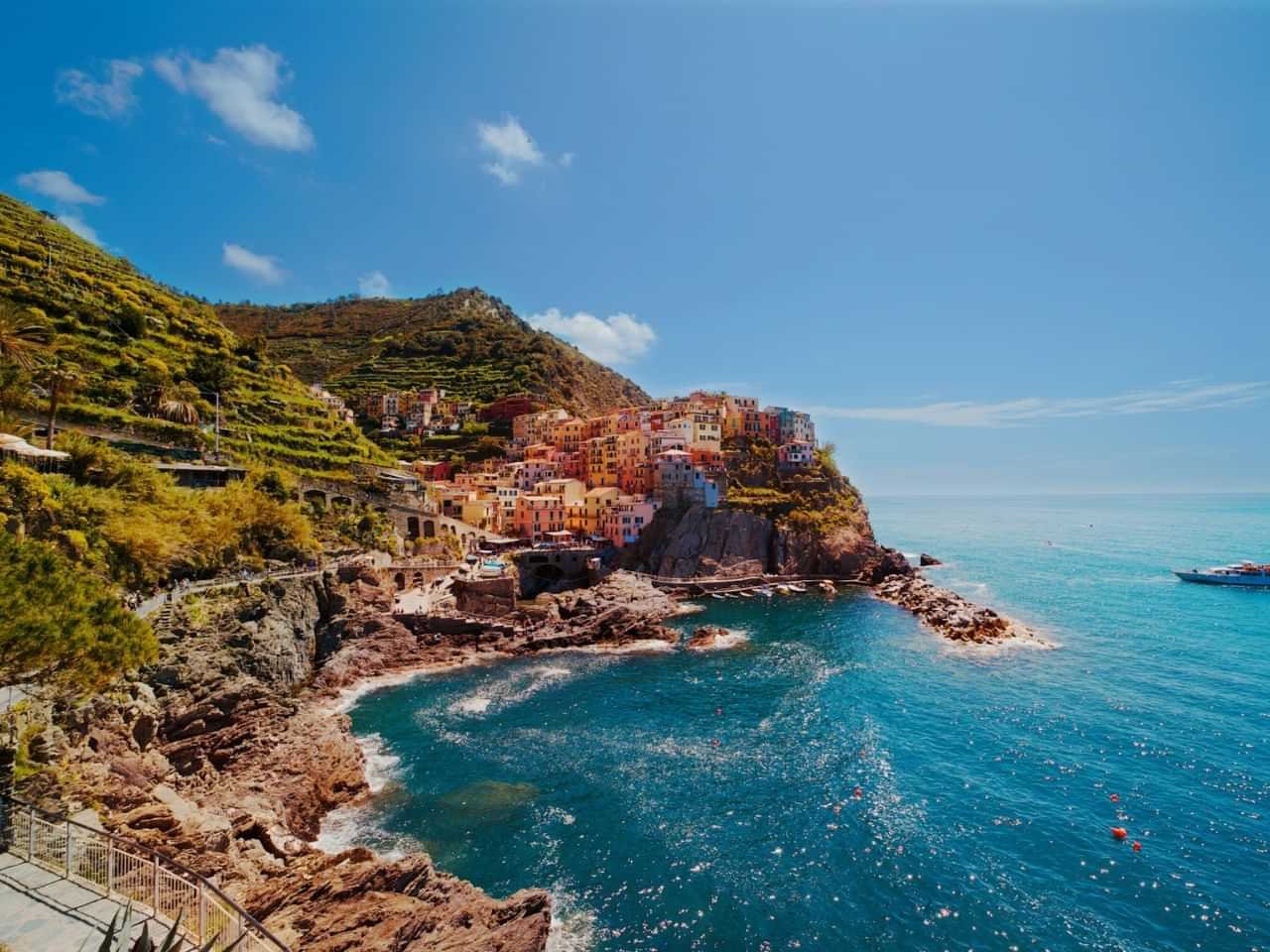
Manarola’s cluster of pastel houses above the harbor is arguably the single most photographed view in all of Cinque Terre, especially at sunset when the colors catch the evening light.
What Makes It Different
Manarola has a small, deep-water swimming spot near the harbor that works for a swim in a way the harbors of Riomaggiore and Vernazza don’t as comfortably.
Things to Do
- Watch sunset from the harbor viewpoint, the area’s most iconic photo spot
- Swim at the small harbor-adjacent swimming area
- Walk (or take the shuttle) up to the village’s small vineyard terraces above town
Best For / Avoid If
- Best for: photographers, sunset-chasers, travelers wanting the single most iconic view in the park.
- Avoid if: you want a real sand beach — this is a rocky, harbor-style swimming spot, not a beach.
Practical Details
Manarola sits mid-line on the rail route, roughly equidistant to villages on either side, making it a workable central base.
Pro Tip
Arrive at the harbor viewpoint at least 30–45 minutes before sunset in peak season — the best photo spots fill in fast once the light starts turning.
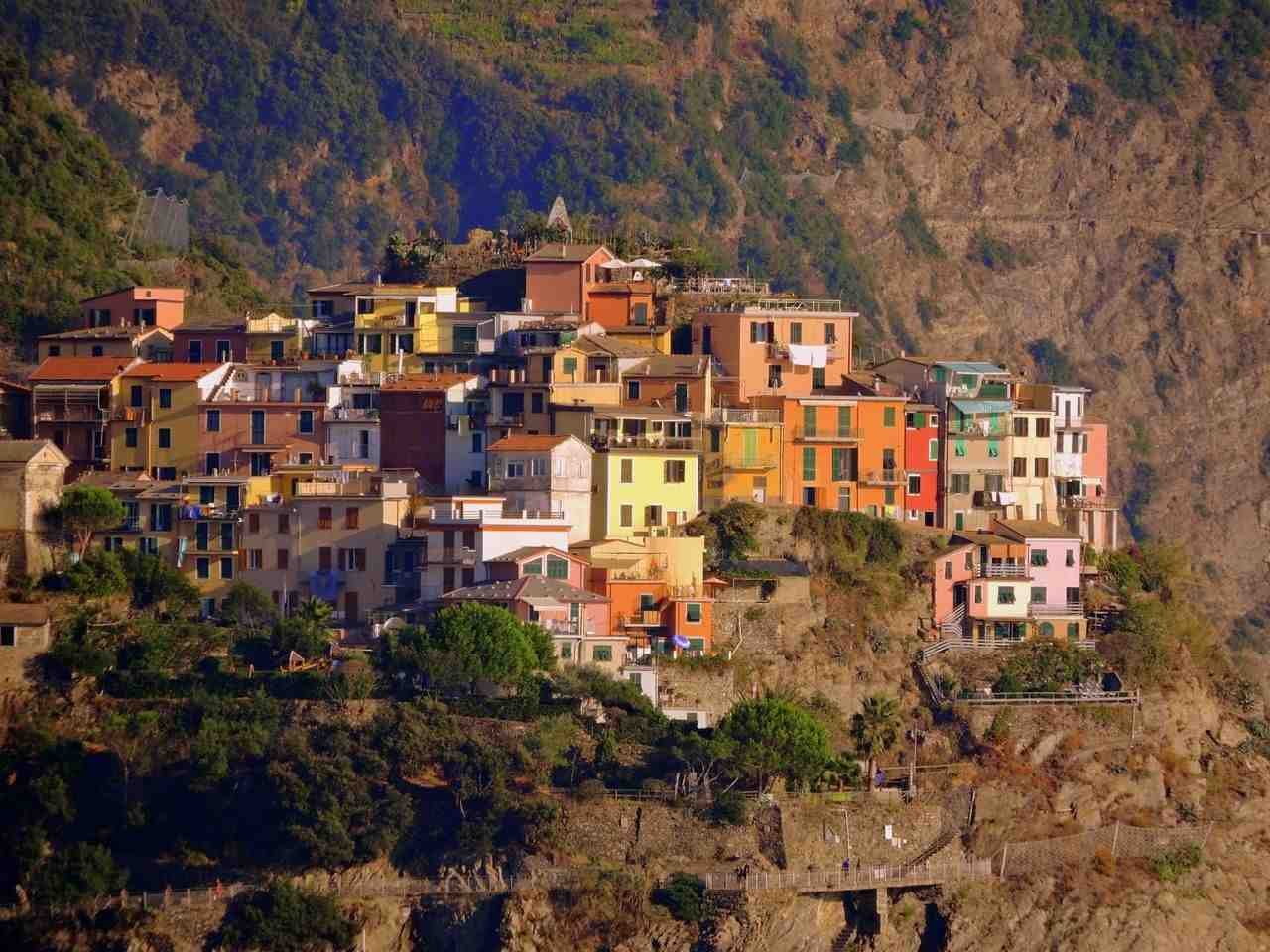
3. Corniglia — The Quiet, Elevated Village
Why Visit
Corniglia is the only one of the five villages not directly on the water, sitting instead atop a cliff — a small but real deterrent to casual visitors that keeps this village noticeably calmer than its neighbors.
What Makes It Different
Reaching the village center requires either climbing roughly 365 steps (the Lardarina staircase) or taking a shuttle bus from the train station — a genuine access filter that thins out day-trip crowds more than anywhere else in the park.
Things to Do
- Walk (or ride the shuttle) up to the village center for panoramic coastal views
- Visit Belvedere Santa Maria for one of the best unobstructed sea views in Cinque Terre
- Explore the village’s quiet streets, genuinely calmer than the other four
Best For / Avoid If
- Best for: travelers wanting the quietest base, hikers comfortable with stairs.
- Avoid if: you have mobility concerns or heavy luggage — this is the most physically demanding village to access.
Practical Details
No direct beach or harbor access — Corniglia’s appeal is elevation and quiet, not the water.
Pro Tip
Take the shuttle bus up on arrival with luggage, then use the staircase for casual trips down into the village once you’re settled — it’s a fun walk without bags, a genuine chore with them.
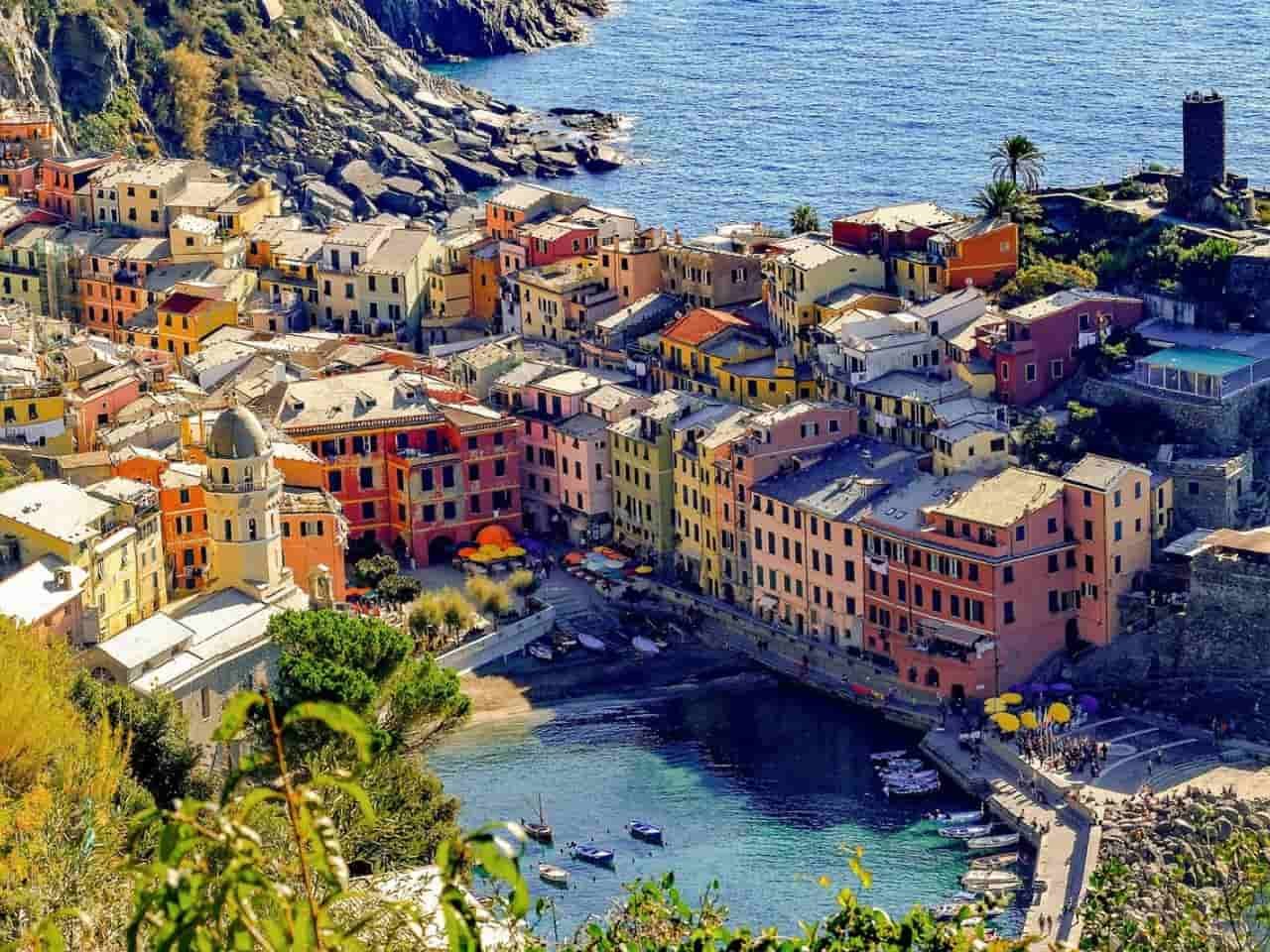
4. Vernazza — The Harbor Village With the Strongest Village Feel
Why Visit
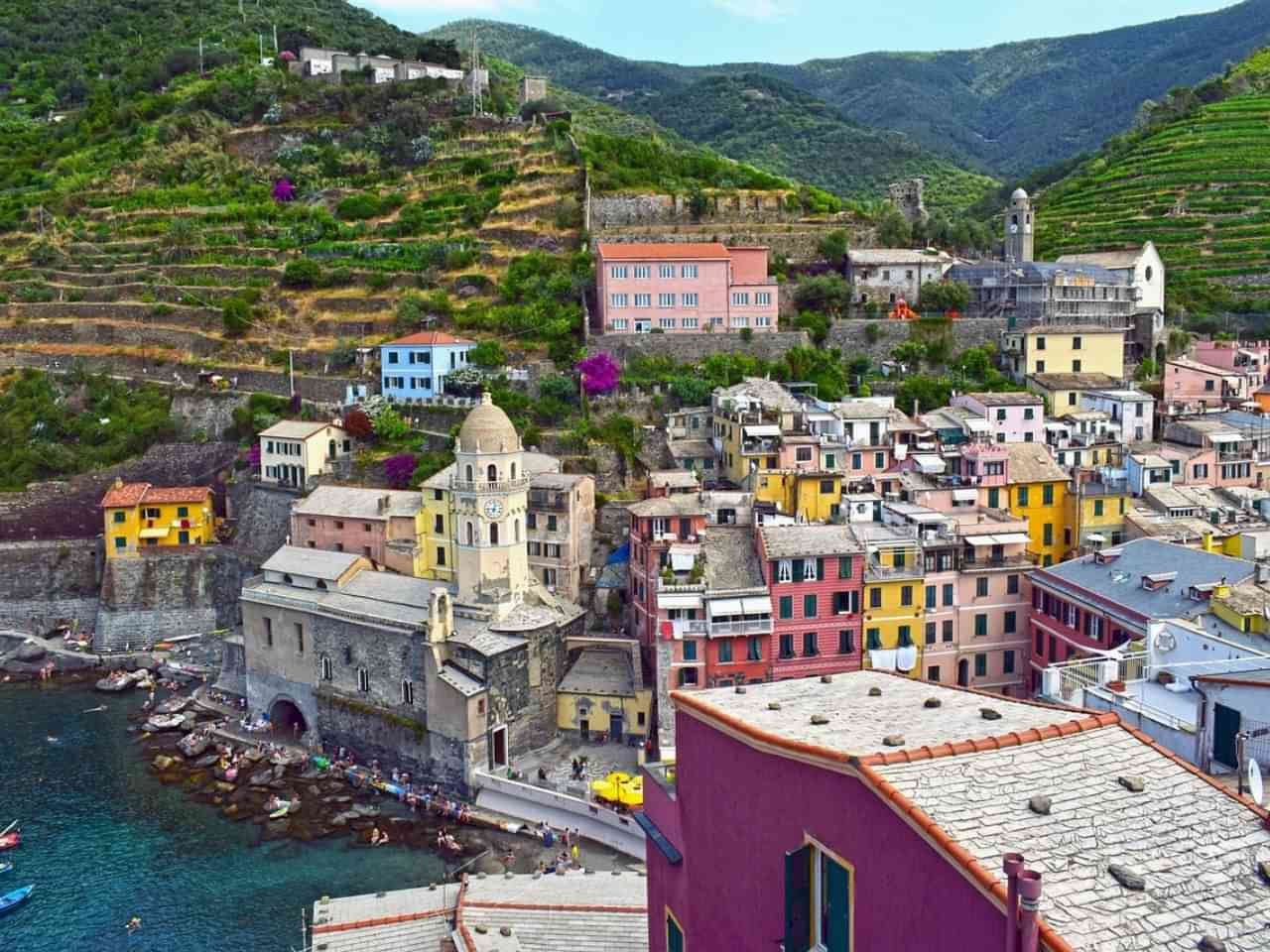
Vernazza’s natural harbor, framed by a small castle and colorful buildings, is often cited as the most complete “village” experience in Cinque Terre — genuinely functioning as a small fishing town rather than a strip of photo spots.
What Makes It Different
Vernazza’s harbor is a natural inlet rather than a man-made structure, giving it a distinct visual shape compared to the other four villages’ straighter coastlines.
Things to Do
- Climb to Doria Castle for harbor and coastal views
- Walk the harbor promenade and its small beach area
- Eat at a harbor-front trattoria — Vernazza has some of the area’s best-regarded seafood
Best For / Avoid If
- Best for: travelers wanting the most atmospheric harbor village, food-focused travelers.
- Avoid if: you want the flattest walking experience — Vernazza has real elevation changes throughout.
Practical Details
Vernazza sits mid-line on the rail route, similar to Manarola, making both villages workable central bases.
Pro Tip
Visit the harbor in the early morning before the day-trip trains arrive — Vernazza’s harbor is genuinely different, and quieter, in the first hour after sunrise.
5. Monterosso al Mare — The Beach Village
Why Visit
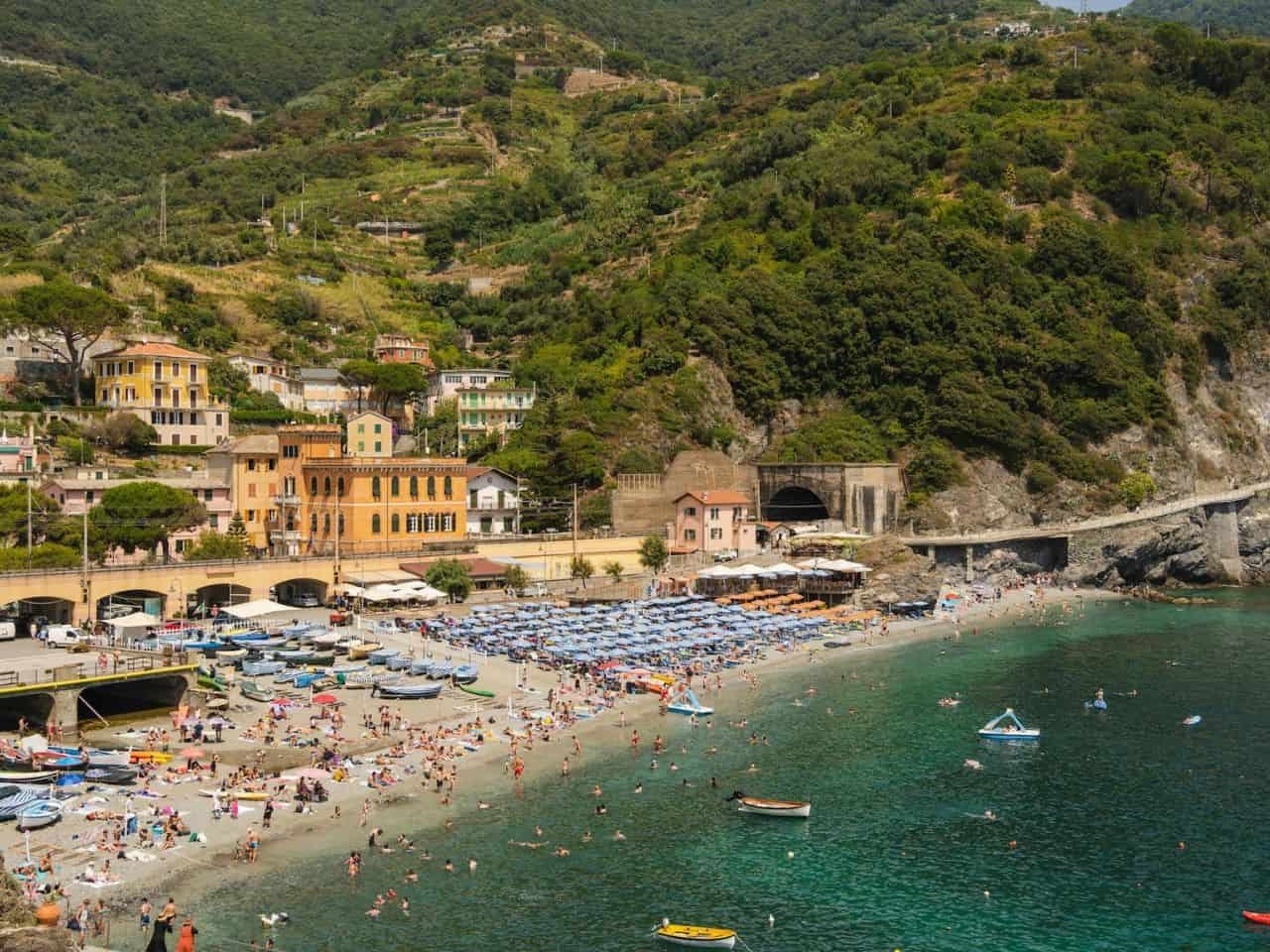
Monterosso al Mare has the only real sand beach in Cinque Terre, plus the flattest streets of any of the five villages — a genuinely different, more relaxed pace than its four cliffside neighbors.
What Makes It Different
Monterosso splits into an old town and a newer beachfront district, giving it more developed tourist infrastructure (sunbed rentals, beach clubs) than anywhere else in the park.
Things to Do
- Spend a beach day at the main sand beach, the park’s only real swimming beach of this kind
- Explore the old town’s historic center, away from the beachfront crowds
- Walk or hike toward Vernazza for coastal views along the trail
- Visit the statue of Neptune on the beach, a local landmark
Best For / Avoid If
- Best for: families, beach-focused travelers, anyone wanting the flattest, most accessible village.
- Avoid if: you want the area’s most “authentic,” least developed atmosphere — this is the most built-up of the five.
Practical Details
Monterosso sits at the opposite end of the rail line from Riomaggiore, with strong onward connections toward Levanto and the wider Ligurian coast.
Pro Tip
Base here specifically if traveling with young children — it’s the only village where a beach day doesn’t require leaving the village entirely, and the flat streets make daily logistics genuinely easier.
Hiking the Sentiero Azzurro (Blue Path)
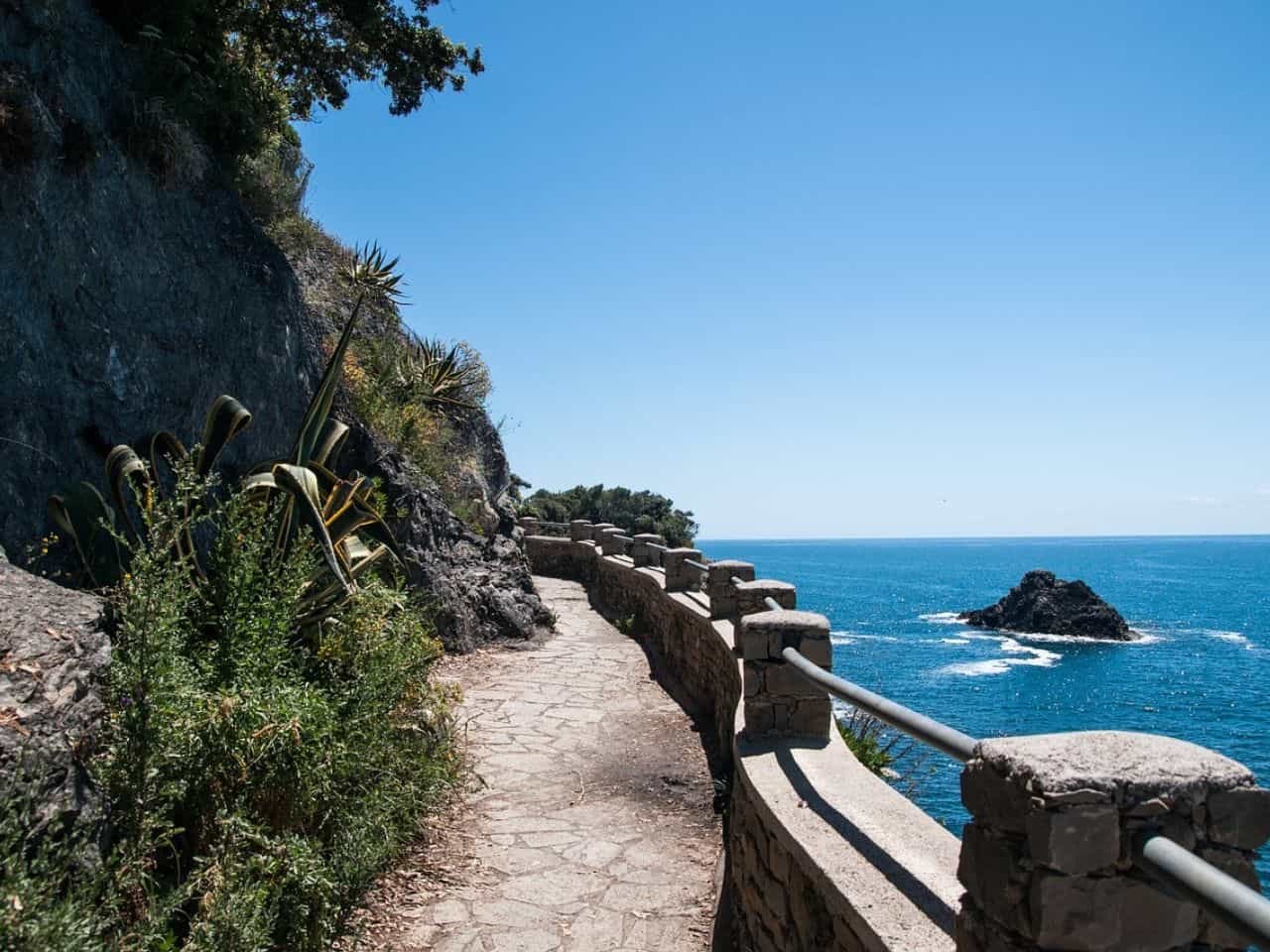
The Sentiero Azzurro connects all five villages along the coastline, though trail conditions and open sections change more frequently here than on a typical hiking route, due to landslide risk and active access management.
| Segment | Distance | Time | Difficulty |
|---|---|---|---|
| Monterosso–Vernazza | 3.5 km | ~2 hours | Moderate |
| Vernazza–Corniglia | 4 km | 1.5–2 hours | Moderate |
| Corniglia–Manarola (via Volastra) | 5 km | 2–2.5 hours | Moderate–Challenging |
| Manarola–Riomaggiore (Via dell’Amore) | 1 km | ~30 minutes | Easy (reservation required — see above) |
The Corniglia–Manarola direct coastal route has faced closures in recent years, with hikers routed via the village of Volastra as an alternative — confirm current status before planning around either option.
A Cinque Terre Trekking Card or Train Card is required for trail access on most sections, available at trailheads or online through the official park portal.
Planning takeaway: check the official park authority’s current trail status before building a hiking-focused day — sections here open and close based on landslide risk, sometimes with limited notice, unlike a fixed national park trail system.
Cinque Terre Food Guide
What to eat: Pesto alla Genovese (this region is pesto’s origin), focaccia, fresh anchovies, and seafood-forward pasta dishes reflecting the area’s Ligurian coastal cuisine.
What to drink: The terraced vineyards above the villages produce distinctive local white wines, particularly well-suited to the area’s seafood-heavy menus.
Where to eat well: Harbor-front restaurants in Vernazza and Manarola carry premium pricing for the view — walking a few streets back typically finds comparable food at a meaningfully lower cost, the same pattern that holds across most of Italy’s famous viewpoints.
Planning takeaway: try pesto here specifically rather than waiting for a stop elsewhere in Italy — this is genuinely the dish’s home region, and the difference in quality is noticeable.
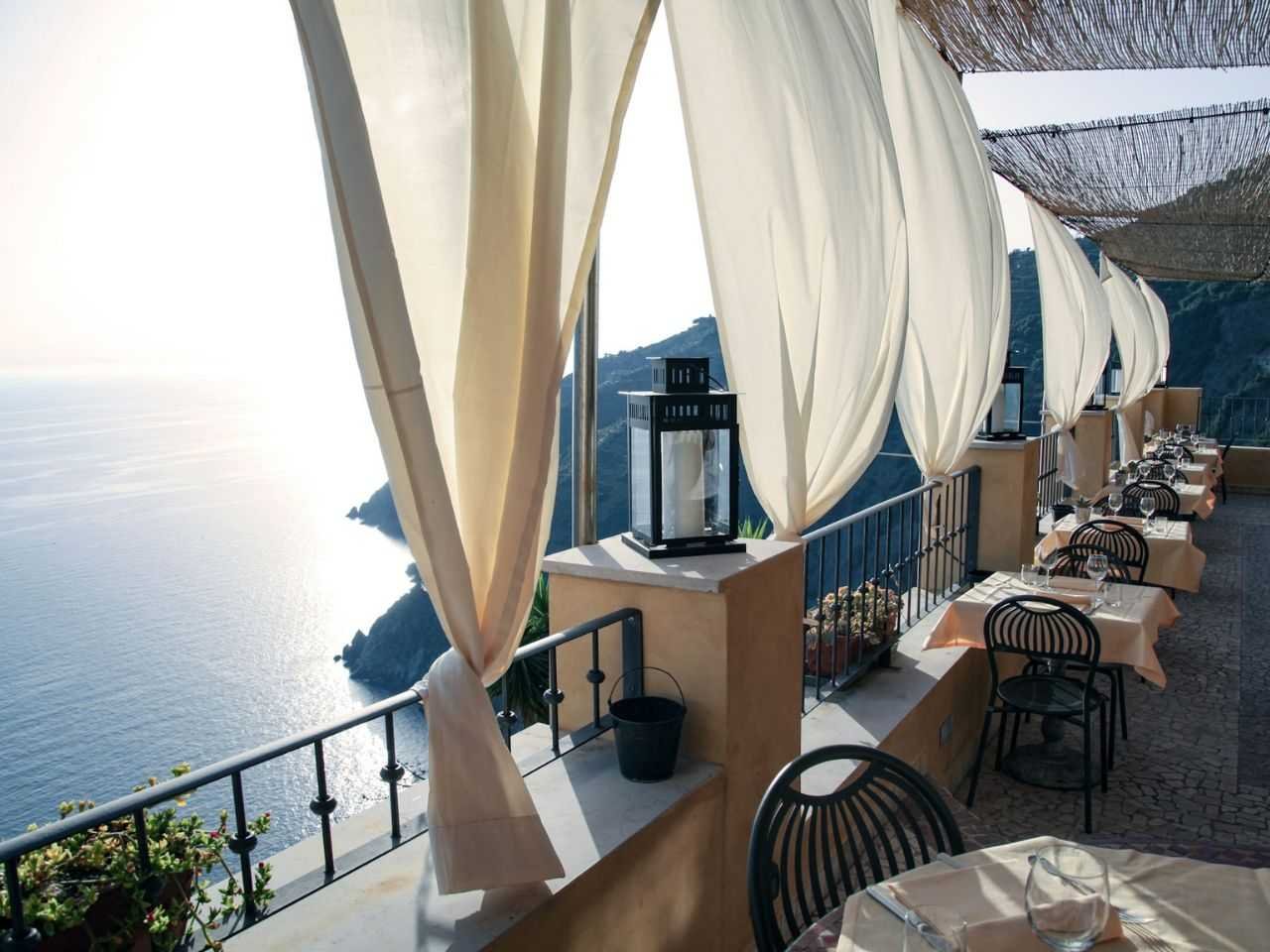
Take a deep insight of top restaurants in Cinque Terre to know where and what to eat like a local!
How Many Days Do You Need?
1 day is enough only for a rushed visit to two or three villages — workable as a day trip from Florence or Milan, but not enough to hike or properly experience any single village.
2–3 days allows a comfortable visit to all five villages, a full hike of whichever Blue Path sections are open, and at least one relaxed beach or harbor afternoon — the realistic sweet spot for most travelers.
4+ days is worth considering mainly if using Cinque Terre as a base for wider Liguria exploration (Portofino, Genoa) rather than the five villages alone, since the villages themselves are compact enough that additional days here specifically see diminishing returns.
Planning takeaway: 2–3 days covers this area properly without wasted time — Cinque Terre’s small scale means it rewards a focused visit more than an extended one.
FAQs
1. Do I need to book Via dell’Amore in advance?
Yes, from 2026 access is by mandatory reservation, capped at 200 visitors per 30-minute slot. Book through the official Cinque Terre National Park portal, especially for peak-season dates.
2. Which Cinque Terre village should I stay in?
Manarola or Vernazza for the most iconic atmosphere; Monterosso al Mare for beach access and flat streets; Riomaggiore for easy rail connections; Corniglia for the quietest option if you don’t mind stairs.
3. How many days do you need in Cinque Terre?
2–3 days covers all five villages and a proper hike without rushing. A single day works only as a limited day trip from a nearby city.
4. Do I need a car in Cinque Terre?
No — a car is actively unhelpful here. The regional train connects all five villages faster and more reliably than driving, and parking in the villages themselves is extremely limited.
5. Is Cinque Terre expensive?
Moderate to high relative to inland Italy, driven mainly by limited accommodation supply in genuinely small villages — the Cinque Terre Card itself adds a real but modest cost on top of accommodation and food.
Helpful Planning Resources
- Cinque Terre La Spezia Train Route Booking
- Cinque Terre Train Card & Cinque Terre Trekking Card
- Cinque Terre National Park — Official Card and Booking Portal — Book the Cinque Terre Card and Via dell’Amore reservations directly.
- Via dell’Amore Official Information — Current hours, pricing, and reservation rules.