Sardinia has more than 1,800 kilometers of coastline, but the beaches you’ve seen on Instagram are only a small slice of what’s out there.
Some are wide, sandy, and reachable by car in five minutes. Others sit at the bottom of a limestone gorge and require a boat, a permit, or a 90-minute hike just to touch the sand.
Choosing the right beach on this island depends on more than the color of the water. Your travel style, budget, tolerance for stairs or hikes, and whether you’re prepared to book a reservation weeks in advance can all determine whether a beach is worth the trip.
This guide ranks the best beaches in Sardinia and explains what to realistically expect from each one, including how to reach it, what swimming is like, how crowded it gets, what it costs, and who it suits best.
The goal isn’t to visit every beach. It’s to choose the beaches that fit your trip.
- What Are the Best Beaches in Sardinia?
- How to Choose the Right Sardinia Beach
- Sardinia Beaches Compared at a Glance
- Best Beaches in Sardinia Map: Where Are They Located?
- Which Beaches Are Near Each Other? (Regional Clusters)
- Do You Need to Book a Reservation? (Important Update)
- 11 Best Beaches in Sardinia
- FAQs
- Helpful Planning Resources
- My Popular Italy Travel Guides
Love this? Check out our guide to Best Time to Visit Italy AND 29 Essential Italy Travel Tips to plan your best Italian trip ever!
What Are the Best Beaches in Sardinia?
The best beaches in Sardinia include La Pelosa, Cala Goloritzé, Cala Mariolu, Cala Luna, Spiaggia Rosa on Budelli, Cala Brandinchi, Spiaggia del Principe, Poetto Beach, Is Arutas, Tuerredda, and Chia. Each offers a different experience, from Caribbean-shallow sandbanks and boat-only coves to a working city beach and a lagoon backed by flamingos.
How to Choose the Right Sardinia Beach
The best Sardinia beach depends on more than scenery. Before choosing where to spend your beach day, consider the type of beach, swimming conditions, crowds, budget, accessibility, season, and your travel style.
The key is simple: choose the beach that matches your priorities, then plan around access, permits, and seasonal conditions.
Choose Based on Beach Type
- For a Classic Sandy Beach: Choose Poetto or Chia if wide, open sand and easy parking matter more to you than seclusion. Both feel like conventional beach destinations rather than hidden coves.
- For Shallow, Turquoise Water: La Pelosa and Cala Brandinchi deliver the “Caribbean of the Mediterranean” look, with sandbars you can wade across.
- For a Boat-Only Cove: Cala Goloritzé, Cala Mariolu, and Cala Luna sit on the wild Gulf of Orosei coastline, reachable only by boat or a demanding hike.
- For a Genuinely Unusual Beach: Is Arutas is covered in quartz grains instead of sand, and Spiaggia Rosa on Budelli gets its blush color from crushed coral and shells.
Choose Based on Swimming
- For Easy, Shallow Entry: La Pelosa, Poetto, and Chia are practical choices when you want a straightforward swim without navigating rocks or a steep descent.
- For Clear Water and Snorkeling: Cala Mariolu and Tuerredda reward anyone bringing a mask, with visibility that regularly exceeds ten meters.
- For a Quick Swim Between Sightseeing: Poetto works well when you want to combine a dip with exploring Cagliari.
Choose Based on Crowds
- Busiest: La Pelosa and Cala Brandinchi fill their daily visitor caps within minutes during July and August.
- More Relaxed: Is Arutas, Tuerredda outside peak hours, and the far end of Poetto tend to offer a calmer beach experience, although none are crowd-free in high season.
Choose Based on Budget
- Lower-Cost Beach Day: Public stretches at Poetto, Is Arutas, and Chia keep costs down since most of the sand is free and unmanaged.
- Mid-Range: Paying the small entry fee at reservation-only beaches like La Pelosa (around €3.50) is a modest cost for a heavily protected beach.
- Higher Spend: Boat excursions to Cala Goloritzé, Cala Mariolu, or Cala Luna, plus beach-club days at Spiaggia del Principe, add up quickly in July and August.
Choose Based on Accessibility
- Easiest Access: Poetto, Chia, and La Pelosa are directly reachable by car or bus with minimal walking.
- Moderate Access: Tuerredda and Cala Brandinchi involve short walks from parking areas and, at peak times, shuttle buses.
- Difficult Access: Cala Goloritzé, Cala Mariolu, and Cala Luna require a boat transfer or a multi-hour hike over uneven limestone terrain.
Choose Based on Season
- May–June: One of the best periods for combining swimming, hiking to remote coves, and manageable crowds, before most reservation systems hit capacity.
- July–August: Best for warm-water swimming and full summer atmosphere, but expect sold-out reservations, the highest prices, and the busiest beach clubs.
- September: Still warm enough for swimming, with noticeably thinner crowds than peak summer.
- October: Coastal walks and swimming on warm days remain possible, but reservation systems, ferries, and beach-club services wind down mid-month.
- November–April: Not a beach holiday season. Rough seas, closed seasonal services, and cooler temperatures make this a better window for hiking and sightseeing than swimming.
Choose Based on Your Travel Style
If you’re short on time, here is a quick guide:
- Best Overall: La Pelosa
- Best for a Boat Day: Cala Goloritzé
- Best for Snorkeling: Cala Mariolu
- Best for Sea Caves: Cala Luna
- Best for a Unique Sight: Spiaggia Rosa, Budelli
- Best for Families: Cala Brandinchi
- Best for Luxury: Spiaggia del Principe
- Best for a City Beach: Poetto
- Best for Something Different: Is Arutas
- Best for Clear Water + An Islet View: Tuerredda
- Best for Dunes + Flamingos: Chia
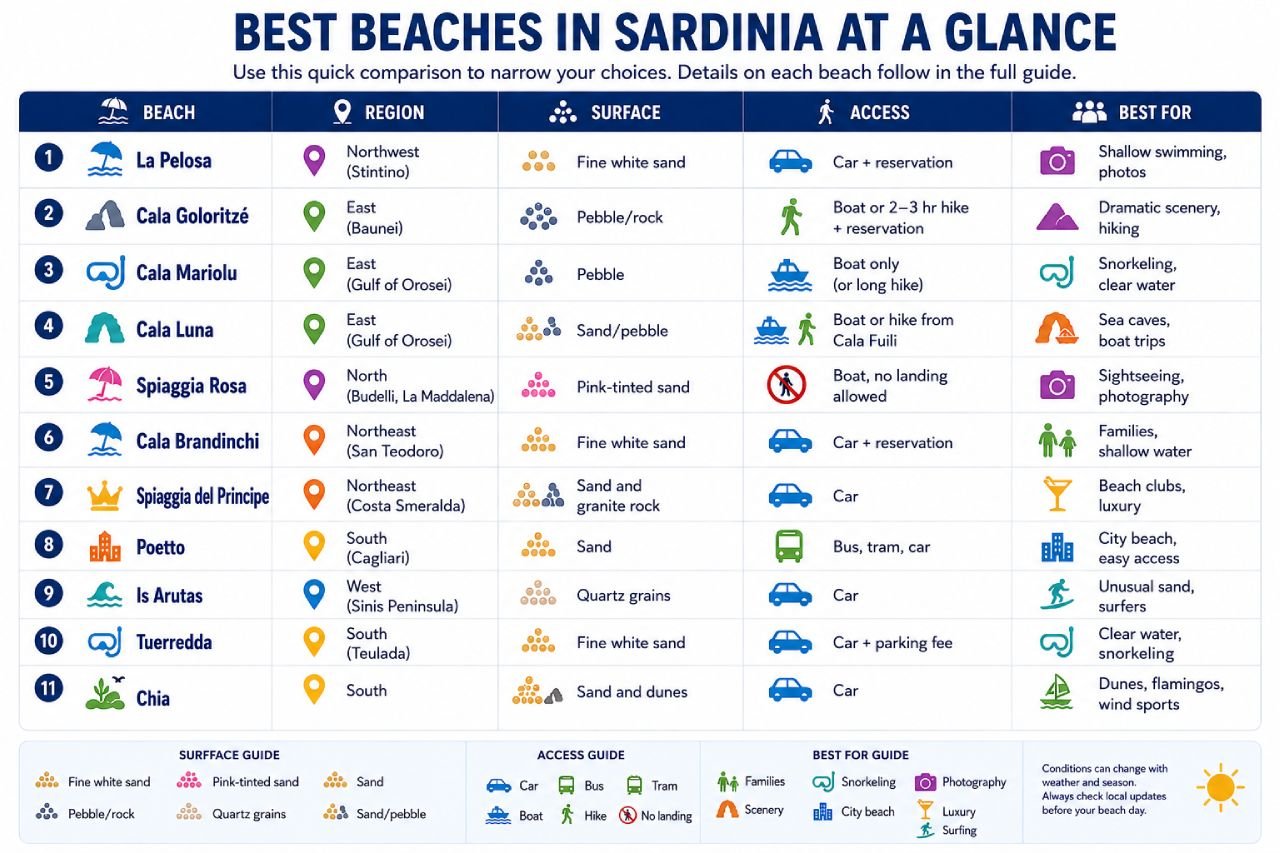
Sardinia Beaches Compared at a Glance
| Sr. No. | Beach | Region | Surface | Access | Best For |
|---|---|---|---|---|---|
| 1 | La Pelosa | Northwest (Stintino) | Fine white sand | Car + reservation | Shallow swimming, photos |
| 2 | Cala Goloritzé | East (Baunei) | Pebble/rock | Boat or 2–3 hr hike + reservation | Dramatic scenery, hiking |
| 3 | Cala Mariolu | East (Gulf of Orosei) | Pebble | Boat only (or long hike) | Snorkeling, clear water |
| 4 | Cala Luna | East (Gulf of Orosei) | Sand/pebble | Boat or hike from Cala Fuili | Sea caves, boat trips |
| 5 | Spiaggia Rosa | North (Budelli, La Maddalena) | Pink-tinted sand | Boat, no landing allowed | Sightseeing, photography |
| 6 | Cala Brandinchi | Northeast (San Teodoro) | Fine white sand | Car + reservation | Families, shallow water |
| 7 | Spiaggia del Principe | Northeast (Costa Smeralda) | Sand and granite rock | Car | Beach clubs, luxury |
| 8 | Poetto | South (Cagliari) | Sand | Bus, tram, car | City beach, easy access |
| 9 | Is Arutas | West (Sinis Peninsula) | Quartz grains | Car | Unusual sand, surfers |
| 10 | Tuerredda | South (Teulada) | Fine white sand | Car + parking fee | Clear water, snorkeling |
| 11 | Chia | South | Sand and dunes | Car | Dunes, flamingos, wind sports |
Save the below infographic for your quick reference.
Best Beaches in Sardinia Map: Where Are They Located?
Take This Map With You! Hit the arrow (↖) in the top-left corner to jump to the full list of each beach location to plan your travel route.
Which Beaches Are Near Each Other? (Regional Clusters)
Sardinia is bigger than it looks on a map, and its best beaches are spread across different parts of the island that don’t connect quickly. Trying to zigzag between them can waste entire days on the road. Instead, plan around clusters — group your beach days by region and base yourself accordingly.
- Northwest Cluster (base: Alghero or Stintino): La Pelosa is the anchor here, reachable in under an hour from Alghero. Pair it with Alghero’s old town and the Neptune’s Grotto sea caves rather than trying to reach the northeast in the same trip.
- North / La Maddalena Cluster (base: Palau): Spiaggia Rosa on Budelli is part of the La Maddalena Archipelago and has restricted access, so plan to experience it as part of an organized archipelago excursion rather than as a conventional beach day. Build the day around the boat trip and surrounding islands instead of trying to combine it with distant mainland beaches.
- Northeast Cluster (base: San Teodoro, Olbia, or the Costa Smeralda): Cala Brandinchi and Spiaggia del Principe are relatively easy to combine on a northeast Sardinia itinerary, especially when you’re already based around San Teodoro, Olbia, or the Costa Smeralda.
- East / Gulf of Orosei Cluster (base: Cala Gonone, Baunei, or Santa Maria Navarrese): Cala Goloritzé, Cala Mariolu, and Cala Luna are all part of the spectacular Gulf of Orosei coastline. Boat excursions can make it possible to see several beaches and coves in one day, although Cala Goloritzé involves a separate land-access route for visitors hiking to it.
- South Cluster (base: Cagliari or Pula): Poetto, Tuerredda, and Chia are all within easy reach of southern Sardinia’s main bases, making this the most flexible cluster for day trips without committing your entire itinerary to one beach.
- West Cluster (base: Oristano or the Sinis Peninsula): Is Arutas sits somewhat apart from Sardinia’s other major beach clusters. It’s a worthwhile stop if you’re traveling through western Sardinia, but a poor fit to combine with the Costa Smeralda or Gulf of Orosei on the same day.
The practical takeaway: pick two, maybe three, clusters for a one-week trip rather than trying to cover all six. Sardinia rewards slower, region-based travel; trying to see La Pelosa and Cala Goloritzé on the same day, for example, means spending hours crossing the island instead of enjoying the beaches.
Do You Need to Book a Reservation? (Important Update)
Several of Sardinia’s most photographed beaches now operate capped, reservation-only access during the summer season, a change driven by erosion and overtourism concerns.
- La Pelosa requires a reservation between May 15 and October 15, capped at roughly 1,500 visitors a day, with a €3.50 per-person fee and a QR code shown at entry. Check the official La Pelosa reservation portal before visiting.
- Cala Goloritzé requires advance booking for land access through the Heart of Sardinia system, with access limited to 250 people at a time. Check the official Cala Goloritzè booking portal before planning your hike.
- Cala Brandinchi and the neighboring Lu Impostu require reservations from June 1 through September 30. Bookings for the second following day open at 6 p.m. Check the official San Teodoro beach reservation portal for your dates.
Before you plan a beach day around any of these three, check the current booking portal for your travel dates — allocations for peak summer weeks can sell out days or weeks in advance.
11 Best Beaches in Sardinia
1. La Pelosa — Sardinia’s Most Iconic Sandbar
Why It Ranks
There’s a reason La Pelosa tops nearly every “best beaches in Sardinia” list — and it’s not just the color of the water.
It’s the postcard image people have of Sardinia before they’ve even booked the flight.
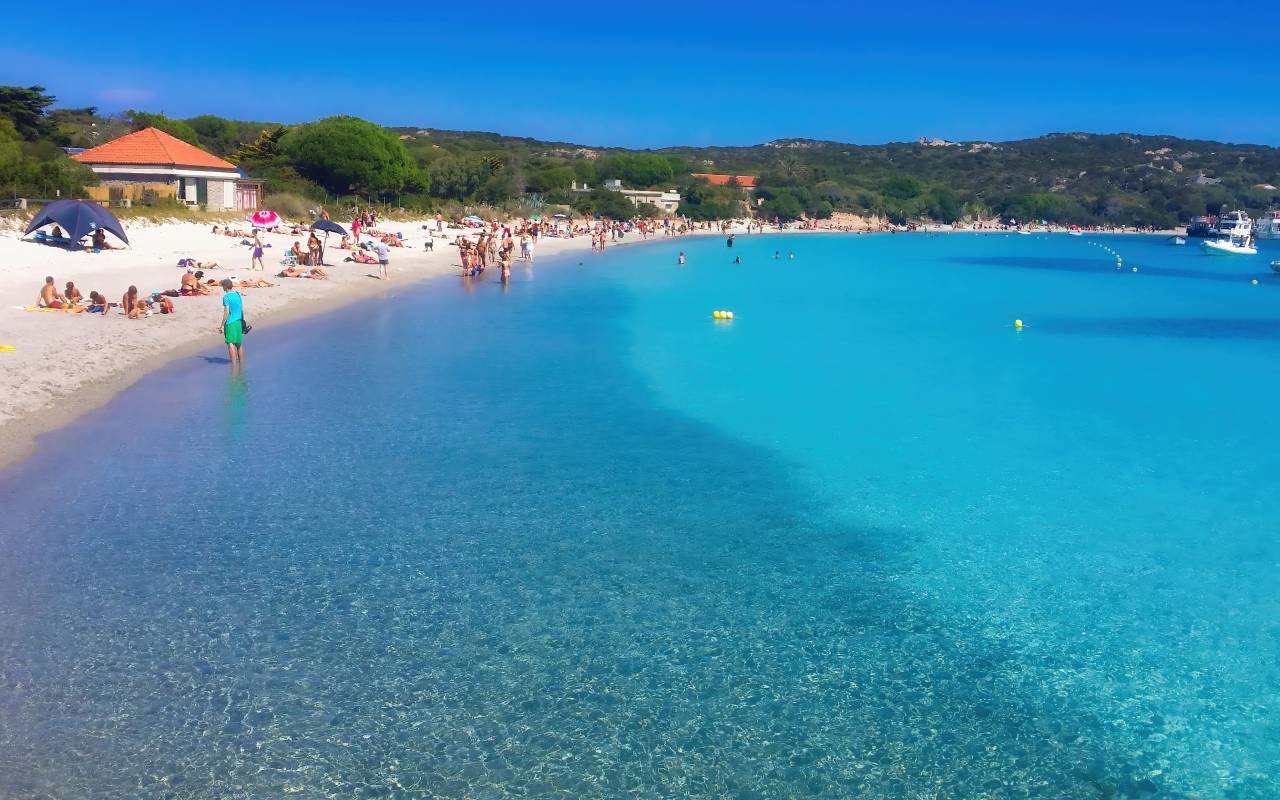
Shallow, turquoise water stretches out toward a 16th-century watchtower and the island of Piana, and the sand stays fine and pale even as the crowds build. This beach is worth the planning effort for first-time visitors who want to see what all the hype is actually about.
What to Expect
La Pelosa sits at the northern tip of the Stintino peninsula, sheltered inside the Gulf of Asinara.
The water is famously shallow, often knee-deep for dozens of meters out, which is part of what gives it that Caribbean look. Wind can pick up strongly in the afternoon, so umbrellas are difficult to keep upright past midday.
Things to Do at La Pelosa
- Swim out toward Isola Piana — The shallow sandbar makes wading much farther than usual possible.
- Photograph the Torre della Pelosa — The 16th-century tower is the beach’s defining backdrop.
- Visit early or after 6 PM — Reservations aren’t required outside the 8 AM–6 PM window, and the light is softer.
- Base yourself in nearby Stintino — A short walk or drive beats a long return trip after a full beach day.
Best For
First-time Sardinia visitors, families with young children, photographers, and travelers who don’t mind planning a reservation in advance for one of the island’s most protected beaches.
Avoid If
Choose another beach if you want spontaneous, walk-up access, a large sandy footprint with plenty of personal space, or shelter from wind.
Budget Reality
The reservation fee itself is modest at €3.50 per person, with children under 12 exempt. The bigger cost is usually paid parking, which runs a few euros an hour and fills up fast in July and August.
#500 reservation slots are released with no lead-time limit, while another batch opens exactly 48 hours before your visit — Officially pre- book the moment a window opens, if you’re traveling in peak season.
Practical Beach Details
- Surface: Fine white sand.
- Beach setup: Fully public, no beach clubs on the main stretch.
- Access rules: Reservation required May 15–Oct 15; a mat is required under any towel placed on the sand; removing sand or shells is fined.
- Shade: Minimal; bring your own umbrella and expect wind to challenge it.
- Families: One of the easier beaches for young children thanks to the shallow water.
- Mobility: Flat, sandy access from the parking area.
How to Get There
La Pelosa is at the northwestern tip of Sardinia, near Stintino.
- From Alghero-Fertilia Airport (AHO): About 32 miles (roughly 45 minutes) by car, heading north on the SP42 toward Porto Torres, then the SP34 toward Stintino. This is the nearest airport and the most common starting point.
- From Alghero town: Around 35 miles and 50 minutes via the same SP42/SP34 route.
- From Olbia or the Costa Smeralda: Roughly 2.5 hours (150–175 km) via the SS597, making La Pelosa a long day trip rather than a quick add-on if you’re based in the northeast.
- By bus: ARST regional buses connect Alghero and Porto Torres to Stintino, but the journey involves a transfer and takes upwards of 2–2.5 hours — a car is by far the more efficient option here.
- Where to base yourself: Alghero offers more restaurants, nightlife, and accommodation choice; Stintino itself is quieter but cuts the drive to a few minutes.
Pro Tip
Book your reservation the moment your travel dates are confirmed, especially for July or August. If you miss the window, arrive after 6 PM instead — access is unrestricted and the crowds thin out considerably.
2. Cala Goloritzé — A Bucket-List Hike to a UNESCO-Protected Cove
Why It Ranks
Cala Goloritzé isn’t just one of the best beaches in Sardinia — it’s the kind of place that reshapes what people expect from a “beach.”
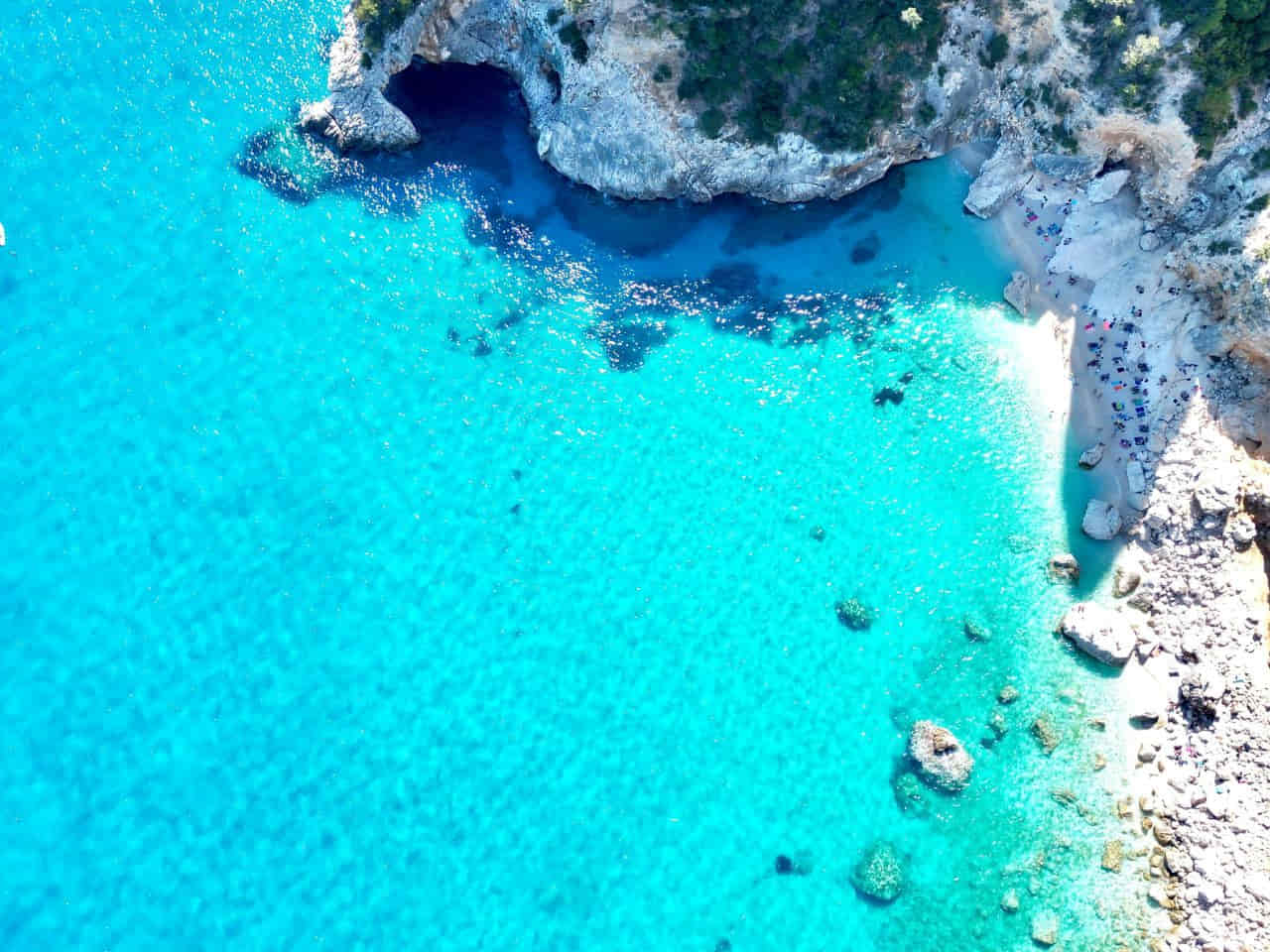
Set on the wild Baunei coastline within the Gulf of Orosei, this UNESCO-protected cove is reachable only by boat or a scenic, sweaty hike through limestone hills and Mediterranean scrub. The payoff is piercing blue water beneath a dramatic limestone arch and the Aguglia peak rising straight out of the sea.
What to Expect
The beach itself is small — pebbles rather than sand — and framed by white cliffs that make the water look almost lit from within.
Because the cove is a protected natural monument that closes by 5pm, daily visitor numbers are capped up to 250 and an online reservation (approx. €6 entry fee) is required. Facilities are minimal to nonexistent, so this is a beach you visit for the scenery and a swim, not for a full day of lounging.
Drone flights are restricted within the protected area, so leave it packed away rather than risk a fine.
Things to Do at Cala Goloritzé
- Hike in via the Baunei Plateau — The roughly 2–3 hour round-trip hike is part of the experience, not just a means to an end.
- Arrive by boat from Cala Gonone or Santa Maria Navarrese — A more comfortable alternative if you’d rather skip the descent.
- Swim beneath the limestone arch — The clearest water sits closest to the rock formations.
- Bring water and proper shoes — There is little to no shade or services along the trail.
Best For
Hikers, photographers, confident swimmers, and travelers who value a dramatic natural setting over comfort or convenience.
Avoid If
Skip Goloritzé if you have limited mobility, want shade and facilities, or are traveling with small children who can’t manage a rocky trail or boat transfer.
Budget Reality
The reservation itself carries a modest fee, but most of your cost will come from either the hike (free, aside from any Baunei Plateau access fee) or a boat excursion, which typically bundles Goloritzé with nearby coves like Cala Mariolu.
Practical Beach Details
- Beach type: Small pebble cove enclosed by cliffs.
- Beach setup: No beach clubs; entirely natural and undeveloped.
- Facilities: None on the beach itself; bring everything you need.
- Access rules: Reservation required through the Baunei municipality during the main season, with a daily cap.
- Mobility: Not suitable for wheelchairs or anyone who struggles with uneven, rocky terrain.
How to Get There
- From Olbia: Roughly 1.5 — 2 hours by car to reach the Baunei Plateau trailhead (Golgo), traveling south on the SS125 through Dorgali territory — allow extra time, as the final stretch is a winding mountain road.
- From Cala Gonone: About 30–40 minutes by car to the Golgo trailhead, making Cala Gonone the more practical base for hikers.
- By hike: The main trailhead starts near the Baunei Plateau (Golgo), descending roughly 2–3 hours round trip over rocky terrain — proper hiking shoes are essential, not optional. Book trail access via official site of Excursion to Cala Goloritzé.
- By boat: Regular excursions run from Cala Gonone, Santa Maria Navarrese, and Arbatax during the summer season, often combined with Cala Mariolu. Boat transfer time from Cala Gonone is roughly 30–45 minutes each way.
Pro Tip
Book your access reservation before you book anything else for this beach day — arriving without one, whether hiking or by boat, can mean being turned away entirely.
3. Cala Mariolu — Clear Water for Snorkelers
Why It Ranks
Cala Mariolu, sometimes translated as “seal beach,” is considered by many locals to be the clearest water on the entire island.
The name Mariolu (“thief” in Sardinian) comes from local fishermen’s tales. Legend says cheeky monk seals once stole their catch right from the nets! Today, the seals are gone, but the wild, untouched vibe remains.
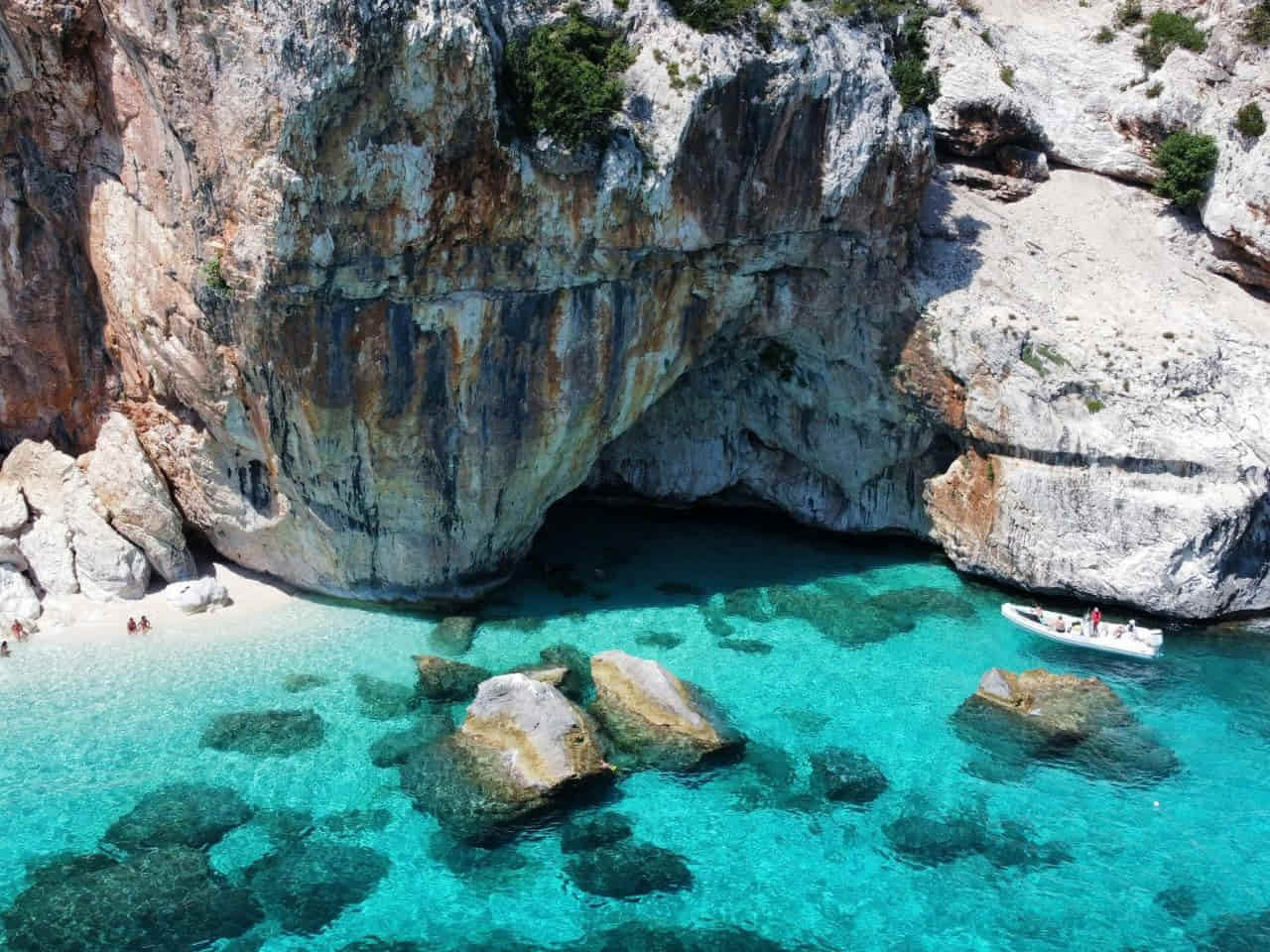
Its combination of pale pebbles, layered turquoise-to-cobalt water, and a genuinely remote feel makes it one of the standout stops on any Gulf of Orosei boat trip.
What to Expect
The beach is pebbly, not sandy, and the water deepens quickly, which is part of what makes it so clear.
Like its neighbors along this stretch of coast, Cala Mariolu has essentially no facilities. Most visitors arrive as a stop on a longer boat itinerary rather than a standalone destination.
Things to Do at Cala Mariolu
- Snorkel along the rocky edges — The clarity here is some of the best on the island.
- Combine it with Cala Goloritzé — Most boat tours pair the two coves in a single day.
- Bring water shoes — The pebbles can be uncomfortable underfoot for extended periods.
Best For
Snorkelers, boat-trip travelers, and anyone prioritizing water clarity over sand or amenities.
Avoid If
Choose another beach if you want soft sand, shallow entry for small children, or easy land access.
Budget Reality
Reaching Cala Mariolu almost always means paying for a boat excursion or rental, since the land route is a long and difficult hike. Prices vary by operator and whether the tour includes multiple coves.
Practical Beach Details
- Beach type: Pebble beach with a steep drop into deep water.
- Beach setup: Fully natural, no beach-club infrastructure.
- Facilities: None; pack your own food, water, and shade.
- Swimming: Better suited to confident swimmers due to the quick depth change.
- Mobility: Boat access is the realistic and the only option as it’s not accessible by car or any other land transport.
How to Get There
- By boat: The standard route, departing from Cala Gonone or Santa Maria Navarrese, with the crossing typically taking 45 minutes to an hour depending on the departure point and sea conditions.
- From Olbia to Cala Gonone (nearest boat-departure base): About 1 hour 35 minutes by car (roughly 68 miles) via the SS125, so most visitors treat this as an overnight base rather than a day trip from the northeast.
- By hike: A long, demanding trail from the Golgo plateau exists but is best left to experienced hikers with a full day to spare — it’s significantly longer and harder than the Goloritzé trail.
Pro Tip
Book a boat tour that includes both Cala Mariolu and Cala Goloritzé rather than trying to reach either independently — it’s the most time-efficient way to see the best of this coastline in a single day.
4. Cala Luna — Sea Caves and a Wide Crescent of Sand
Why It Ranks
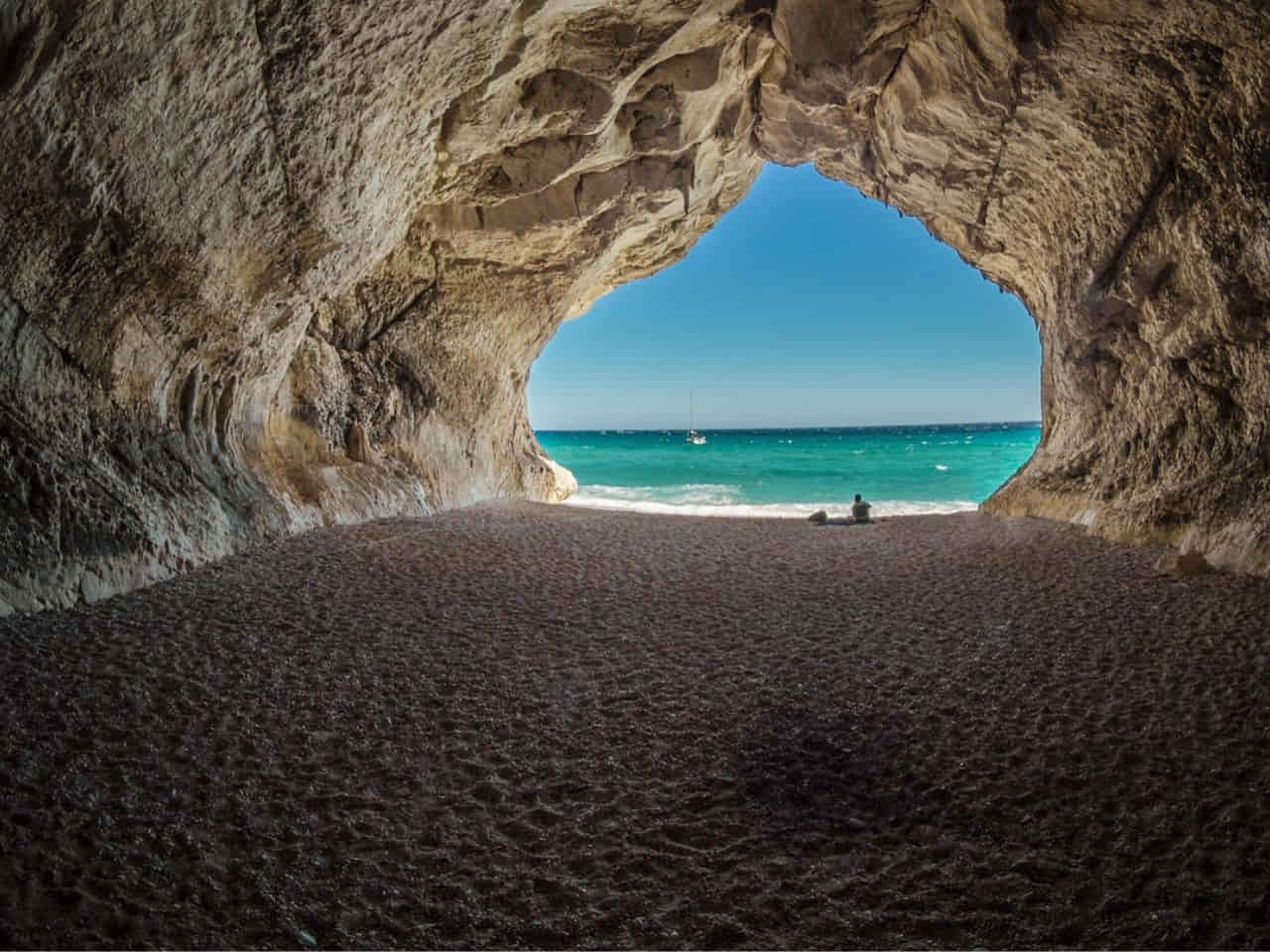
Cala Luna combines what many of the Gulf of Orosei’s coves lack: actual sand, in a wide crescent, backed by dramatic caves and a small freshwater stream.
It’s a strong choice for travelers who want the remote, boat-access feel of this coastline without giving up the comfort of a proper beach.
What to Expect
The beach curves along a limestone cliff face dotted with cave openings, some large enough to walk into.
Unlike Mariolu and Goloritzé, Cala Luna does have a small seasonal snack bar, making it slightly more practical for a longer stay.
Things to Do at Cala Luna
- Explore the sea caves — Several are accessible on foot at the beach’s edge.
- Hike in from Cala Fuili — A roughly 1.5–2 hour coastal trail for those who prefer walking to boating.
- Arrive by boat from Cala Gonone — The shorter, more common route for most visitors.
- Grab a drink at the seasonal bar — One of the few amenities on this stretch of coast.
Best For
Travelers who want a balance of sand, scenery, and at least minimal facilities, families comfortable with a boat transfer, and hikers looking for a moderate coastal trail.
Avoid If
Skip Cala Luna if you want complete solitude — its relative accessibility makes it busier than Mariolu or Goloritzé in peak season.
Budget Reality
A boat transfer or excursion is the main cost, similar to the other Gulf of Orosei beaches. The seasonal snack bar adds a modest, optional expense.
Practical Beach Details
- Beach type: Sand and pebble crescent backed by limestone cliffs and caves.
- Beach setup: Natural, with one small seasonal bar.
- Facilities: Minimal; don’t expect showers or extensive services.
- Families: More manageable than Mariolu or Goloritzé because of the sandier shoreline.
- Mobility: The hike from Cala Fuili is moderate but not wheelchair accessible.
How to Get There
- By boat: Frequent departures from Cala Gonone during the summer season, with a crossing time of roughly 20–30 minutes — the shortest boat transfer of the three Gulf of Orosei coves on this list.
- By hike: A well-marked coastal trail from Cala Fuili, just south of Cala Gonone, roughly 1.5–2 hours each way.
- From Olbia to Cala Gonone/Cala Fuili (nearest base): About 1 hour 35 minutes by car via the SS125.
Pro Tip
Take the boat in and hike out (or vice versa) if you’re reasonably fit — it lets you experience both the water approach and the dramatic coastal trail without doubling back the same way.
5. Spiaggia Rosa, Budelli — A Pink Beach You Can Look At but Not Touch
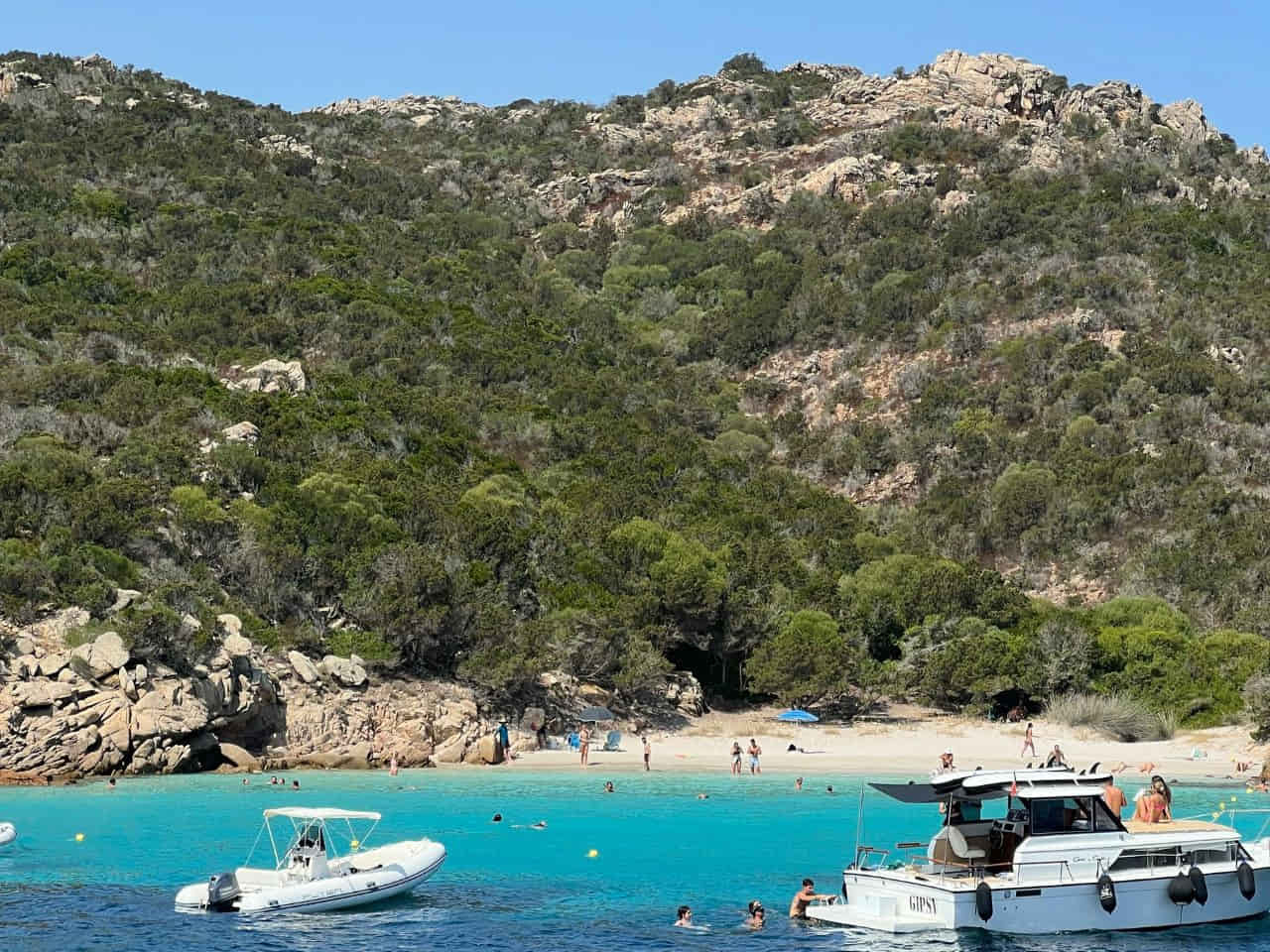
Why It Ranks
Tucked away on the protected island of Budelli in the La Maddalena Archipelago, Spiaggia Rosa is one of the most unusual beaches in Sardinia, if not Europe.
Its rosy tint comes from crushed coral and microscopic shell fragments, giving the sand a genuinely otherworldly glow that is unlike anywhere else on the island.
What to Expect
Because of its fragile ecosystem, landing on the beach itself is prohibited for regular visitors — you view it from a boat or a roped-off viewing area rather than walking on the sand.
This makes Spiaggia Rosa a sightseeing stop rather than a swimming beach in the traditional sense, but it’s a highlight of any La Maddalena Archipelago boat trip.
Things to Do at Spiaggia Rosa
- Join a La Maddalena Archipelago boat tour — The standard and essentially only way to see the beach.
- Photograph the color from the water — The pink tone is most vivid from a moderate distance.
- Swim and snorkel at nearby permitted beaches — Most tours combine Budelli with swim stops at other archipelago islands.
Best For
Photographers, boat-trip travelers, and anyone who wants to see one of the Mediterranean’s genuinely rare natural sights.
Avoid If
Skip this stop if your priority is an actual swimming beach — you won’t be setting foot on the sand here.
Budget Reality
Your cost here is entirely the boat excursion, typically departing from Palau or La Maddalena town and covering several islands in the archipelago over a half or full day.
Practical Beach Details
- Beach type: Fine sand with a natural pink tint.
- Access: Landing prohibited for regular visitors; view from boat or designated distance.
- Facilities: None; this is a viewing stop within a larger tour.
- Rules: Removing sand or shells anywhere in the archipelago is illegal and enforced with fines around €500+ ; drone use is also restricted within the protected park boundaries.
How to Get There
- By boat tour only: Departures run from Palau and La Maddalena town throughout the summer season.
- From Olbia to Palau (nearest mainland departure point): About 40–50 minutes by car (roughly 40 km) via the SS125 north through Arzachena.
- From Palau to La Maddalena town: A short public ferry crossing, generally around 15–20 minutes, with frequent daily departures — from there, tour boats continue on to Budelli and the rest of the archipelago.
Pro Tip
Choose a tour that also stops for swimming at nearby beaches like Cala Coticcio or Spargi, since Spiaggia Rosa itself is a look-don’t-touch stop rather than a place to spend your beach day.
6. Cala Brandinchi — “Little Tahiti” for Families
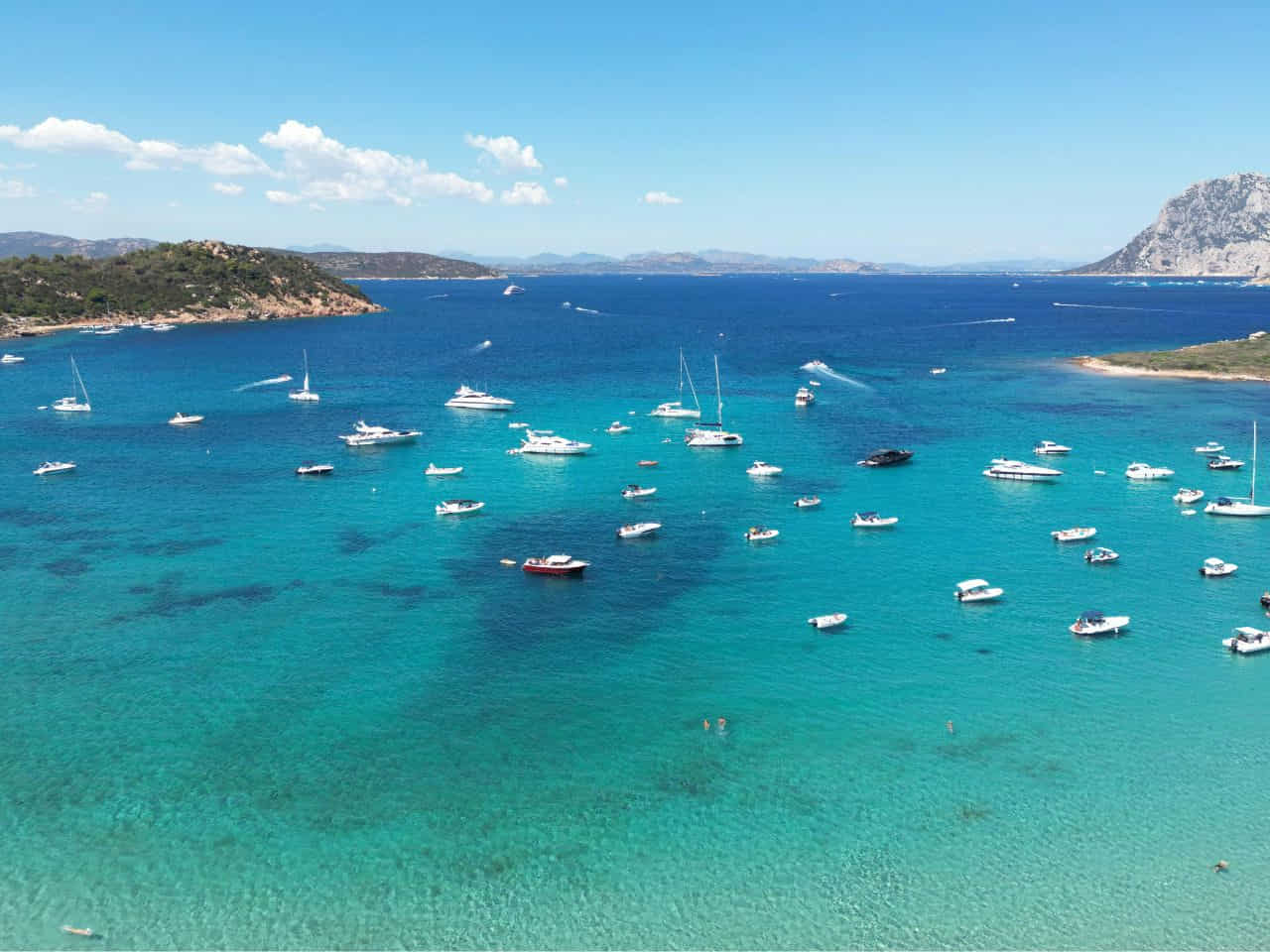
Why It Ranks
Often nicknamed “Little Tahiti,” Cala Brandinchi near San Teodoro pairs shallow, gentle water with a genuinely full range of amenities, making it one of the most family-practical beaches on the island.
What to Expect
The water stays shallow for a good distance out, the sand is fine and pale, and the beach is backed by a small pine-covered dune system rather than a busy waterfront town.
Like La Pelosa, Cala Brandinchi now operates on an online reservation system via Municipality of San Teodoro capped at 1500 visitors per day, with approx. €2 entrance fee in peak season with bookings opening the evening before your visit.
Things to Do at Cala Brandinchi
- Let kids swim without worry — The gentle, shallow water is one of the safest on the island for young children.
- Rent snorkeling gear or a sunbed — On-site rental services make this an easy no-planning beach day.
- Combine it with San Teodoro — The town is a short drive away for lunch or an evening out.
- Check the neighboring Lu Impostu beach — Covered by the same reservation system, it’s a useful overflow option.
Best For
Families with young children, travelers who want amenities without a beach-club price tag, and anyone based in San Teodoro or nearby Olbia.
Avoid If
Choose another beach if you want complete spontaneity — the reservation requirement rules out a same-day, walk-up visit during peak months.
Budget Reality
The reservation fee is low, around €2 per person over 12, with children under 5 free and not counted toward the cap. Rentals (sunbeds, snorkeling gear) are extra and vary by season.
Practical Beach Details
- Surface: Fine white sand.
- Beach setup: Public beach with rental services available seasonally.
- Access rules: Reservation required June 1–September 30; bookings open at 6 PM for the day after next.
- Families: One of the strongest choices on the island specifically because of the shallow water.
- Mobility: Flat and straightforward from the parking area.
How to Get There
- From Olbia Airport: About 25 minutes by car (roughly 13 miles) south on the SS125 toward San Teodoro.
- From San Teodoro town: Just a few minutes’ drive, or a short walk/cycle for those staying centrally; a seasonal shuttle bus also runs in peak months.
- By bus: Regional ARST buses connect Olbia to San Teodoro in around 30–35 minutes, though you’ll still need a short local hop or taxi from the town center to the beach itself.
Pro Tip
Book your reservation the evening before your visit, as soon as the window opens — Cala Brandinchi’s allocation for popular summer dates can fill within the hour.
7. Spiaggia del Principe — Costa Smeralda’s Beach Club
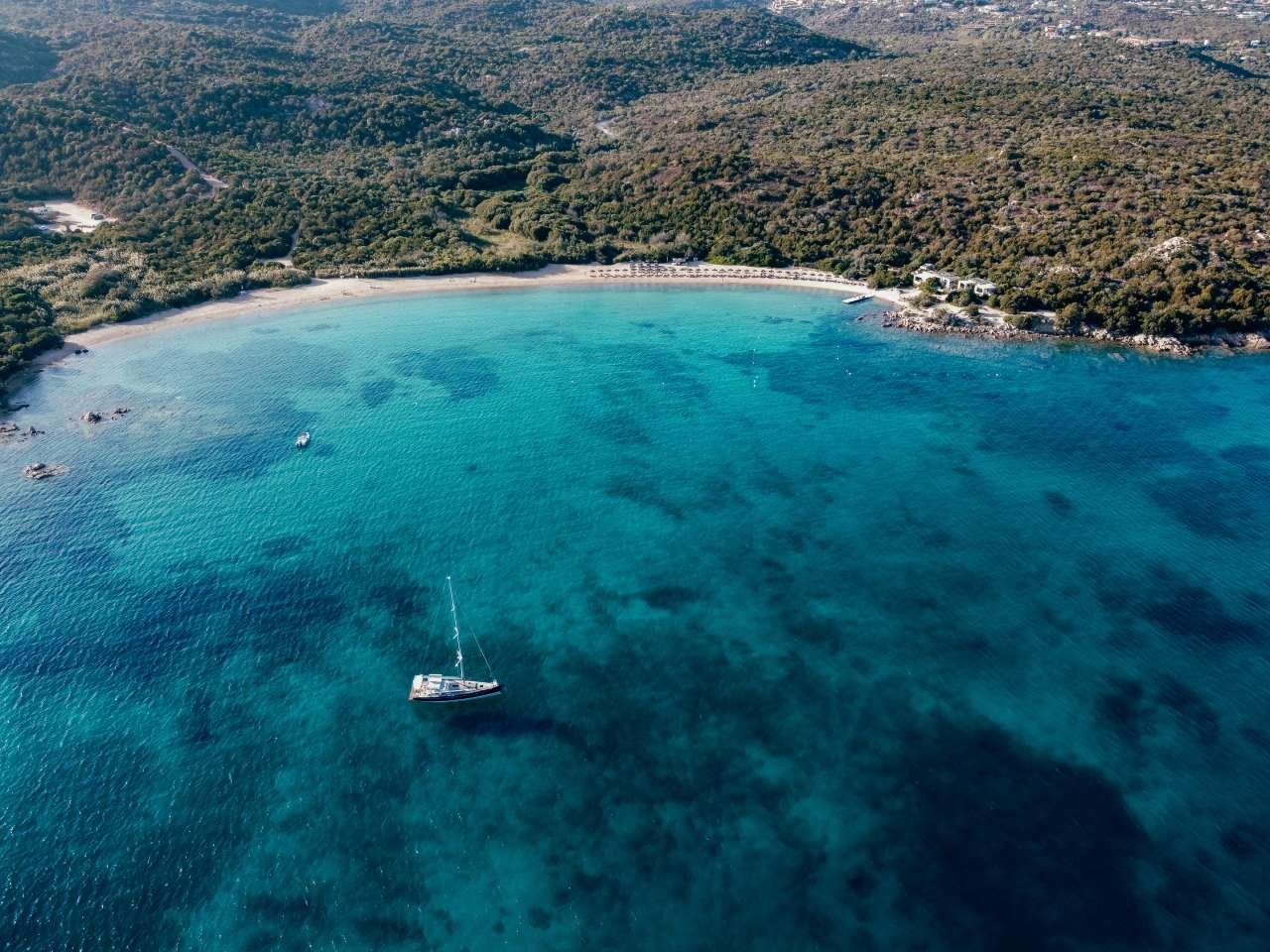
Why It Ranks
Spiaggia del Principe is a must for anyone building a Costa Smeralda itinerary around beach clubs, boat days, and a more polished version of a Sardinia beach visit.
What to Expect
The beach combines pale sand with pink-hued granite boulders scattered through the water, a signature look of this part of the coast.
Sections are managed by beach clubs offering sunbeds, umbrellas, and food service, though a public stretch remains available for those who don’t want to pay for a full setup.
Things to Do at Spiaggia del Principe
- Reserve a sunbed at a beach club — The standard way to spend a full day here in comfort.
- Swim among the granite boulders — A distinctive feature of this stretch of coastline.
- Combine it with Porto Cervo — The glamorous marina town is a short drive away for dinner.
- Arrive by boat — Many Costa Smeralda visitors reach the beach as part of a private or chartered boat day.
Best For
Travelers prioritizing comfort, beach clubs, and a more social scene, couples, and anyone staying in or near the Costa Smeralda.
Avoid If
Skip this beach if you’re on a tight budget or want a quiet, undeveloped setting.
Budget Reality
This is one of the more expensive beach days on the island. Beach-club sunbeds and umbrellas carry premium pricing, particularly in July and August, though a free public section keeps a lower-cost option available.
Practical Beach Details
- Surface: Sand interspersed with granite rock formations.
- Beach setup: Mix of public sand and managed beach clubs.
- Facilities: Extensive at the beach clubs; minimal on the public stretch.
- Families: Workable, though the rocks require some care with very young children.
- Mobility: Generally accessible by car with a short walk from parking.
How to Get There
- From Olbia Airport: About 35–40 minutes by car (roughly 18 miles) north on the SS125 toward Arzachena and Porto Cervo.
- From Porto Cervo: A short 10–15 minute drive along the coast — the most direct route for anyone already based in the Costa Smeralda.
- By boat: A common option for travelers staying on a charter or private boat during their trip, with most Costa Smeralda marinas within a short cruise of the beach.
Pro Tip
Reserve your beach-club spot in advance for July or August, and check whether the public section suits your needs before committing to a paid setup — it can save a significant amount on a multi-day trip.
8. Poetto Beach — Cagliari’s Easy, Eight-Kilometer City Beach
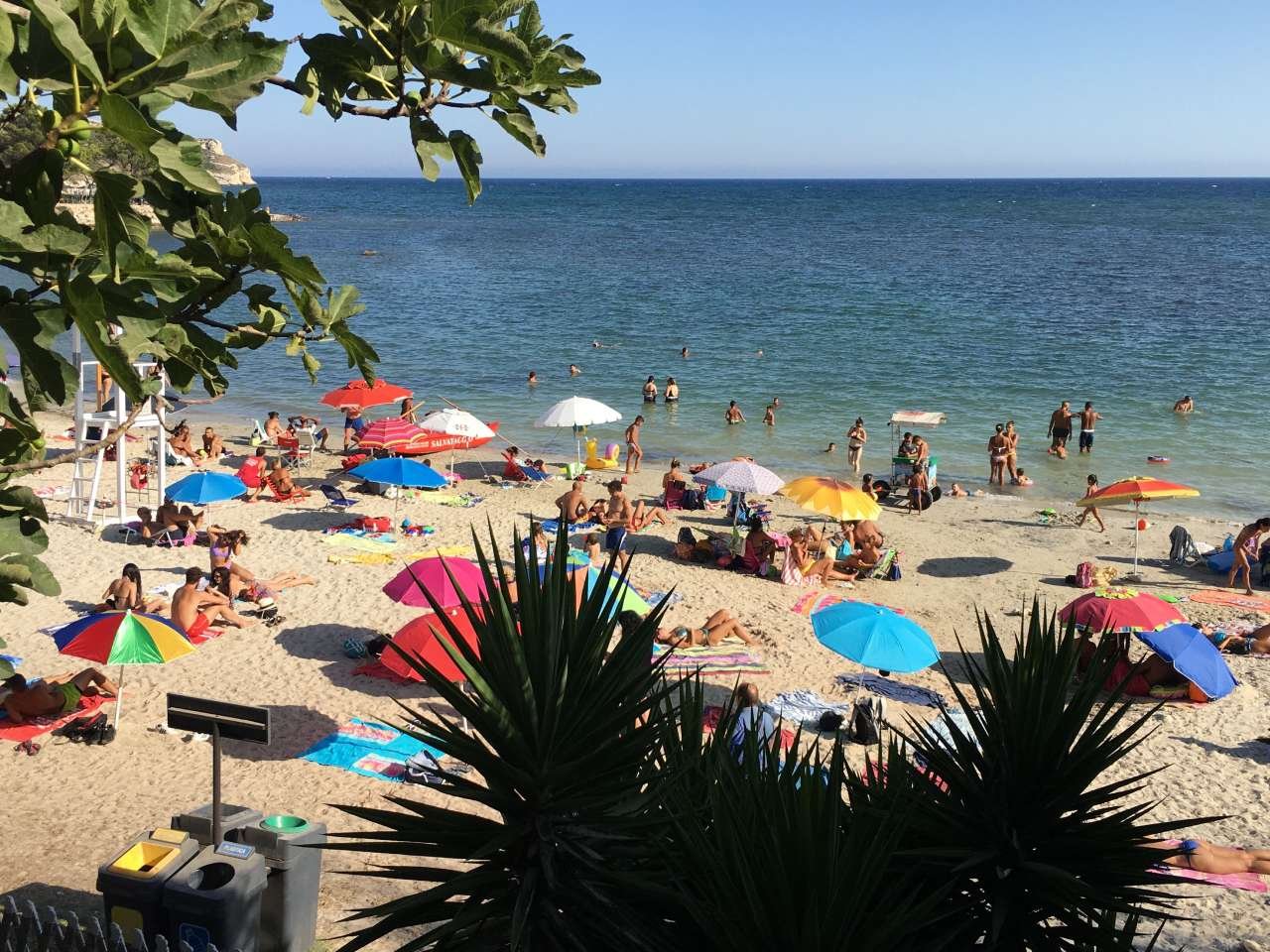
Why It Ranks
Poetto is the beach to choose when you want swimming without sacrificing a day of your itinerary to reach it.
Stretching roughly eight kilometers along Cagliari’s waterfront, it’s one of the longest urban beaches in Italy and is directly connected to the capital by bus and bike path.
What to Expect
The beach is wide, sandy, and lined with a promenade of bars, restaurants, and rental kiosks, giving it a lively, local atmosphere rather than a resort feel.
Because it’s so long, crowd density varies significantly by section — the end near the city center is busiest, while the far end toward the Sella del Diavolo headland thins out considerably.
Things to Do at Poetto Beach
- Combine the beach with Cagliari sightseeing — The Castello district and archaeological museum are a short trip away.
- Walk or bike the full promenade — A practical way to find a quieter stretch of sand.
- Rent a sunbed at one of the many kiosks — An easy, affordable upgrade from the free public sand.
- Stay for the evening scene — Poetto’s bars get lively after sunset, especially in summer.
Best For
City-based travelers, budget-conscious visitors, students, and anyone who wants a swim without leaving Cagliari for the day.
Avoid If
Choose another beach if you want turquoise, remote-feeling water — Poetto is a city beach first and foremost.
Budget Reality
Poetto is one of the most affordable beach days on the island. Most of the sand is free public space, with paid sunbed rental as an optional extra rather than a requirement.
Practical Beach Details
- Surface: Sand.
- Beach setup: Public beach with numerous rental kiosks and beachfront bars.
- Facilities: Extensive — showers, toilets, restaurants, and rentals along the entire promenade.
- Families: Practical thanks to easy access and shallow entry in most sections.
- Mobility: One of the more accessible beaches on the island, with flat promenade access.
How to Get There
- From central Cagliari: About 4 miles; roughly 8–15 minutes by car or taxi, or a similar time by direct city bus (Line PF/PQ or equivalent, running every 10–20 minutes from the Bonaria stop).
- From Cagliari Elmas Airport (CAG): Around 20–25 minutes by car via the city ring road, or a bus/taxi combination via central Cagliari if you’re not renting a car.
- By bike or on foot: A dedicated path runs along much of the promenade, making Poetto one of the few beaches on this list that’s genuinely walkable or cyclable from a city-center hotel.
- By car: Convenient but parking fills quickly on summer weekends, especially near the central section closest to the city.
Pro Tip
Walk or bike toward the Sella del Diavolo end of the beach if the central section feels too crowded — the water quality and view are just as good with noticeably more space.
9. Is Arutas — Sardinia’s Quartz-Sand Beach
Why It Ranks
Is Arutas is unlike anywhere else on the island: the “sand” is actually tiny, rounded grains of quartz, white, pink, and occasionally pale green, worn smooth by centuries of sea action.
The result looks a little like rice, which is part of why it draws curious travelers as much as sun-seekers.
If you’re exploring western Sardinia around the Sinis Peninsula, consider adding a cultural stop to your beach itinerary. The island’s prehistoric Nuragic heritage is represented by Su Nuraxi di Barumini, a UNESCO World Heritage Site, although it requires a separate inland detour from the coast.
What to Expect
The water turns deep quickly and there’s very little natural shade, so this is a beach best suited to a few hours rather than a full lazy day.
Removing even a single grain of the quartz sand is illegal and enforced with fines, so leave what you find exactly where it is.
Things to Do at Is Arutas
- Compare the texture to regular sand — It’s genuinely one of the more unusual sensations on any Mediterranean beach.
- Swim in the deep, clear water — Be aware the seabed drops off faster than at typical sandy beaches.
- Explore the wider Sinis Peninsula — Is Arutas is part of a broader, underrated stretch of coastline worth a full day.
- Bring your own shade and supplies — Facilities are limited to a couple of seasonal kiosks.
Best For
Curious travelers, surfers exploring the wider Sinis Peninsula, and anyone who wants a genuinely different beach from the island’s typical sandy or pebbly options.
Avoid If
Skip Is Arutas if you want shade, extensive facilities, or a beach designed for lounging all day.
Budget Reality
This is a low-cost beach day — access and parking are inexpensive, and there are no beach clubs to speak of.
Practical Beach Details
- Surface: Rounded quartz grains, not traditional sand.
- Beach setup: Entirely public and undeveloped.
- Facilities: Two small seasonal kiosks; otherwise minimal.
- Rules: Taking sand or shells is illegal and fined.
- Swimming: Better for confident swimmers due to the quick drop-off.
How to Get There
- From Oristano: About 30–40 minutes by car (roughly 20 miles) west across the Sinis Peninsula, making Oristano the most practical base for this beach.
- From Cagliari: Around 1.5 — 2 hours by car via the SS131, which is why Is Arutas works best as a stop on a longer north–south drive rather than a dedicated day trip from the capital.
- By car: The most practical option overall, with a rental car recommended for exploring the Sinis Peninsula more broadly — there’s no meaningful public transport directly to the beach.
Pro Tip
Pair Is Arutas with a full day around the Sinis Peninsula, including nearby Maimoni and San Giovanni di Sinis, rather than treating it as a standalone stop — this stretch of coast rewards a slower visit.
10. Tuerredda Beach— Clear Water with an Islet View
Why It Ranks
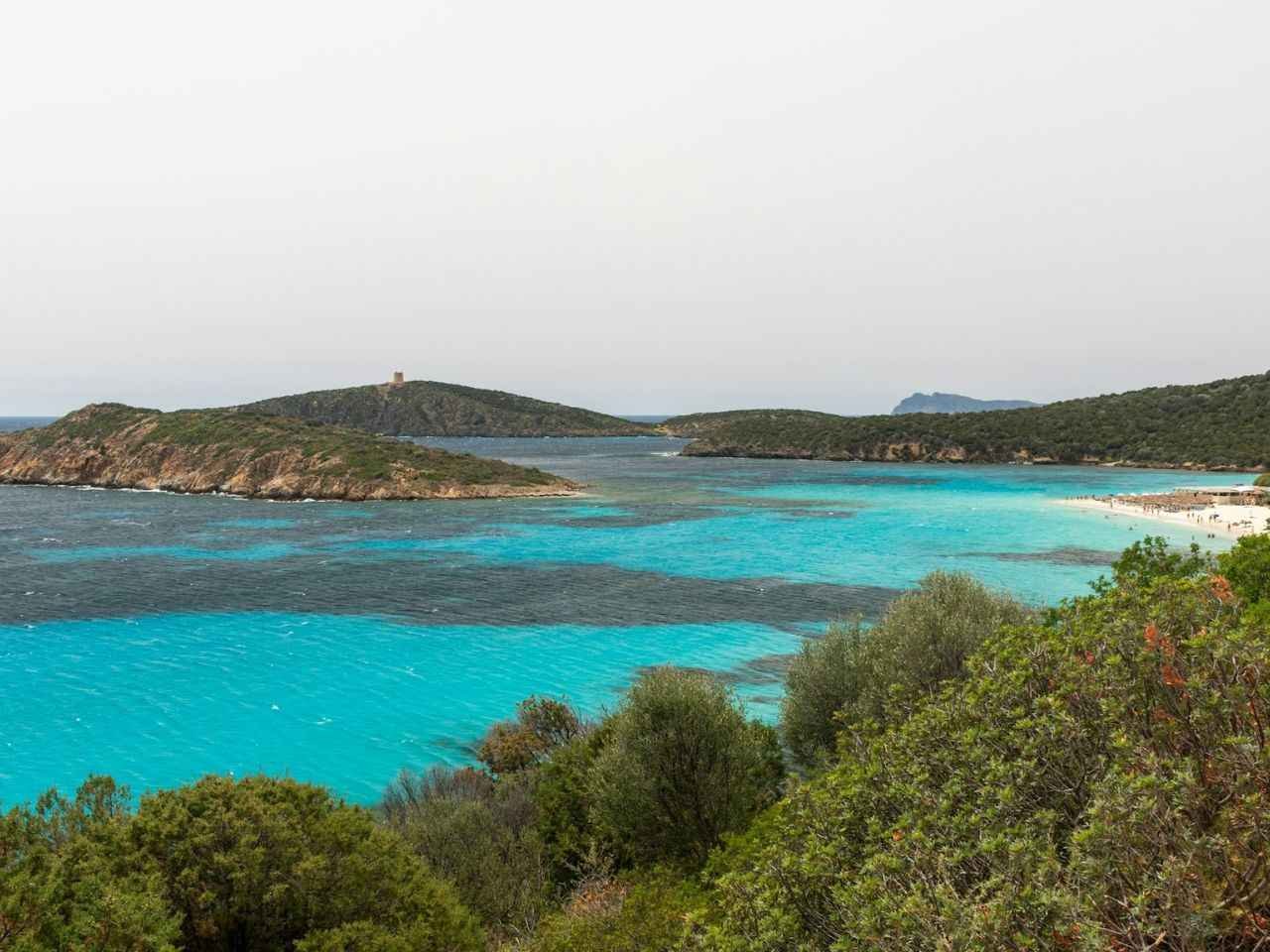
Tuerredda combines water that shifts from transparent to turquoise to deep blue with one of the more photogenic backdrops on the south coast: the small islet of Tuerredda sitting just offshore.
What to Expect
The beach is compact and can reach capacity on summer mornings, so arriving early matters more here than at some of the island’s larger stretches.
Fine white sand and calm, sheltered water make it a strong choice for swimming and snorkeling out toward the islet, which is close enough to reach by swimming for many visitors.
Things to Do at Tuerredda Beach
- Swim out toward the islet — A popular, manageable swim for confident swimmers.
- Snorkel around the adjacent coves — Two smaller coves next to the main beach are also worth exploring.
- Arrive early — Parking and beach space both fill up well before midday in peak season.
- Bring a beach mat — Loungers without a rental package require a small mat fee to place on the sand.
Best For
Snorkelers, couples, and travelers based in the south who want clear water without the boat-access difficulty of the Gulf of Orosei coves.
Avoid If
Skip Tuerredda on a summer weekend if you can’t arrive early — the parking lot and beach both reach capacity quickly.
Budget Reality
Parking carries a fee, and a small mat charge applies if you don’t rent a sunbed. Beyond that, Tuerredda remains a reasonably affordable beach day compared with the Costa Smeralda.
Practical Beach Details
- Surface: Fine white sand.
- Beach setup: Public beach with some sunbed rental available.
- Facilities: Modest; a few seasonal services near the parking area.
- Families: Manageable thanks to generally calm water, though the beach’s small size limits space.
- Mobility: A short walk from the parking area to the sand.
How to Get There
- From Cagliari Elmas Airport (CAG): About 1 hour 3 minutes by car (roughly 40 miles) south via the SS195 toward Teulada.
- From central Cagliari: Similar, at just over an hour by car; there’s no practical public transport option, so a rental car is essentially required.
- By car: The primary way to reach Tuerredda, with paid parking near the beach that fills early in peak season.
Pro Tip
Arrive before 9 AM in July or August — both the parking area and the beach itself fill well before midday, and there’s no way to reserve a spot in advance.
11. Chia Beach — Dunes, Wind, and a Flamingo Lagoon
Why It Ranks
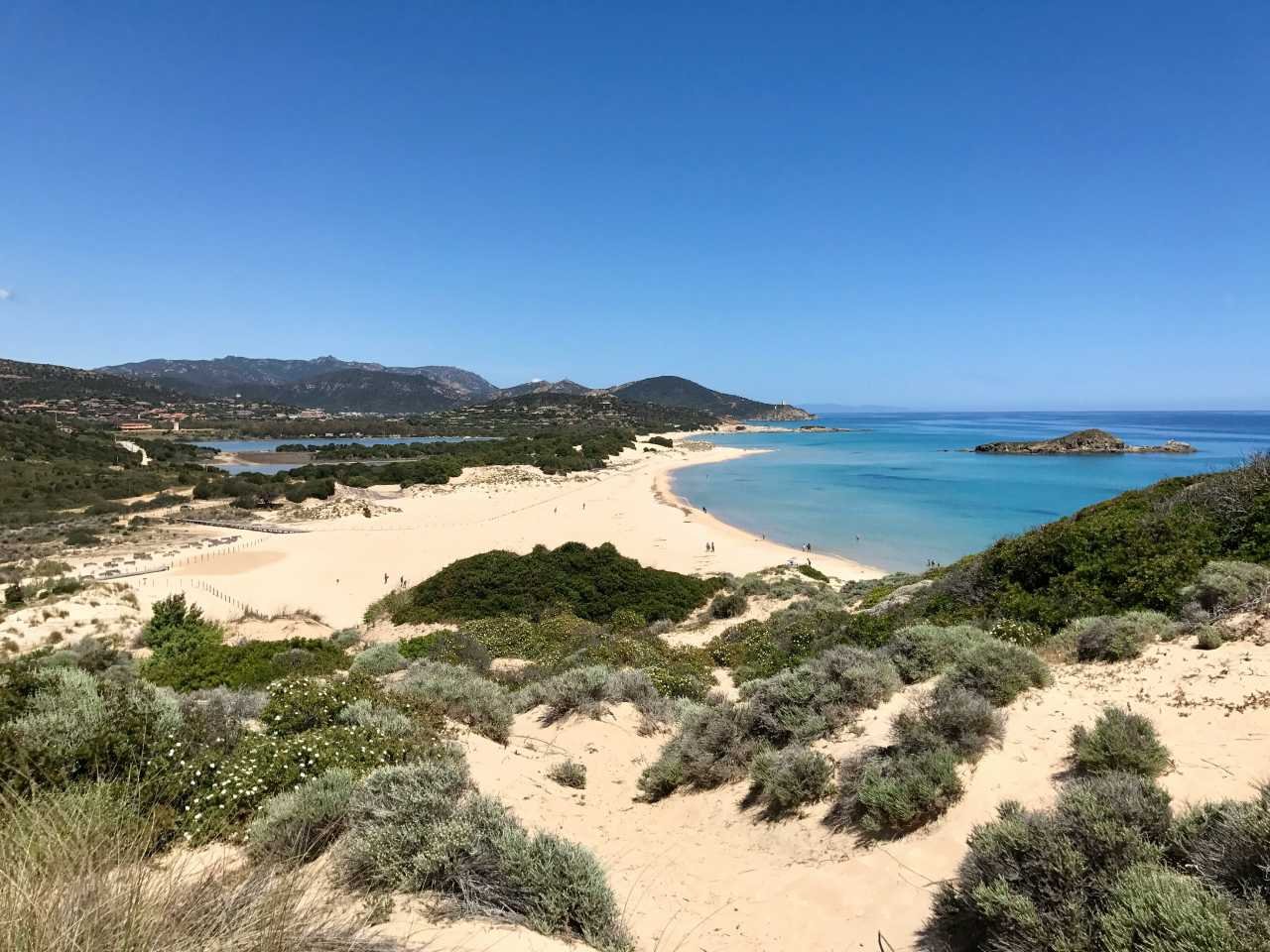
Chia rounds out this list because it offers something few other Sardinia beaches do: a dramatic dune system, a wildlife-rich lagoon, and consistently strong wind that makes it one of the island’s best spots for kitesurfing and windsurfing.
What to Expect
The beach itself stretches long and sandy, backed by tall dunes and Mediterranean scrubland rather than a town promenade.
The adjacent lagoon regularly hosts flamingos, giving Chia a different character from the typical swim-and-sunbathe beach day.
Things to Do at Chia Beach
- Walk or climb the dunes — A distinctive feature not found at most other beaches on this list.
- Spot flamingos at the lagoon — Best in the early morning or late afternoon.
- Try kitesurfing or windsurfing — Rental and lesson services operate seasonally near the main beach.
- Explore Su Giudeu, the adjacent beach — A quieter extension of the main Chia shoreline.
Best For
Wind-sports enthusiasts, birdwatchers, and travelers who want a beach with more going on than swimming alone.
Avoid If
Skip Chia on a windy day if your priority is calm water for lounging — the same wind that makes it great for kitesurfing can make sunbathing less pleasant.
Budget Reality
The beach itself is largely free and public, with paid parking as the main cost. Kitesurfing or windsurfing lessons add a separate, optional expense.
Practical Beach Details
- Surface: Sand backed by dunes.
- Beach setup: Public, with some seasonal rental services.
- Facilities: Modest; concentrated near the main access points.
- Wildlife: Flamingos are commonly seen at the adjacent lagoon.
- Families: Workable, though strong wind on some days may not suit young children.
How to Get There
- From Cagliari Elmas Airport (CAG): About 53 minutes by car (roughly 34 miles) south via the SS195.
- From central Cagliari: Around 50–55 minutes by car, similar to the airport route; a limited ARST bus service also runs from Cagliari’s main bus station, though it takes over an hour and requires checking seasonal timetables.
- By car: The standard and most practical way to reach Chia, with several parking areas along the shoreline near the main beach and Su Giudeu.
Pro Tip
Check the wind forecast before you go. If it’s blowing hard, treat it as a windsurfing day rather than a lounging day — or head to a more sheltered beach like Tuerredda instead.
FAQs
1. Are beaches in Sardinia free?
Most beaches in Sardinia have a free public section, though some of the most popular ones — including La Pelosa and Cala Brandinchi — now require a paid reservation to manage visitor numbers. Beach clubs on top of public sand, common in the Costa Smeralda, charge separately for loungers and umbrellas.
2. Do I need to book beaches in Sardinia in advance?
For a growing number of them, yes. La Pelosa, Cala Goloritzé, and Cala Brandinchi (with Lu Impostu) all require online reservations during the peak season. Check the official booking portal for your specific travel dates before building a beach day around any of these three.
3. What should I bring to a Sardinia beach?
Bring water, sunscreen, a hat, swimwear, a towel, and a beach mat for reservation-only beaches that ban towels directly on the sand. For remote Gulf of Orosei coves, also pack snacks and extra water, since facilities are minimal or nonexistent.
4. Can you visit more than one Sardinia beach in a day?
Yes, but realistically expect one or two, not several. Sardinia is larger than it looks on a map, and many of the best beaches sit at the end of long, winding coastal roads or require a boat transfer. Pairing one main beach with a nearby town is more practical than trying to beach-hop widely in a single day.
5. Which Sardinia beaches are best for families with children?
Cala Brandinchi, La Pelosa, Poetto, and Chia are among the more practical choices, thanks to shallow or gently sloping water and easier access than the boat-only coves of the Gulf of Orosei.
Helpful Planning Resources
- Regione Autonoma della Sardegna – Official Tourism Portal — General visitor information, events, and seasonal updates.
- La Pelosa Official Reservation Site — Book your reservation directly to avoid third-party booking fees.