Alberobello is small enough to see in half a day and popular enough that arriving at the wrong hour turns that half-day into a shuffle through tour groups.
The difference between a magical visit and a crowded, souvenir-shop-lined one comes down almost entirely to timing and a few decisions most first-time visitors get wrong.
This guide covers what actually matters for a visit here: when to arrive to beat the tour buses, which trulli district to prioritize, real entry costs, whether to stay overnight or day-trip, and how to fit Alberobello into a wider Puglia itinerary without wasting a day driving back and forth.
The goal isn’t to see everything in Alberobello. It’s a small town — the goal is timing your visit so what you do see isn’t ruined by crowds.
- What Is Alberobello Known For?
- How to Plan Your Alberobello Visit
- Best Time to Visit Alberobello
- How to Get to Alberobello
- Alberobello Map: Where Is It?
- 7 Best Things to Do in Alberobello
- Where to Stay: Alberobello or a Nearby Town
- Where to Eat In Alberobello
- Suggested 1-Day Alberobello Walking Tour Itinerary
- Parking Guide
- Pairing Alberobello With the Rest of Puglia
- FAQs
- Helpful Planning Resources
- My Popular Italy Travel Guides
Love this? Check out our full Travel Guide to Puglia Along with Essential Italy Travel Tips to round out your planning.
What Is Alberobello Known For?
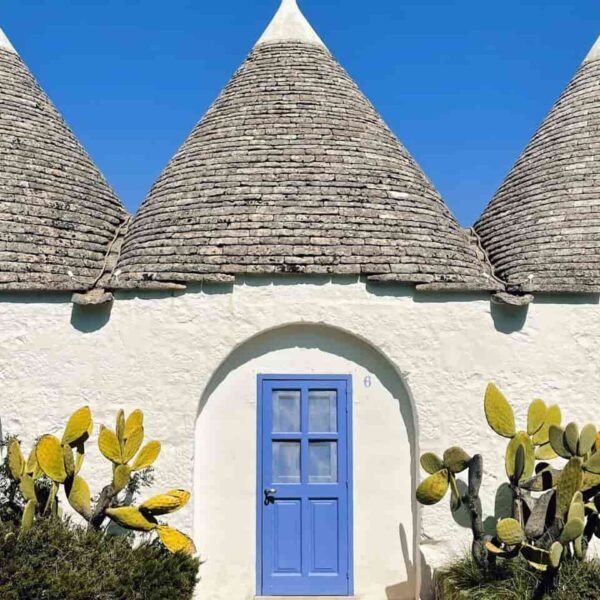
Alberobello is known for its trulli — whitewashed, cone-roofed stone houses built without mortar, originally constructed this way in the 14th–19th centuries so they could be dismantled quickly to avoid a property tax on permanent structures. The town’s two trulli districts, Rione Monti (over 1,000 trulli, UNESCO-listed since 1996) and the quieter Aia Piccola, make it one of Puglia’s most visited stops, best handled as a half-day to full-day visit rather than a rushed stopover.


How to Plan Your Alberobello Visit
Alberobello rewards a specific kind of planning more than most towns on a Puglia itinerary, because its small size means timing matters more than sequencing.
- If you have half a day, arrive before 9:30 AM, cover Rione Monti and Aia Piccola while they’re still quiet, and leave before the 10 AM–12 PM tour bus peak sets in — this is genuinely enough time to see the town’s core sights without feeling rushed.
- If you have a full day, add the Trullo Sovrano, the Church of St. Anthony, Belvedere Santa Lucia, and a proper sit-down lunch — a comfortable pace rather than a checklist sprint.
- If you’re staying overnight, book a trullo stay specifically — the town empties out noticeably after the last tour buses and day-trippers leave in early evening, and the quiet version of Alberobello at dusk and dawn is a genuinely different experience from the midday crowds.
- If you’re road-tripping through Puglia, Alberobello works better as a stop within a Valle d’Itria loop (paired with Ostuni and Locorotondo) than as a standalone day trip from a distant base — the driving math works out better that way.
Quick-reference by priority:
| If you want… | Do this |
|---|---|
| The fastest way to beat the crowds | Arrive before 9:30 AM |
| The quietest version of the town | Stay overnight, walk at dusk or dawn |
| A local, non-touristy trulli district | Aia Piccola over Rione Monti |
| Fewer souvenir-shop pressure encounters | Browse from outside before stepping in |
| A calmer, cheaper overnight base | Stay in Locorotondo or Martina Franca instead |
Best Time to Visit Alberobello
Spring (April–June) and fall (September–October) are the strongest windows — mild temperatures, manageable crowds, and (in September) the town’s biggest annual event.
- Festa dei Santi Medici (September 25–27): Alberobello’s largest festival — fireworks, street food, and a saints’ statue parade through Rione Monti and Piazza del Popolo. Expect the town at its most crowded and most alive simultaneously; book accommodation well ahead if you want to be there for it.
- Luminarie (December): The town’s Christmas light displays, worth a visit if you’re in Puglia over the holidays and want a quieter, cooler-weather version of Alberobello.
- Sagra del Peperoncino (July): A spicy pepper festival, smaller in scale but a good pairing if you’re already visiting in summer.
- Summer (July–August): The hottest and most crowded season — workable, but expect both heat and tour-bus volume at their peak, with little shade in the trulli districts.
Planning takeaway: if your dates are flexible, late April, May, or late September deliver the best combination of weather and crowd levels — avoid the last week of September unless you specifically want to catch the Festa dei Santi Medici and don’t mind the crowds that come with it.
How to Get to Alberobello
Alberobello has no major train station of its own, but the town center is compact and fully walkable once you arrive.
- From Rome: Train to Bari (about 4 hours), then a local connection to Alberobello (roughly 1.5 hours) — or a cheaper FlixBus-to-Bari-then-train combination.
- From Naples: Direct train to Bari (about 3 hours) with a transfer, or drive via the A16 highway (about 3.5 hours).
- From Bari: The most common approach — train or bus from Bari Centrale station (1.5 — 2 hours, under €10), or a 1-hour drive via the SS16 highway.
- From Brindisi Airport: Renting a car is the easiest option (about a 45-minute drive); by public transport, take a bus to Ostuni and connect to a local train.
- Regional trains: Ferrovie del Sud Est (FSE) connects Alberobello to smaller Puglia towns that the main Trenitalia network doesn’t reach — useful if you’re basing elsewhere in the Valle d’Itria without a car.
- Major International Airports: Bari Karol Wojtyła (BRI), roughly 65 km away, is the closest and most practical; Brindisi (BDS) is a workable alternate depending on your wider Puglia route.
If you’re driving, know the ZTL rule before you enter town: Alberobello’s historic center has restricted traffic zones (Zona a Traffico Limitato) — driving into them without authorization risks an automatic fine via camera enforcement. Park in one of the designated lots outside the center (see the Parking Guide below) rather than attempting to drive into the trulli districts themselves.
Alberobello Map: Where Is It?
Alberobello sits in the Valle d’Itria, inland from the Adriatic coast, roughly equidistant between Bari and Brindisi — which is why either airport works, depending on the rest of your route.
7 Best Things to Do in Alberobello
1. Explore Rione Monti — The Main Trulli District

Over 1,000 trulli line Rione Monti’s steep, cobbled streets, many converted into B&Bs, cafés, and souvenir shops — this is the district most photos of Alberobello come from, and it’s genuinely worth the visit despite the crowds. One thing worth knowing before you browse: many souvenir shops here expect a purchase once you step inside, not just a look — window-shop from outside if you’re not planning to buy, to avoid an awkward exchange.
2. Discover Aia Piccola — The Quieter, Residential Trulli District
A two-minute walk from the main tourist drag, Aia Piccola holds 400+ trulli where locals actually live — a working neighborhood rather than a commercial district, with far fewer crowds than Rione Monti. If your time is limited and you have to choose one district for a quiet, authentic feel, this is it. Look for Casa d’Amore, the first non-trullo house built in town, constructed deliberately in defiance of the old tax-avoidance building rules.
3. Visit Trullo Sovrano — The Only Two-Story Trullo

The town’s largest and tallest trullo, built in the early 1700s for a wealthy priest’s family and — unlike standard trulli — built with mortar, making it a rare permanent structure from that era. Now a small museum on how trulli functioned as homes. Entry typically runs €1.50–2, a modest cost for the town’s most distinctive single building.
4. Marvel the Church of St. Anthony — The Only Trullo-Style Church in the World
An 18th-century church built in trullo form, sitting at the top of Rione Monti near the Belvedere — easy to combine both stops in one visit. Free to enter; look up for the ceiling frescoes, easy to miss on a quick visit.
5. Climb the Belvedere Santa Lucia — The Best Viewpoint
A short, genuinely steep uphill walk from Piazza del Popolo (about 10 minutes) to Alberobello’s highest point, with panoramic views over the trulli rooftops — the best single photo spot in town, particularly at sunset. Bring water; there’s no shade on the climb.
6. Explore the Museo del Territorio — A Hands-On Local History Museum
Housed in a 19th-century trullo complex near Piazza Sacramento, this museum focuses on how Puglian farming families actually lived, with some hands-on exhibits (grain grinding) that work well for kids. Entry typically runs €3–4, cash preferred.
7. Shop for Souvenirs and Local Crafts

For centuries, Alberobello’s economy revolved around farming and crafts—think olive wood carvers, stone masons, and textile weavers. Today, many shops still use traditional techniques passed down through generations.
What I Ended Up Buying (That’s Actually Worth It)
- Ceramic Trulli Miniatures – The classic souvenir, but bought from Ceramiche d’Arte (hand-painted, not mass-produced).
- Olive Wood Products – Spoons, bowls, and cutting boards that smell like Puglia.
- Linen Textiles – Tablecloths, napkins, and aprons in sunny Mediterranean colors.
- Almond Sweets – Pastichiotti (almond cookies) or fig jam from family-run botteghe.
- Local Wine or Olive Oil – Bonus: It’s usually cheaper here than at airports.
Pro Tip: Check for “Made in Puglia” – Some imported trinkets sneak in.
Where to Stay: Alberobello or a Nearby Town
Staying inside Alberobello — specifically in a converted trullo — is the single most distinctive lodging experience in Puglia, but it comes at a price premium and books out fast in summer.
- Stay in Alberobello if: you want the trullo-sleeping experience itself, or you want to be in town at dawn and dusk when the crowds are gone. Book well ahead for summer dates — good trulli sell out weeks in advance.
- Stay in Locorotondo instead if: you want a calmer base with a short bus ride into Alberobello, more budget-friendly accommodation, and a town with its own distinct (circular, whitewashed) old-town character.
- Stay in Martina Franca instead if: you want a livelier, more youthful base with baroque architecture and easy public transport connections, while still being close enough to day-trip into Alberobello.
Planning takeaway: if budget or availability rules out a trullo stay, basing in Locorotondo or Martina Franca costs less and still puts Alberobello within a short, easy trip — you’re not sacrificing much by staying just outside town.
Where to Eat In Alberobello


Alberobello offers a variety of dining options that showcase the rich culinary traditions of Puglia. Here are some of the best places to eat in Alberobello that you can opt for as per your mood.
Skip restaurants with English-only menus near the main squares — the better trattorias sit slightly off the main tourist routes near the trulli districts. Try orecchiette con cime di rapa (ear-shaped pasta with bitter greens, Puglia’s signature dish) and bombette pugliesi (stuffed pork rolls) as a genuine introduction to regional cooking.
Note: Cash is still preferred at many smaller trattorias — don’t assume card acceptance.
Budget-friendly option: panzerotti (fried calzone) from a street vendor makes a solid, cheap lunch if you’re moving quickly between sights rather than sitting down.
Suggested 1-Day Alberobello Walking Tour Itinerary
- Morning (before 9:30 AM): Start at Piazza del Popolo, then head straight into Rione Monti while it’s still quiet — visit Trullo Sovrano and the Church of St. Anthony.
- Late morning: Climb to Belvedere Santa Lucia for the panoramic view, then cross into Aia Piccola for a quieter, more residential feel — stop at La Cantina for a short break.
- Midday: Sit down for lunch at one of the trattorias listed above, avoiding the busiest 12–2 PM tourist-menu spots directly on the main squares.
- Afternoon: Visit Museo del Territorio if local history interests you, then browse shops for genuine local crafts (olive wood, linen, ceramics) rather than mass-produced souvenirs.
- Evening (if staying overnight): Return to Rione Monti or the Belvedere after the day-trip crowds leave — this is when the town’s atmosphere shifts from “busy tourist stop” to genuinely magical.
Parking Guide
Alberobello’s historic center is largely closed to private vehicles (ZTL zones), so park in one of the designated lots outside the trulli districts and walk in — everything in town is within easy walking distance once you’ve parked.
- Parcheggio Alberobello Centro — closest to the town center overall.
- Parcheggio Parco Urbano — most convenient if heading straight to the main trulli district.
- Parcheggio Aia Piccola — best if prioritizing the quieter district first.
- Parcheggio Largo Martellotta — a solid alternative if the more central lots are full.
Planning takeaway: arrive before 9:30 AM specifically to secure parking as well as beat the crowds — lots fill up alongside the tour-bus rush in peak season, and there’s no reliable overflow option once the main lots are full.
Pairing Alberobello With the Rest of Puglia
Alberobello works best as one stop within a Valle d’Itria loop rather than a standalone destination — Ostuni and Locorotondo are both under 30 minutes away, and Matera (technically in Basilicata, not Puglia, but a common and worthwhile pairing) is roughly an hour’s drive for travelers building a longer southern Italy route.
For the full regional picture — which towns pair well, how many days to allocate, and how to sequence a longer Puglia trip — see our complete Travel Guide to Puglia.
FAQs
1. How much time do you need in Alberobello?
Half a day covers the core sights (Rione Monti, Aia Piccola, Trullo Sovrano) at a reasonable pace; a full day adds the Belvedere, Church of St. Anthony, and a proper sit-down lunch without feeling rushed. Most visitors don’t need more than one full day unless using it as a base for the wider Valle d’Itria.
2. Is Alberobello worth visiting if it’s touristy?
Yes, with the right timing. Arriving before 9:30 AM and prioritizing Aia Piccola alongside Rione Monti delivers a genuinely different, quieter experience than the midday version most day-trippers see.
3. What is the difference between “trulli” and “trullo”?
“Trullo” is singular (one house); “trulli” is plural (multiple houses) — both refer to the same cone-roofed, dry-stone building style.
4. Do I need a car to visit Alberobello?
Not strictly — trains and Ferrovie del Sud Est regional rail connect Alberobello to Bari and nearby towns. A car helps significantly if you’re combining Alberobello with Ostuni, Locorotondo, or other Valle d’Itria towns in one trip, since regional public transport between smaller towns is limited.
5. Can I visit Alberobello and Matera in one day?
Yes, though it’s a full day rather than a relaxed one — Matera is roughly an hour’s drive from Alberobello, and several tour operators run combined day trips from Bari covering both UNESCO sites.
Helpful Planning Resources
- UNESCO World Heritage Listing: The Trulli of Alberobello — Official UNESCO information on the site’s heritage status.
- Ferrovie del Sud Est (FSE) Official Site — Regional train schedules connecting Alberobello to nearby Puglia towns.