Italy runs on its own internal logic — meal times, train ticket rules, restricted driving zones, closing hours — and most of it isn’t explained anywhere until you’ve already gotten it wrong once.
These 40 Italy travel tips are built around the decisions that actually change how a trip goes: what to book before you land, how money and transport really work here, and the handful of specific changes (a new Trevi Fountain rule, biometric border checks) that older guides haven’t caught up to yet.
How to Use This Guide
- Bookmark it — you’ll want the transport and money sections again mid-trip.
- Read the “Before You Go” section before booking anything else.
- Re-check the entry-rules tip close to your travel date, since border procedures shifted from 2026.
Love this? Check your Best Season to Visit Italy AND Some of Best Places to Visit in Italy to plan your perfect Italian Gateway!
What Are the Most Important Italy Travel Tips?
- Book the Trevi Fountain, Colosseum, and Vatican Museums in advance — the Trevi added a timed-entry requirement from 2026, catching returning visitors off guard.
- Build in extra time at the airport for biometric border checks (EES), live at all Schengen borders since April 2026.
- Validate paper train, bus, and metro tickets before boarding — digital tickets don’t need this step, and the two rules are easy to confuse.
- Never drive into a ZTL zone without confirming it’s allowed — camera fines arrive months later, by mail.
- Carry a mix of cards and cash — Italy is increasingly cashless, but coins still matter for restrooms and trolleys.
- Eat at least one meal a day away from major landmarks — pricing and quality both improve within a few streets.
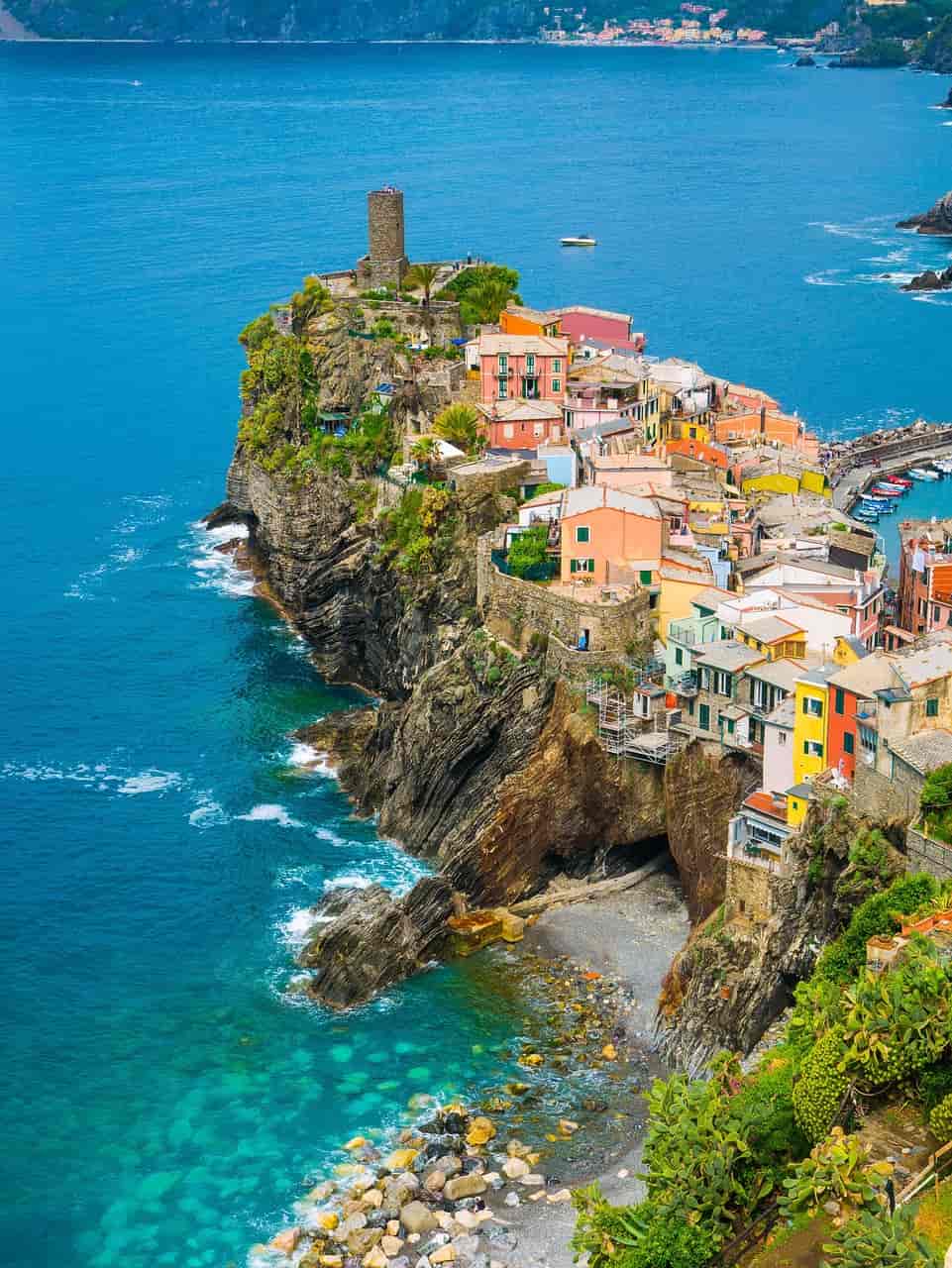
- Stay overnight in day-trip-heavy towns (Venice, Cinque Terre) rather than visiting only at midday.
- Pick fewer destinations — travel time between Italian regions adds up faster than a map suggests.
Everything below explains why, and adds 32 more.
Before You Go
1. Book the Trevi Fountain and Other Major Sites Ahead — Timed Entry Is Now Standard
The Vatican Museums, Colosseum, Uffizi Gallery, and Accademia Gallery have required advance booking for years, from 2026, even the Trevi Fountain enforces timed entry to manage crowd density at Italy’s most photographed (and most Instagrammed) landmark. Arriving without a reservation at any of these means long queues at best and a fully booked day at worst.
Planning takeaway: book your must-see sites the moment your travel dates are fixed — for peak season, several operators now recommend booking 9–12 months out for the best availability on guided access and timed slots.
2. Know the 2026 Entry Rule Changes: EES Is Live, ETIAS Still Isn’t
The EU’s Entry/Exit System (EES) — a biometric border check replacing manual passport stamps — went fully live at all Schengen borders, including Italy’s, in April 2026. ETIAS, a separate pre-travel authorization system, remains delayed with no confirmed date; treat any site charging you for one today as illegitimate.
Planning takeaway: build extra buffer time into your Italy arrival in 2026 specifically — EES has caused longer processing queues at several major airports since its rollout.
3. Understand the Schengen 90/180-Day Rule
Most non-EU visitors can stay in the Schengen Area (which includes Italy) for up to 90 days within any rolling 180-day period — not 90 days per country. A multi-country Europe trip still counts against this same shared limit.
Planning takeaway: if you travel to Europe often or your trip runs long, track cumulative Schengen days across the full 180-day window, not just this one visit.
4. Buy Travel Insurance Before Anything Else
Coverage protects against medical emergencies, cancellations, and delayed baggage — all more disruptive abroad than at home. Buy it before locking in other bookings, since cancellation coverage on many policies only applies to costs incurred after the policy activates.
Planning takeaway: treat travel insurance as the first booking on your list, not the last.
5. Pack for Walking, Not for a Suitcase Tour
Cobblestones, station stairs, and hilltop towns make a heavy suitcase a genuine liability. For churches and religious sites, pack something that covers shoulders and knees — a light scarf works for both men and women and solves the problem instantly if you’re caught without one at the door.
Planning takeaway: guards turn visitors away at major churches without exception — don’t assume you’ll be let off for not knowing the rule. travel, it is generally considered an essential part of trip planning rather than an optional extra.
6. Bring a Type C/F/L Adapter, Not a Voltage Converter
Most phones, laptops, and cameras are dual-voltage, so a simple plug adapter covers nearly everyone — buying one before departure is cheaper than an airport kiosk markup.
Planning takeaway: confirm your specific devices are dual-voltage before assuming you don’t need a converter; older hair styling tools are the most common exception.
7. Don’t Try to See All of Italy in One Trip
Rome, Florence, Venice, Cinque Terre, and the Amalfi Coast look close together on a map, but the travel time between them adds up to real, non-negotiable hours. Fewer regions with more time in each consistently beats a rushed multi-city checklist.
Planning takeaway: pick 2–3 regions for a one-to-two-week trip and go deeper rather than wider — you’ll remember the trip better for it.
Getting Around Italy
8. Use High-Speed Trains Between Major Cities
Rome, Florence, Venice, Milan, Naples, and Bologna connect via fast, comfortable high-speed rail that beats flying once airport transfer time is factored in.
Planning takeaway: book high-speed tickets further ahead for the cheapest fare class — prices climb as the departure date approaches, unlike flat-rate regional tickets.
9. Use Regional Trains for Smaller Towns and Short Hops
Regional trains are slower and make more stops, but they’re the only way to reach many towns in Cinque Terre, Tuscany, Umbria, and rural Sicily — and they’re meaningfully cheaper than a last-minute high-speed ticket for short journeys between nearby cities.
Planning takeaway: book regional tickets ahead on weekends and holidays too — they sell out on popular routes just like high-speed rail does.
10. Validate Paper Tickets — Digital Tickets Don’t Need It
Paper train, bus, and metro tickets must be stamped at a platform validation machine before boarding; skipping this risks a fine that can double if not paid on the spot. Digital tickets (bought via app) are typically valid immediately and don’t require this step, which causes real confusion for travelers used to one system or the other.
Planning takeaway: if you’re holding a paper ticket, validate it before you board every single time — assuming “I did it once, I’m fine” is how the fine happens.
11. Rent a Car Only Where It Actually Helps
Rome, Florence, Venice, Milan, and Naples are all easier without a car — parking, traffic, and ZTL zones outweigh any flexibility gained. A car earns its cost in Tuscany, Umbria, Sicily, Sardinia, and the Dolomites, where public transport thins out.
Planning takeaway: decide your car-vs-train strategy by region, not for the whole trip — mixing both is normal and often the smartest approach.
12. Know ZTL Zones Before You Drive Anywhere
ZTL (Zona a Traffico Limitato) restricted zones sit inside most historic city centers, monitored by camera, with fines that arrive by mail months after your trip. GPS navigation does not reliably route you around them.
Planning takeaway: confirm ZTL boundaries and parking arrangements with your accommodation before you drive anywhere near a historic center — don’t rely on your GPS to know the rules for you.
13. Use Ferries Where They’re Genuinely Part of the Experience
Ferries serve the Amalfi Coast, Capri, Ischia, Sicily, Sardinia, Lake Como, and Cinque Terre (seasonally), often more pleasantly than the equivalent drive.
Planning takeaway: book ferry tickets ahead in peak season — dock queues for walk-up tickets can eat a meaningful chunk of your day.
14. Check for Strikes Before a Tight Connection
Transportation strikes occasionally affect trains, buses, and airports, though most are announced in advance and protected service hours often still run.
Planning takeaway: check official strike notices 24–48 hours before any connection you can’t afford to miss, and avoid booking an international flight immediately after a long train leg.
Money & Budget Tips
15. Walk a Few Streets Away From Landmarks Before Eating
Restaurants directly beside the Colosseum, Piazza San Marco, or a famous coastal viewpoint reliably charge more for average food — a pattern that holds at nearly every major landmark in the country.
Planning takeaway: treat “closest restaurant to the sight” as a warning sign, not a convenience.
16. Travel Shoulder Season for the Best Value
April–May and September–October combine lower accommodation costs, thinner crowds, and milder weather than July–August peak season.
Planning takeaway: if your dates are flexible, shoulder season delivers a meaningfully better trip for less money, not just a marginal saving.
17. Use Aperitivo Hour as a Cheap, Local Meal
In Milan, Turin, Florence, and Rome especially, a single drink during aperitivo hours often comes with complimentary snacks or a buffet spread.
Planning takeaway: treat aperitivo as a legitimate light-dinner option on at least one night, not just a pre-dinner drink.
18. Carry Coins, Even in an Increasingly Cashless Country
Card and contactless payment now cover most restaurants, shops, and museums, but €1 and €2 coins are still needed for public restrooms and supermarket trolleys.
Planning takeaway: keep a small stash of coins separate from your card wallet — you’ll need them for exactly the small things a card won’t cover.
19. Stay a Few Stops Outside the Main Tourist Center
Accommodation prices drop meaningfully one or two train or metro stops away from the most famous districts, often without real inconvenience.
Planning takeaway: check a hotel’s actual walk-or-transit time to your main sights before ruling it out for being “not central.”
20. Consider an Agriturismo Over a Hotel in the Countryside
In Tuscany, Umbria, and Sicily specifically, agriturismos (working farm stays) often deliver better value and a more genuine experience than a comparable hotel.
Planning takeaway: book agriturismo stays for the countryside legs of your trip and save hotels for the cities, rather than defaulting to hotels everywhere.
21. Understand Tipping and the Coperto Charge
Tipping is appreciated but not expected at US levels — a small per-person coperto (cover charge) on your bill already covers bread and table service and isn’t a scam. Rounding up or leaving a few euros for great service is normal; large percentage tips aren’t.
Planning takeaway: check your bill for a listed coperto before assuming you also need to tip heavily on top of it.
Food & Dining Tips
22. Expect Dinner Service to Start Around 7:30–8:00 PM
Many restaurants outside major tourist areas don’t fully open for dinner until this window — arriving earlier can mean a limited menu or a closed dining room.
Planning takeaway: if you’re hungry before 7:30 PM, plan for a café snack or aperitivo rather than expecting a full restaurant to be ready.
23. Book Restaurants Through an App or Direct Message, Not Just Walk-In
Even casual trattorias in major cities now commonly take reservations through apps like The Fork or Quandoo, or a direct WhatsApp message — walk-in availability at popular spots has gotten less reliable as this shift has taken hold.
Planning takeaway: if a trattoria has a WhatsApp number listed, message ahead for popular dinner slots rather than assuming you can walk in.
24. Ask Specifically for Tap Water if You Don’t Want Bottled
Restaurants commonly serve bottled water by default; tap water is safe and free, but you generally have to ask for it by name.
Planning takeaway: say “acqua del rubinetto” if you want free tap water — otherwise expect a bottled water charge on your bill by default.
25. Order Espresso Standing at the Bar
Espresso is meant to be quick, finished standing at the counter within a minute or two — sitting at a table can raise the price, especially in tourist-heavy piazzas.
Planning takeaway: if you want to sit and linger over coffee, budget for table service pricing; if you want the authentic (and cheaper) version, stand at the bar.
26. Eat the Regional Specialty, Not the Same Dish Everywhere
Naples for pizza, Bologna for pasta, Sicily for seafood and pastries, Tuscany for rustic countryside cooking — ordering the same familiar dish nationwide means missing what each region actually does best.
Planning takeaway: research one or two signature dishes for each region on your itinerary before you arrive, and prioritize those over a default order.
Check out these – top restaurants in Cinque Terre serving the best Italian cuisine!

27. Look for “Gelato Artigianale,” Not Just the Nearest Shop
Not all gelato is artisanal — overly bright, glowing colors and a location right beside a major attraction are both signs of a lower-quality tourist shop.
Planning takeaway: a queue of locals, not tourists, is a better signal of gelato quality than proximity to a landmark.
If gelato is a priority for you, this curated list of the best gelato in Rome is worth bookmarking.

Common Mistakes to Avoid
28. Treating Every Stop as a Rushed Day Trip
Venice, Cinque Terre, the Amalfi Coast, and Lake Como all show a genuinely different, calmer side of themselves before roughly 9 AM and after day-trippers leave in the evening.
Planning takeaway: stay at least one night in your highest-priority “iconic” stop rather than day-tripping in — the early-morning and evening version of these places is worth the extra cost.
29. Booking Overly Tight Train or Flight Connections
Italy’s rail network runs well overall, but delays and platform changes happen — a connection with no buffer time can cascade into a missed flight.
Planning takeaway: build in real slack for any connection ahead of an international flight, not just the legal minimum layover.
30. Buying Counterfeit Goods From Street Vendors
Purchasing counterfeit designer goods — common near major landmarks in Florence, Venice, and Rome — is illegal for the buyer under Italian law, not just the seller, and can result in fines.
Planning takeaway: treat street-vendor “designer” goods as a legal risk to you personally, not just a quality-control issue.
Safety Tips
31. Watch for Pickpockets in Predictable Locations
Pickpocketing concentrates around major attractions, train stations, and crowded public transit — keep valuables in a front pocket or a bag worn across the body.
Planning takeaway: treat crowded platforms and landmark plazas as your highest-alert zones, not quiet side streets.
32. Recognize Common Tourist Scams
Unofficial ticket sellers, bracelet scams, and unsolicited “help” in exchange for money all target busy tourist areas specifically.
Planning takeaway: a firm, polite “no, grazie” and continuing to walk resolves the vast majority of these situations without escalation.
33. Use Official Taxis or Ride Apps Only
Choose licensed taxi stands or a reputable app — never an unsolicited offer near an airport, station, or major attraction.
Planning takeaway: pre-arrange an airport transfer or confirm your app’s coverage before you land, rather than deciding on the spot while tired.
34. Don’t Fly a Drone Without Checking Local Rules First
Drone use is restricted or banned in many historic centers and near protected monuments, with real fines and potential confiscation for violations.
Planning takeaway: check local drone regulations for each specific city on your route before you pack one — “I didn’t know” isn’t accepted as an excuse.
Tips by Travel Style
35. First-Time Visitors
Focus on fewer destinations — Rome, Florence, and Venice remain the easiest introduction, connected well by train.
Planning takeaway: resist the urge to add a fourth or fifth city on a first trip; depth beats breadth for a first impression of Italy.
36. Families
Choose slower itineraries with fewer hotel changes, and lean toward late spring or early autumn for manageable weather and crowds.
Planning takeaway: book accommodations with a kitchenette or breakfast included for family trips — it removes pressure to find a restaurant on off days.
37. Budget Travelers
Travel shoulder or off-season, use regional trains strategically, and consider Naples, Sicily, or Umbria over the most famous (and priciest) hotspots.
Planning takeaway: one region with genuinely lower costs (Sicily, Puglia) can fund extra days elsewhere in the trip.
Local Tips Most Tourists Learn Too Late
38. Sundays and Midday Hours Are Genuinely Quiet
Shops, pharmacies, and supermarkets commonly reduce hours or close entirely on Sundays, and many smaller-town businesses close for a few hours midday before reopening.
Planning takeaway: run essential errands on a weekday morning — don’t assume Sunday or 2 PM availability outside major tourist centers.
39. August Changes How the Country Runs
Around Ferragosto (August 15), many local businesses close for their own summer break, even as tourist numbers and prices both peak.
Planning takeaway: if visiting in August, confirm specific restaurants and shops are open rather than assuming standard hours — a handwritten closed sign is normal, not a red flag.
40. Summer Heat Changes How You Should Schedule Each Day
Temperatures of 35–40°C (95–104°F) are now common in Rome, Florence, Naples, and inland Sicily and Puglia during peak summer, making midday sightseeing genuinely exhausting rather than just uncomfortable.
Planning takeaway: schedule outdoor sightseeing for early morning and evening in summer, and treat the early afternoon as an indoor-attraction or rest window rather than pushing through the heat.
Final Italy Travel Advice
Italy rewards travelers who front-load the boring logistics — bookings, entry rules, a rough sense of ZTL and validation rules — and stay flexible with everything else.
You don’t need to solve every detail before you land, but the tips above remove the friction that turns a good trip into a frustrating one. The rest of it — which trattoria becomes your favorite, which piazza you keep returning to — sorts itself out once you’re there.
FAQs
1. Do I need to book the Trevi Fountain in advance now?
Yes, starting from this year – 2026 the Trevi Fountain requires timed entry alongside Italy’s other major sites (Colosseum, Vatican Museums, Uffizi). Book it the same way you’d book any other major attraction, not as an afterthought.
2. How does the 2026 EES border change affect my trip?
The Entry/Exit System replaced manual passport stamps with a biometric facial scan and fingerprints at all Schengen borders, including Italy’s, starting April 2026. It applies to most non-EU travelers and can add processing time at busy airports — build in extra buffer time, especially on a first crossing.
3. Is ETIAS required to visit Italy in 2026?
No. ETIAS remains delayed with no confirmed launch date; current reporting points to a 2027 start. You do not need to apply for anything yet.
4. Do I need to validate my train ticket every time?
Only paper tickets require validation at a platform machine before boarding — every time, not just once. Digital tickets purchased through an app are typically valid immediately and don’t need this step.
5. Is Italy safe for solo travelers?
Yes, generally — the main practical risk is petty theft (pickpocketing, bag snatching) in crowded tourist areas rather than violent crime. Standard precautions cover most of the real risk.
6. How much cash should I carry in Italy?
Enough for a day or two outside major cities, plus coins for restrooms and trolleys — card and contactless payment now cover most restaurants, shops, and museums even as Italy trends more cashless.
7. Can I drink tap water in Italy?
Yes. Tap water is safe to drink throughout Italy, and many cities provide public drinking fountains where travelers can refill water bottles for free.
Helpful Planning Resources
- Vatican Museums Official Ticket Office – Book and check your advance reservation ticket for Vatican Museum, hidden sections, and guided tour.
- Trevi Fountain Official Timed-Entry Booking — Reserve your slot ahead of any Rome trip.
- EU Entry/Exit System (EES) Official Information — Current border-check requirements by nationality.
- Trenitalia – High-speed train network, check routes, fares, and schedules.