Italy doesn’t have one “best” time to visit — and that’s exactly why most people get this wrong.
Some travelers want beach weather. Others want empty museums, lower prices, or a specific festival. And plenty of first-time visitors accidentally book Italy at its hottest, most crowded, most expensive moment without realizing there was a better option two weeks earlier or later.
This guide breaks the decision down by season, region, and travel style — plus two 2026-specific changes worth knowing before you book: a new biometric border-check process, and a lasting demand shift in the Dolomites following February’s Winter Olympics.
The goal isn’t finding Italy’s single “best” month. It’s matching the right month to the trip you’re actually planning.
- When is the Best Time to Visit Italy?
- How to Choose the Best Time to Visit Italy
- Best Time to Visit Italy Compared at a Glance
- Best Time to Visit by Region
- Best Time to Visit Italy by Season
- Best Time to Visit Italy by Travel Style
- Italy’s Festival and Event Calendar
- Best Months to Visit Italy (Month-by-Month Quick Reference)
- What Changed from 2026
- FAQs
- Helpful Planning Resources
- My Popular Italy Travel Guides
Love this? Check out our Travel Guide to Puglia and Essential Italy Travel Tips to round out your planning.
When is the Best Time to Visit Italy?
- Best overall: April–June and September–October.
- Best for first-time visitors: May, June, and September.
- Best weather-to-crowd ratio: Late April, early May, late September.
- Best for beaches: June and September — warm water without August’s peak crowds.
- Best for budget travelers: November–March, excluding the Christmas/New Year window.
- Cheapest month: January.
- Best for skiing: December–March, with the Dolomites carrying extra demand in 2026 following the Winter Olympics.
- Most crowded and expensive: July–August.
Everything below explains why, region by region.
How to Choose the Best Time to Visit Italy
Before picking dates, weigh these four questions — the sections below give you the specific facts to answer each one, once you know what you’re optimizing for.
- How much heat can you tolerate, and does your itinerary lean inland or coastal? Inland cities run considerably hotter than lakes and coastlines in the same month.
- Is avoiding crowds worth trading away the warmest weather? The two don’t move together in Italy — the calmest months and the warmest months rarely overlap.
- Is your budget flexible, or are you locked into school holidays or fixed dates? Flexibility opens up meaningfully cheaper windows than a fixed peak-season date allows.
- How many regions does your itinerary span, and do they share a “good season”? The Dolomites, Rome, and Sicily are rarely in their best window at the same time — see the regional breakdown below before assuming one month works for all of them.
Planning takeaway: answer these four questions first, then use the season, region, and travel-style sections below to land on a specific window — trying to pick a month before knowing your own priorities is how most people end up in Italy’s most crowded weeks by accident.
Best Time to Visit Italy Compared at a Glance
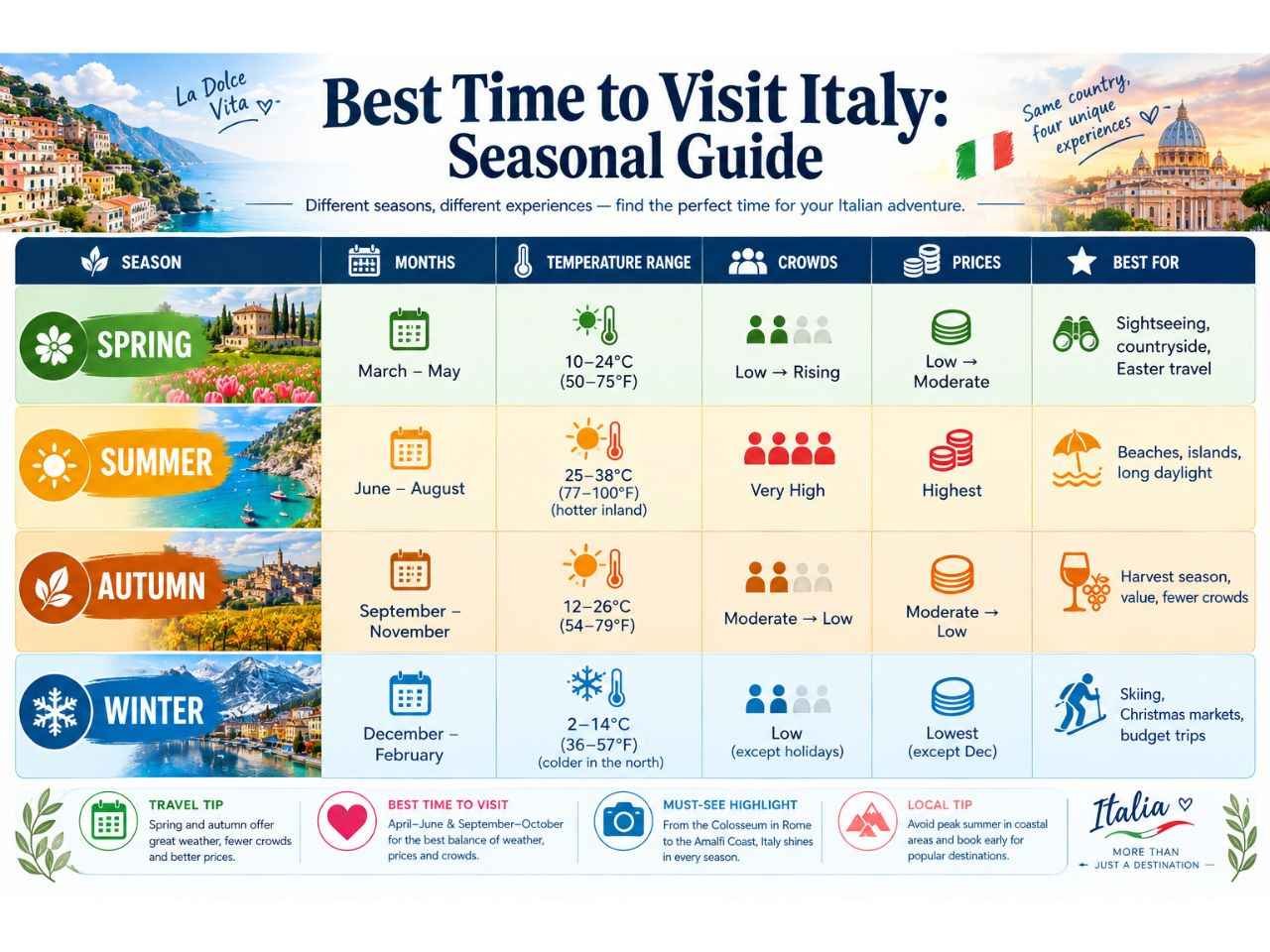
| Season | Months | Temperature Range | Crowds | Prices | Best For |
|---|---|---|---|---|---|
| Spring | March–May | 10–24°C (50–75°F) | Low → Rising | Low → Moderate | Sightseeing, countryside, Easter travel |
| Summer | June–August | 25–38°C (77–100°F), hotter inland | Very High | Highest | Beaches, islands, long daylight |
| Autumn | September–November | 12–26°C (54–79°F) | Moderate → Low | Moderate → Low | Harvest season, value, fewer crowds |
| Winter | December–February | 2–14°C (36–57°F), colder in the north | Low (except holidays) | Lowest (except Dec) | Skiing, Christmas markets, budget trips |
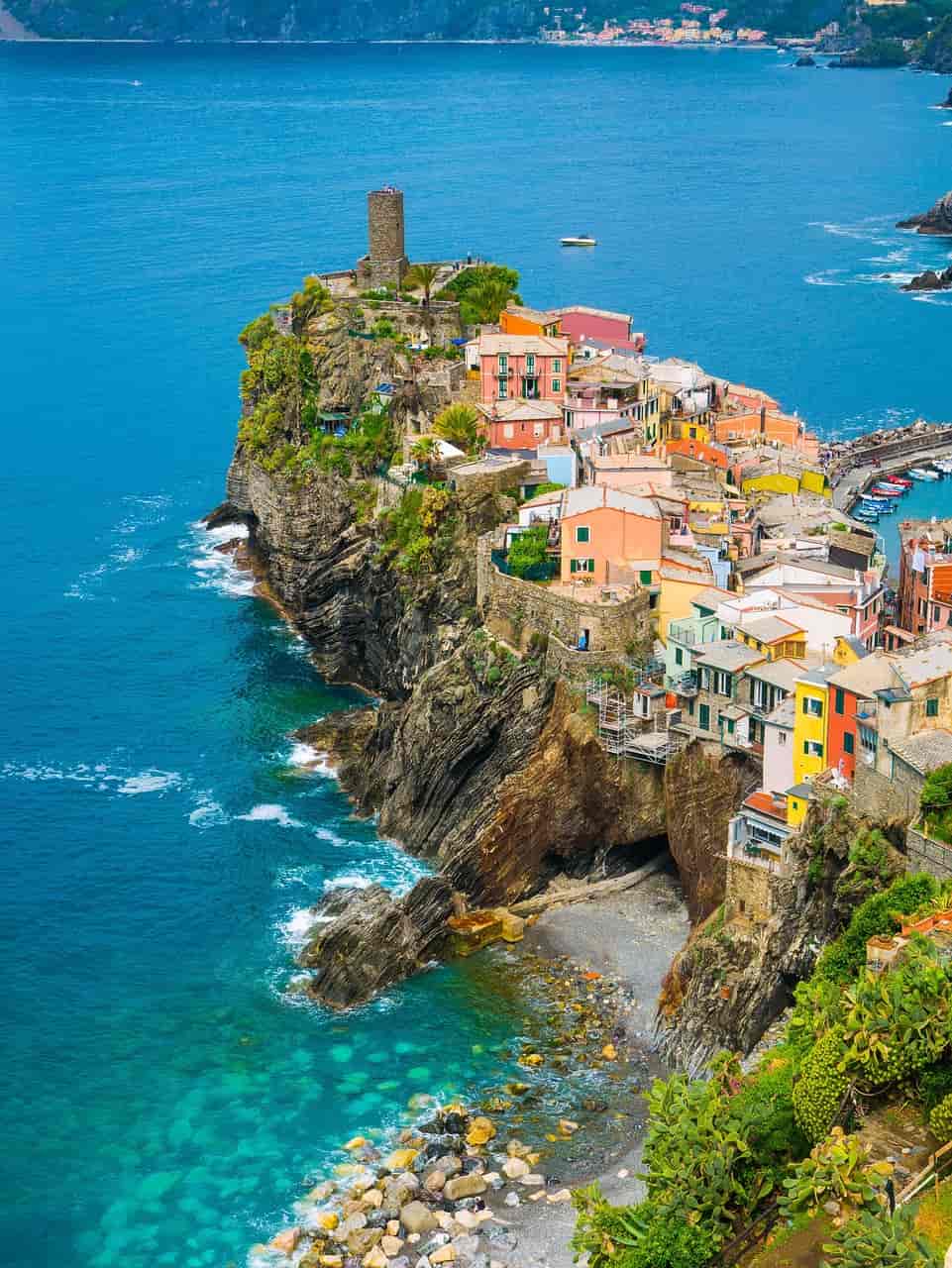
Save the image below to quickly find your best match to travel Italy!
Best Time to Visit by Region
Italy’s regions are never in the same season at the same time — plan around the specific place, not the country as a whole.
- Northern Italy (Milan, Venice, the Dolomites, Lake Como): June–September for lake and city travel; December–March for Dolomites skiing, with 2026 carrying elevated demand and pricing following the Winter Olympics. Winter here brings genuine cold and fog, especially around Venice.
- Central Italy (Rome, Florence, Tuscany, Umbria): April–June and September–October are the strongest windows — summer heat in Rome and Florence regularly exceeds 35°C (95°F), making shoulder season noticeably more comfortable for walking-heavy sightseeing.
- Southern Italy (Naples, Puglia, Amalfi Coast): May–June and September–early October avoid both summer’s heat and its crowding; July–August remains the only reliable warm-water swimming window but comes with peak pricing.
- The Islands (Sicily, Sardinia): April–October for a genuinely long warm season — Sicily in particular stays mild enough for spring sightseeing while northern Italy is still cold, and its milder winters make it a reasonable off-season alternative to the mainland.
Planning takeaway: a trip combining Rome, the Dolomites, and Sicily in one visit has no single “best” month — pick the region that matters most to your priorities and build the season around it, or accept a genuine trade-off in one leg of the trip.
Best Time to Visit Italy by Season
Spring (March–May)
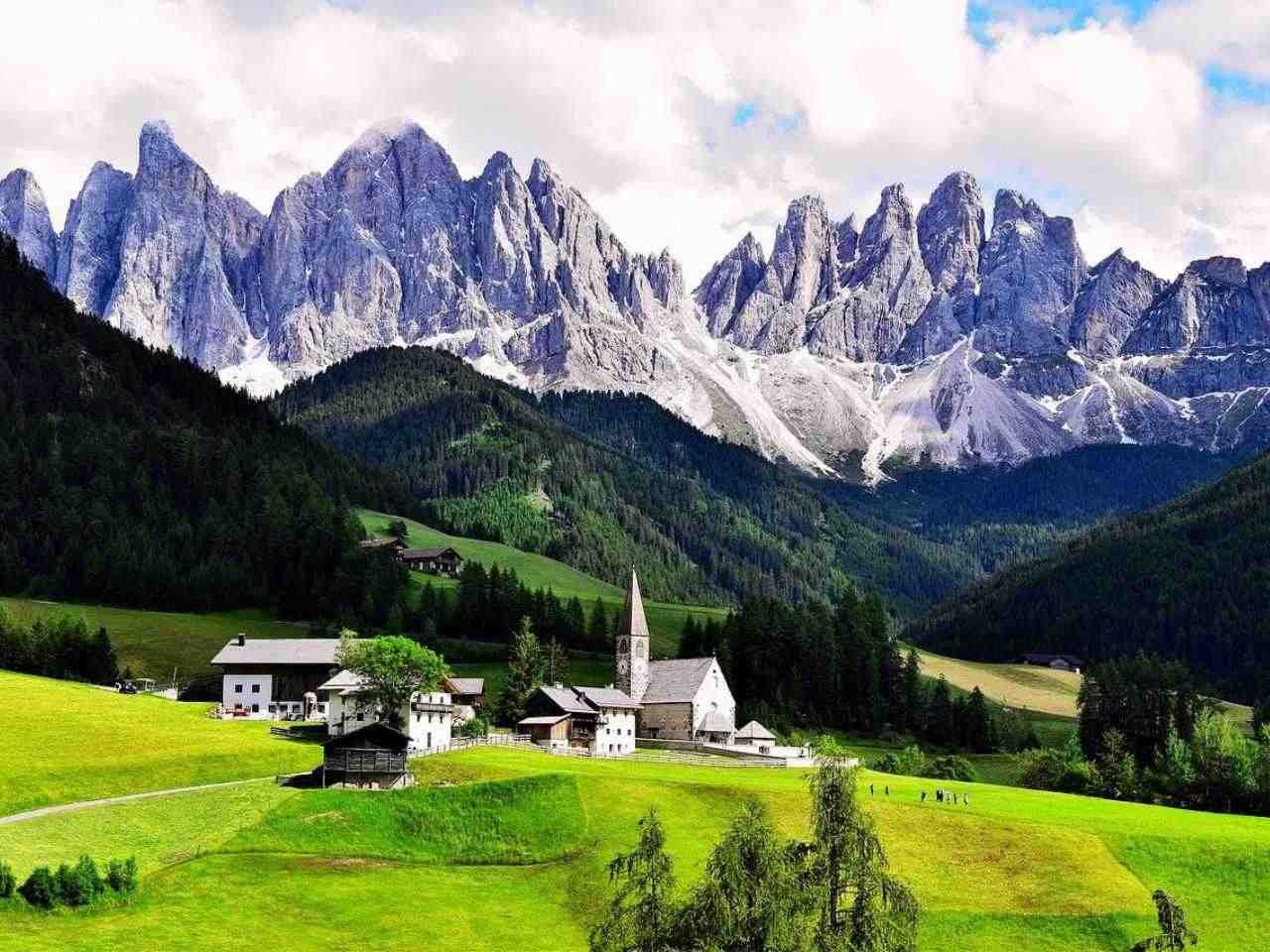
Comfortable temperatures, greening landscapes, and fewer crowds than summer make spring one of the strongest overall windows — May in particular delivers pleasant weather across nearly the entire country at once.
Trade-off: March weather is still unpredictable, sea temperatures remain too cool for swimming, and Easter week brings a temporary crowd and price spike wherever it falls that year.
Best for: Rome, Florence, Venice, Tuscany, Umbria, Lake Como, Cinque Terre, and the Amalfi Coast (especially May).
Summer (June–August)
The most popular season by far — long daylight, warm seas, and full festival and outdoor-dining energy across the coast and islands. July and August specifically are Italy’s most expensive and crowded weeks of the year — accommodation on the Amalfi Coast, Venice, Lake Como, and Sardinia rises sharply, and major attractions now routinely require advance timed-entry booking, including sites that didn’t need it a few years ago.
Trade-off: if these are your only available dates, shift your itinerary toward beach and lake destinations rather than inland city sightseeing — the heat and crowds compound each other hardest in Rome, Florence, and Naples.
Best for: Sardinia, Sicily, the Amalfi Coast, Lake Como, Cinque Terre, and Dolomites hiking.
Autumn (September–November)
Widely considered Italy’s most balanced season — summer crowds fade, temperatures stay comfortable, and harvest season brings food and wine-focused travel to the front. November specifically is one of the least crowded and most affordable months nationwide, alongside January and February.
Trade-off: daylight hours shorten, rainfall increases later in the season (especially in the north and center — November is Italy’s wettest month), and some seasonal ferry routes reduce their schedules.
Best for: Tuscany, Umbria, Sicily, Rome, Florence, Naples, and Lake Como.
Winter (December–February)
A genuinely different side of Italy — thinner crowds, lower prices, Christmas markets, and Alpine ski season, with the Dolomites carrying extra cachet in 2026 after hosting the Winter Olympics. January specifically is the single cheapest month to visit Italy — flights, hotels, and some tours often sit at their yearly lows.
Trade-off: cold temperatures, short daylight, some coastal resorts partially closing, and occasional weather-related travel disruption. If you want the savings without the coldest weather, target late March or late October instead of the depths of winter.
Best for: the Dolomites, Venice, Rome, Florence, Naples, Sicily (for milder winter weather), and Lake Como’s quiet off-season atmosphere.
Best Time to Visit Italy by Travel Style
First-time visitors: April–June and September–October — comfortable weather and manageable crowds across the country’s major highlights.
Budget travelers: January, February, and November — the lowest flight and hotel prices of the year, particularly in major cities.
Couples and honeymooners: May, September, and October — pleasant weather and a noticeably calmer atmosphere than peak summer.
Beach and island travelers: June and September — warm water without August’s peak crowding.
Sightseeing-focused travelers: April, May, and October — cooler temperatures make extended walking and city exploration far more comfortable.
Families: late May, June, and early September — good weather and fewer crowds than the core summer holiday weeks.
Hikers and nature lovers: June–September for the Dolomites; April–May and October for Tuscany and Umbria’s countryside trails.
Planning takeaway: if your travel style doesn’t match your available dates, shift your destination rather than forcing the timing — a couple visiting only in August, for instance, is often better served by Lake Como’s relative calm than the Amalfi Coast’s peak crowding.
Italy’s Festival and Event Calendar
A handful of recurring events genuinely shift when — and where — to plan a visit.
- Venice Carnival (Carnevale di Venezia): Ten days ending on Shrove Tuesday, so exact dates shift each year with Easter — typically mid-to-late February. Expect Venice at its most atmospheric and its most crowded simultaneously.
- Easter Week: Dates shift annually; expect a temporary spike in crowds and prices nationwide, especially in Rome, regardless of which month it falls in.
- Palio di Siena: A historic horse race held twice a year, July 2 and August 16, drawing large crowds to Siena’s Piazza del Campo for both.
- Ferragosto (August 15): A national holiday marking peak summer shutdown — many local businesses close for their own break even as tourist numbers and prices both peak around them.
- Milan Fashion Week: Held in February and September each year, driving hotel prices up sharply in Milan specifically during those weeks.
- Christmas Markets and Luminarie: Late November through early January across cities and towns nationwide, with a genuinely festive, lower-crowd atmosphere outside the Christmas/New Year week itself.
Planning takeaway: check whether your travel dates overlap with any of the above before booking — several of these shift prices and crowd levels in a specific city more than the season itself does.
Best Months to Visit Italy (Month-by-Month Quick Reference)
Each month is already covered by season, region, and festival timing above — this table is a fast lookup for what’s distinct about that specific month, not a repeat of the seasonal case.
| Month | What’s Distinct This Month |
|---|---|
| January | Cheapest month nationwide; cold, quiet, low tourist volume |
| February | Venice Carnival typically falls here (dates shift with Easter); Milan Fashion Week |
| March | Spring arrives earliest in the south; shoulder season begins |
| April | Peak spring sightseeing weather; possible Easter-week crowd spike |
| May | Best all-around month nationwide for weather and coverage |
| June | Warm, strong for beaches, just ahead of peak summer crowds |
| July | Palio di Siena (July 2); peak heat, crowds, and prices begin |
| August | Ferragosto shutdowns (Aug 15); Palio di Siena (Aug 16); peak beach season |
| September | Milan Fashion Week; wine harvest begins; strong value returns |
| October | Autumn color; rainfall increases later in the month |
| November | Italy’s wettest month (north/center); also one of the quietest and cheapest |
| December | Christmas markets and Luminarie; ski season opens in the Dolomites |
What Changed from 2026
Two developments from earlier this year are still worth factoring into your timing decision, beyond the usual seasonal patterns.
EES border checks are now standard. The EU’s Entry/Exit System — a biometric border-check process that replaced manual passport stamps — went fully operational at all Schengen borders, including Italy’s, in April 2026. It caused real processing delays at several major airports during the rollout and into summer 2026; built in extra buffer time on arrival, particularly on a first crossing, since biometric registration now applies to every non-EU visitor regardless of season.
The Dolomites saw a lasting demand shift after February’s Winter Olympics. Milan-Cortina 2026 (February 6–22) put the Dolomites in the global spotlight, with bookings running as much as 160% above the prior winter in the lead-up to the Games. If Dolomites skiing is on your list for the upcoming winter season, expect the region’s elevated profile — and pricing — to carry forward rather than reset to pre-Olympics levels.
Planning takeaway: neither of these changes what season suits your trip, but both affect how far ahead you should book and how much buffer time to build in — especially since the Dolomites’ next ski season (winter 2026–2027) is the first real test of whether Olympic-driven demand actually holds.
FAQs
11. What is the best month to visit Italy overall?
May, June, September, and October offer the best balance of pleasant weather, manageable crowds, and strong sightseeing conditions across most of the country.
2. Is Italy too hot in summer?
July and August can be genuinely hot, especially in Rome, Florence, and Naples, where temperatures frequently exceed 35°C (95°F). Coastal destinations and northern lakes stay more comfortable during the same months.
3. What is the best time to visit Rome specifically?
April–June and September–October, avoiding both summer’s heat and the temporary crowd spike around Easter week, whenever it falls that year.
4. What is the best time to visit the Dolomites?
December–March for skiing (expect elevated demand in 2026 following the Winter Olympics), or June–September for hiking — spring and late autumn see many mountain facilities close entirely.
5. Is winter a good time to visit Italy?
Yes, especially for budget travelers, cultural sightseeing, Christmas markets, and skiing — major attractions are noticeably less crowded than during peak season, aside from the Christmas/New Year week itself.
Helpful Planning Resources
- Italy’s Official Tourism Portal — Official updates on seasonal events, transportation, and regional travel information.
- EU Entry/Exit System (EES) Official Information — Current border-check requirements by nationality.
Good